
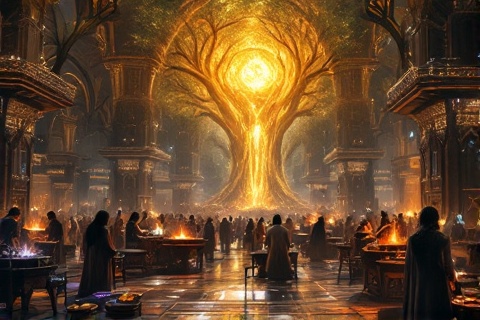
The Shining Exiles: Unveiling the Legacy of the Noldor
From Valinor's Light to Middle-earth's Shadows—The Fate of Tolkien's Most Ambitious Elves
Origins in the Great Journey
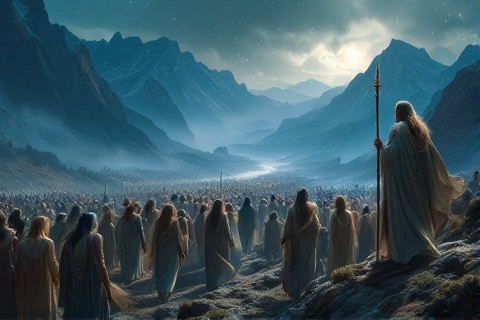
The Noldor, also known as the Deep Elves or Ñoldor in their own tongue, were one
of the three clans of the Eldar who heeded the call of the
Vala Oromë to journey to Valinor. Among the
three kindreds of Elves who made this Great Journey, the Noldor were marked by
their exceptional intellect, strength of will, and insatiable curiosity about
the nature of all things in Arda.
Under the leadership of Finwë, their first High King, the
Noldor undertook the perilous journey from Cuiviénen across
the vast expanse of Middle-earth. Their path took them
through the dangers of the Wildlands, across the great river
Anduin, and over the Misty Mountains, displaying the
determination and unity that would become hallmarks of their people.
The Noldor earned their epithet 'Deep Elves' through their profound interest in
the mysteries of craft, language, and lore. Unlike their kin the
Vanyar who devoted themselves to poetry and light, or the
Teleri who found joy in music and the sea, the Noldor sought to
understand the very foundations of Arda itself. Their intellectual pursuits and
masterful craftsmanship would later set them apart from all other Elven kindreds
in both blessing and curse.
Life in the Blessed Realm
In Valinor, the Noldor found their greatest teacher in Aulë the Smith, one of
the Valar who shared their passion for craftsmanship and understanding. Under
his tutelage, they learned the arts of metalwork, gemcraft, and the shaping of
materials both mundane and magical. The skills they acquired from Aulë would
influence their works throughout the ages of Arda.
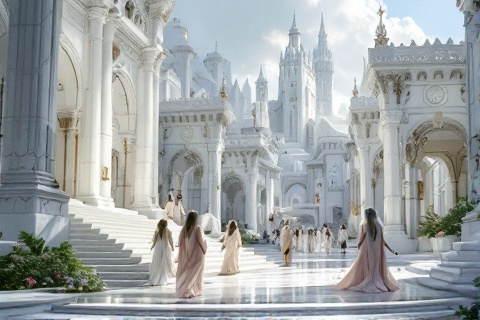
The Noldor established their magnificent city of Tirion upon Túna, crowned by
the tower of Mindon Eldaliéva whose lamp could be seen from the shores of
Middle-earth. In this gleaming city of white walls and crystal stairs, they
developed their written language Tengwar, created works of unparalleled beauty,
and delved deep into the knowledge of science and lore that would later be
carried back to Middle-earth.
Among all their works, none surpassed the creation of the
Silmarils by Fëanor, son of Finwë
and greatest craftsman of the Eldar. These three jewels contained the light of
the Two Trees of Valinor, a feat never again equaled in the history of Arda.
Their creation marked both the pinnacle of Noldorin craft and the beginning of
their greatest tragedy.
Under the blessed light of Telperion and Laurelin, the Two Trees of Valinor, the
Noldor reached heights of knowledge and skill that would never again be matched
in Middle-earth. They became masters of linguistics, architecture, metallurgy,
and countless other arts. Their achievements fostered a growing pride that would
eventually lead to their downfall, as they began to desire ever greater works
and autonomy from the guidance of the Valar.
The Darkening of Valinor
The destruction of the Two Trees by Melkor and
Ungoliant plunged Valinor into darkness and marked the
beginning of the Noldor's exile. Using his spider-form ally's insatiable hunger,
Melkor orchestrated the death of the Trees, forever changing the fate of Arda
and setting in motion events that would reshape the history of both Valinor and
Middle-earth.
In the chaos following the Trees' destruction, Melkor struck at the heart of the
Noldor by slaying their High King Finwë at Formenos and
stealing the Silmarils. This act of violence, the first murder in the history of
the Eldar, sent shockwaves through the Noldorin people and ignited a flame of
vengeance in the heart of Fëanor.
In response to these tragic events, Fëanor gathered the Noldor and, in a moment
of passionate grief and rage, swore the terrible Oath that would doom his
people. Together with his seven sons, he bound himself and by extension many of
the Noldor to an unbreakable vow to recover the Silmarils at any cost. This
Oath, sworn in the name of Ilúvatar himself, would drive the Noldor to commit
terrible deeds and would haunt their bloodline for ages to come.
The Flight of the Noldor

The Kinslaying at Alqualondë marked the first tragic
consequence of the Oath of Fëanor, where Elf slew Elf
for the first time in the history of Arda. When the Teleri refused to give up
their ships to transport the Noldor to Middle-earth, Fëanor led his followers in
a brutal assault on their Telerin kin. This bloodshed at the crystal havens of
Alqualondë would forever stain the honor of the Noldor and create a rift between
the kindreds that would never fully heal.
Following the Kinslaying, Mandos himself appeared before the Noldor and
pronounced the Doom that would follow them into exile. Known as the Prophecy of
the North, this curse foretold that the Noldor would find neither peace nor rest
in their quest, and that all their great works in Middle-earth would eventually
turn to dust. The Doom would manifest throughout their history in countless
tragedies and fallen kingdoms.
The crossing of the Helcaraxë by Fingolfin's host
represented perhaps the most grueling chapter of the Noldor's exile. After
Fëanor's betrayal and burning of the ships at Losgar, Fingolfin's people chose
to cross the grinding ice of the far north rather than abandon their journey.
Many perished in the crossing, including Elenwë, wife of Turgon, but their
determination to reach Middle-earth never wavered despite the terrible
conditions and Fëanor's treachery.
Realms in Middle-earth
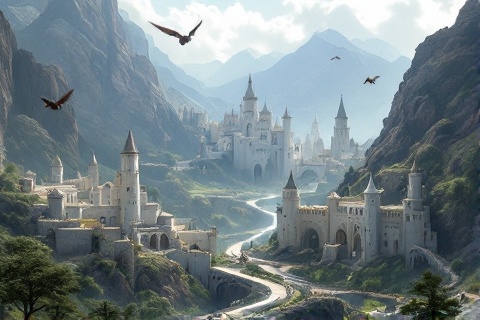
Upon reaching Middle-earth, the Noldor established powerful kingdoms throughout
Beleriand, bringing their advanced knowledge and
craftsmanship to these new realms. They founded strongholds such as
Hithlum, Dorthonion, and the March of
Maedhros, each becoming centers of resistance against Morgoth's dominion. These
kingdoms represented the Noldor's attempt to recreate something of the glory of
Valinor in the lands of their exile.
Among their greatest achievements were the hidden cities of
Gondolin and Nargothrond, which stood
as testaments to Noldorin architecture and ingenuity. Gondolin, built by Turgon
in secret, mirrored Tirion upon Túna and remained hidden from Morgoth's eyes for
centuries. Nargothrond, delved by Finrod Felagund,
became a center of power and learning until its tragic fall.
The Noldor formed crucial alliances with the Sindar of
Beleriand, though these relationships were often complex due to their past
actions and pride. Under the leadership of High Kings Fingolfin and later
Fingon, they organized the first unified resistance against Morgoth, forming the
Union of Maedhros and fighting in the Nirnaeth Arnoediad. Their military prowess
and strategic leadership proved essential in the long war against the Dark
Enemy, even though ultimate victory would only come through the intervention of
the Valar.
Legacy of Craft and Knowledge
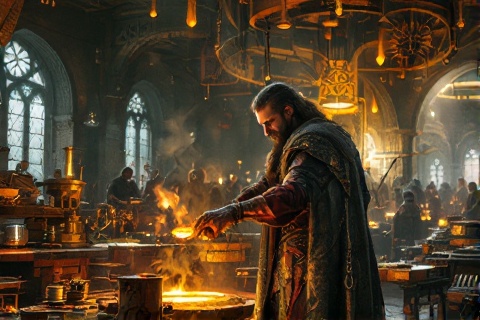
The creation of the Rings of Power by Celebrimbor,
grandson of Fëanor, represented both the enduring skill of the Noldor and their
continuing vulnerability to pride and deception. Working with Sauron in his fair
guise as Annatar, Celebrimbor forged rings of unprecedented
power, culminating in the creation of the three Elven Rings: Narya,
Nenya, and Vilya. These rings, though
untouched by Sauron directly, were still bound to the One
Ring's fate.
The Noldorin havens of Rivendell and
Eregion became vital centers for the preservation of lore and
craft in the Second Age. Under the leadership of Elrond
Half-elven in Rivendell, ancient knowledge was preserved and
passed down through the ages. Eregion, though eventually destroyed by Sauron,
represented the height of Second Age Noldorin craft and collaboration with the
Dwarves of Khazad-dûm.
The technological and cultural influence of the Noldor profoundly shaped the
development of Middle-earth. Their advanced understanding of metallurgy,
architecture, and various crafts elevated the societies they interacted with.
The healing arts of Elrond, the forging techniques taught to the
Dwarves, and the written traditions passed to Men
all stemmed from Noldorin knowledge brought from Valinor.
The Price of Pride
The Oath of Fëanor continued to drive the actions of his sons throughout the
First Age, leading to further Kinslayings at Doriath and the
Havens of Sirion. The terrible binding power of the Oath forced even the most
noble of Fëanor's sons, such as Maedhros and Maglor, to commit horrific acts
against their own kin in pursuit of the Silmarils. This cycle of violence and
tragedy only ended with the death or exile of all of Fëanor's sons.
The great Noldorin realms established in Beleriand fell one by one to Morgoth's
forces or their own internal conflicts. Nargothrond was destroyed by
Glaurung the dragon, Gondolin was betrayed and sacked,
and the other kingdoms gradually succumbed to the overwhelming power of the
Enemy. The final destruction of Beleriand in the War of
Wrath marked the end of the Noldor's greatest period of
power in Middle-earth.
During the Third Age, the Noldor diminished significantly in
both number and power. Most of the remaining Noldor dwelt in Rivendell or
departed for the West, their pride tempered by ages of loss and sacrifice. Those
who remained, like Elrond and Galadriel, focused on
preserving what they could of their ancient knowledge and preparing for their
eventual departure from Middle-earth.
Cultural Impact and Relations

The Noldor's influence on the development of Men and Dwarves was profound and
long-lasting. They taught the Edain agriculture, metalwork, and
letters, helping to establish the foundations of Númenórean
civilization. Their collaboration with the Dwarves,
particularly in Eregion, led to unprecedented achievements in craftsmanship and
the development of new techniques that benefited both races.
The relationship between the Noldor and their Sindarin and Telerin kin remained
complex throughout the ages. While the wounds of the Kinslaying never fully
healed, necessity and shared purposes often brought these kindreds together. The
Sindar learned much from the Noldor's knowledge while teaching them in turn
about the lands and peoples of Middle-earth.
Throughout their time in Middle-earth, the Noldor served as teachers and leaders
in the struggle against darkness, whether embodied in Morgoth, Sauron, or their
servants. Their experience, wisdom, and power made them natural leaders in these
conflicts, though their pride and past actions sometimes hindered their
effectiveness. The counsel of Noldorin leaders like Galadriel and Elrond proved
crucial in the final struggles of the Third Age.