
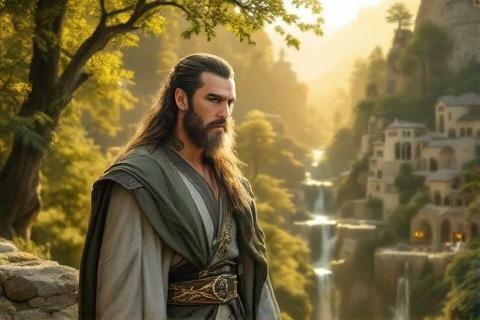
Elrond Half-elven: Lord of Rivendell
Wisdom, Heritage, and the Guardian of the West
A Short Welcome to Elrond Half-elven

Elrond Half-elven stands as one of the most important
elf-lords in Tolkien’s legendarium, known
above all as the Lord of Rivendell in both The
Hobbit and The Lord of the Rings,
where he appears as a figure of wisdom, power, and deep memory whose house
becomes a turning point for the stories of others rather than a stage for his
own glory.
Throughout the tales, Elrond acts as healer, counselor, and guardian, tending
the wounds of Frodo and others, giving weighty
advice to heroes such as Aragorn and
Boromir, and protecting the refuge of Rivendell so that it
remains a stronghold of safety while darkness grows outside its borders.
Readers should care about Elrond’s place in Middle-earth because he quietly
shapes the paths of many great figures, from the heirs of
Númenor to the hobbits of the
Shire, and his life stretches back to the First
Age, making him a living bridge between ancient tragedies and
the final struggles against Sauron in the Third
Age.
Origin and Bloodlines: The Half-elven Heritage

Elrond’s story begins in the Elder Days, for he is born of both Elven and
Human ancestry as the son of Eärendil the
Mariner and Elwing, a union that joins the
line of the great mariner who sailed to Valinor with that of
the faithful defenders of the Silmaril at the Havens of
Sirion.
Through Eärendil and Elwing, Elrond’s bloodline links him to mighty and
sorrowful houses, for he is kin to the royal house of Turgon of
Gondolin on his father’s side and to
Beren and Lúthien on his
mother’s side, so that in his veins meet the line of a High King of the Noldor
and the line that dared to wrest a Silmaril from Morgoth’s iron crown.
Because of this rare mingling of Elf and Man, and because both Eärendil and
Elwing had been granted special mercy by the Valar, Elrond and his twin brother
Elros were given a unique gift: the choice of their kindred, whether to be
counted among immortal Elves or mortal Men.
From this choice arose two very different destinies, since Elrond chose to be of
the Eldar and remain in Middle-earth while Elros embraced the fate of Men and
became the first King of Númenor, so that from Elrond came the later lords of
Rivendell and from Elros came the long royal line that would one day lead to
Aragorn.
The Choice of the Half-elven — A Turning Point
The Valar’s granting of the choice of kindred to Elrond and Elros was a rare act
of mercy and judgment, acknowledging that these two carried both the doom of Men
and the gift of the Eldar and allowing them to decide whether to live as
immortal Elves under the world or as mortal Men bound to its swift years.
Elrond, having seen the ruin of Beleriand and the sorrow of
many mortal deaths, accepted the life of the Eldar, while his brother Elros,
perhaps moved by a different hope and calling, chose mortality and was rewarded
with a long but finite life as king over the gifted island realm of Númenor.
Elrond’s choice explains his long presence through many ages of Middle-earth,
for he lives from the troubled end of the First Age through the Second
Age wars against Sauron and into the end of the Third Age,
carrying in his memory events that for others exist only as dim legends, which
gives his counsel both depth and a solemn sense of loss.
The decision of the brothers echoes through history, because the elven line of
Elrond guards wisdom and sanctuary in Rivendell while the human line of Elros
rises, falls in the Downfall of Númenor, and is renewed in the Dúnedain of the
North, so that the fates of both Elves and Men are marked by this ancient choice
and finally meet again in Aragorn and Arwen.
Founding and Stewardship of Rivendell (Imladris)

In the Second Age, after wars and wandering, Elrond established Rivendell as a
hidden refuge in a deep valley of Eriador during the struggle against Sauron,
and over time it became a house of counsel, healing, and preservation of lore
where the weary or hunted could find safety and where memories of older days
were guarded.
Tolkien’s descriptions paint Rivendell as a sheltered valley with the loud clear
waters of the Bruinen, stone-built houses set among terraces and paths, and
slopes clothed with pine and birch and ancient trees, so that visitors like
Bilbo and the hobbits first feel peace, then wonder,
as if they have stepped into a corner of the Elder Days.
As Lord of this hidden realm, Elrond ruled with measured care, opening his doors
to travelers such as Thorin’s company, the Dwarves of Erebor,
wandering Rangers, and hobbits when need and trust justified it, while at the
same time keeping Rivendell defended and unseen by enemies who would gladly
destroy such a stronghold of the West.
Under his guidance, Rivendell became not merely a fortress but a centre of
songs, tales, and learning, where ancient histories were preserved, the shards
of Narsil were kept safe, and the hurts of body and spirit
were tended so that those who departed from Elrond’s house were often stronger
and wiser than when they arrived.
Appearance, Bearing, and Personality
Tolkien presents Elrond as noble and fair, with a face that is grave and
timeless rather than youthful, and eyes that are keen and bright as if they look
not only at the present moment but back through long ages of memory, giving him
an air of quiet strength and command.
At the same time Elrond shows a blend of gentleness and firm authority, for in
his house he moves as a healer and host, kindly to hobbits and
Dwarves, yet when the Council of
Elrond is held he becomes a judge and leader who can
weigh hard choices, rebuke folly, and declare what must be done in order for any
hope to remain.
His speech and manner are measured and careful, since he listens at length to
Gandalf, to Boromir, to the tales of Gloin and the words
of Frodo before giving his own counsel, choosing his moments to speak so that
when he does, his advice carries weight and often brings the debate to a turning
point.
Because Elrond bears in his mind the memory of the ruin of Beleriand, the fall
of Gil-galad, and the long decline of the Eldar, his patience has the depth of
one who has seen many cycles of hope and loss, yet this also places a weight of
sorrow upon him, which shines through when he speaks of the fading of the Elves
and the need for Men to take up their full burden.
Counsel, Healing, and the Role of a Lord
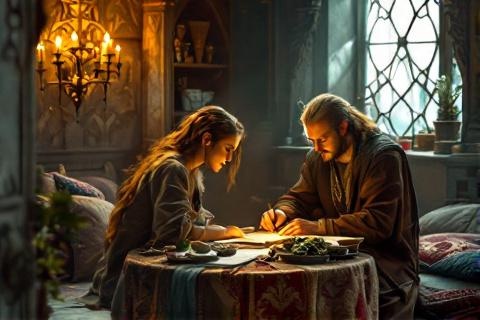
One of Elrond’s most visible roles is that of healer, for in The Lord of the
Rings he tends Frodo’s deadly wound from the
Morgul-blade with skill and song, calling on elven
knowledge and strength to draw out the fragment and restore the hobbit, and it
is said that in his house were many such healings of hurts caused by war and
shadow.
Beyond healing bodies, he gives counsel to kings and heroes such as Isildur’s
heirs, the Númenórean exiles, and later Aragorn, guiding
their choices with wisdom that respects their freedom, since he does not use
force or fear but instead presents the dangers and hopes clearly, allowing
others to accept the risks of their own paths.
As guardian of lore, Elrond preserves written records and living memory alike,
keeping the histories of the Elder Days, the languages of the Eldar, and the
songs of past deeds so that things long lost elsewhere remain clear in
Rivendell, which is one reason Gandalf and others turn to him when ancient
knowledge is needed.
In times of rising darkness he helps coordinate resistance by making Rivendell a
safe meeting place and by planning aid, as when he hosts the Council that
chooses the Fellowship, sends out scouts to seek
news of the Enemy, and provides guidance and equipment so that those who go out
from his house can oppose Sauron with at least a small hope of success.
Relations with Men, Elves, and Other Peoples
Because Elrond is both Half-elven and ancient in years, his lineage and the
choice of his kindred make him a natural bridge between Elves and Men, and many
come to him seeking counsel that takes into account elven memory, human
weakness, and the duties that both races must share if Middle-earth is to
survive.
He maintains strong friendships with leaders such as Gandalf and
Círdan and holds trust-based alliances with
Men and Dwarves, welcoming to Rivendell not only Elves but also Dúnedain
Rangers, wandering Dwarves like Gloin and Gimli, and even simple hobbits, giving
them respect when trust is earned and need is proven.
Yet Elrond can also be wary and cautious, since he has seen great kingdoms fall
through pride and rash action, so he often resists hasty plans and short-sighted
alliances, preferring to wait, to gather news, and to act only when the time and
company are right, which some might mistake for reluctance but which often
avoids needless ruin.
Over the centuries his house becomes a quiet crossroads where different peoples
meet and learn from one another, whether in song and story by the fireside or in
weighty councils, so that Rivendell stands as a rare place where Dwarves, Men,
Elves, and even hobbits can share knowledge and prepare for the struggles that
lie ahead.
A Short Summary of the Key Events in Elrond’s Life
Elrond was born in the late First Age to Eärendil and Elwing, at a time of great
turmoil when the sons of Fëanor still sought the
Silmarils and when the Havens where he dwelt as a child were attacked, so that
from his earliest days he lived amid flight, loss, and the mighty events that
closed the wars against Morgoth.
When he and his brother were later brought to safety and judged by the Valar,
Elrond was offered the choice of kindred and chose at last to be counted among
the Elves, binding himself to the fate of the Eldar and remaining in
Middle-earth as one of its Wise rather than taking the short road of mortal men.
In the Second Age and beyond he founded and led Rivendell, first as a refuge for
those fleeing Sauron’s forces, then as a lasting sanctuary where exiles from
Eregion, wandering Dúnedain, and others could find shelter
while he preserved weapons, heirlooms, and lore that might one day help in
renewed struggles against evil.
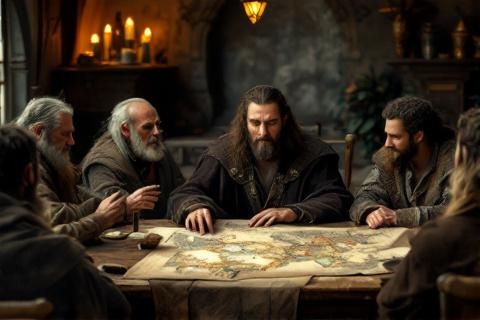
During the late Third Age Elrond played a central part in the events around the
War of the Ring, most clearly as host of the Council where the history of the
Ring was set forth and the Fellowship was chosen, and then as one who sent forth
Aragorn with reforged Narsil and his own sons as companions so that the final
resistance to Sauron could take shape.
Legacy: Why Elrond Matters in Tolkien’s World
Across the long ages, Elrond’s greatest work may be his preservation of
knowledge and memory, for in a world where time wears down stone and song alike
he keeps alive the histories of Beleriand, the tales of the Númenóreans, and
ancient tongues such as Quenya and Sindarin, all of which later ages rely on to
understand their own place in the story of the world.
As a bridge between races he not only gives advice but also shelters and trains
those who will shape the future, including Aragorn, who grows up in his house
under the name Estel, learning both the lore of the Eldar and the duties of the
Dúnedain, so that Elrond’s quiet teaching influences both the line of Men and
the fate of the Elves.
Through his choices and long stewardship, Elrond sends out ripple effects that
touch many later events, for it is his safe-keeping of the heir of Isildur, his
preservation of Narsil, his hosting of the Council, and his readiness to support
the Fellowship that make possible the alliances and heroes that finally bring
down Sauron.
Even after he sails West and his time as a lord in Middle-earth ends, the memory
of his house, the tales born or preserved there, and the line of those he
mentored and loved, such as Arwen and Aragorn, remain central to how later
peoples remember the long struggle against darkness and the wisdom that helped
them endure.