
Of the Coming of the Elves
Awakening and the First Steps in Middle-earth
The Firstborn — What Makes the Elves Unique
In Tolkien’s legendarium the Elves stand
as the Firstborn, the first of the Children of Ilúvatar to awaken in the world,
and this fact gives them a special place in all later history, for they open the
story of the speaking peoples of Middle-earth and see more of its ages than any
others. They appear before Men, before Dwarves are
revealed, and long before Hobbits are ever heard of, so their
memory reaches back to times mortals can only glimpse in song and story. Because
they are the Firstborn, the Valar look on them with a kind of
grave honor and also with a sense of duty, knowing that the thoughts of Ilúvatar
are first shown forth in them. From the moment of their awakening the Elves
stand between the powers of the world and its later peoples, acting as witnesses
to the earliest light and the earliest wrongs, and everything that follows in
The Silmarillion and even The Lord of the
Rings grows out of that first fact that they came
first to the shores of Middle-earth.
Elves in Tolkien’s world are not immortal in the sense of being unable to be
slain, but rather in that their lives are bound to the life of
Arda itself, so that they do not age or die by sickness or old
age as Men do, and their spirits remain within the circles of the world. They
can be killed by violence, hurt by grief, or grow weary in spirit and pass to
the Halls of Mandos, yet even then their fëar, or souls, may in time be rehoused
in new bodies of the same form, and they return to life so long as Arda endures.
This fate, called the Doom of the Firstborn, means that Elves see long ages
pass, and they bear the weight of long memory that Men escape through death.
Their unending life makes both their joys and sorrows deeper, because nothing
they have loved or lost is ever quite forgotten while the world lasts. Through
them Tolkien explores what it might mean to live as long as the earth, watching
its beauty grow and fade with no final release until the end of all things.
Tolkien describes the Elves as stronger and fairer than Men in many ways, with
keener senses, quicker understanding, and a natural grace in almost every art
they touch, so that they learn swiftly and remember deeply, and they love music,
speech, and the making of beautiful things. Their hearing and sight are sharper,
and they can read the stars, the wind on leaves, and the shapes of stone with a
skill that seems magical to later peoples, while their hands work gold, silver,
wood, and cloth with a fineness few can match. From their earliest days they
delight in language, shaping it into subtle forms of sound and grammar, and they
weave songs that are both art and memory, holding history within melody. This
love of craft and beauty does not mean mere decoration; for the Elves, every
well-made thing reflects a truth or longing of their hearts and often preserves
some echo of the starlit world of their beginning. In this way their nature
turns almost every part of life into a form of art, whether it is the forging of
gems, the building of halls, or the planting of trees.
At the root of Elvish nature lies a deep tie to the Music of the Ainur, the
great song through which Ilúvatar shaped the world, and this connection appears
in their instinctive understanding of form, harmony, and order. They do not
remember the Music itself, for they awaken long after it is sung, yet the
pattern of that song is written into their being so that when they create
languages, cities, or songs they are in a sense answering and echoing that first
divine theme. Because of this, the Elves respond strongly to the beauty or
marring of Arda: they rejoice when the lands are healed or made fair, and they
suffer in spirit when Melkor’s shadow twists what should be whole. Their long
lives let them watch the unfolding of the themes of Ilúvatar in the world, and
their own choices, both wise and proud, become part of the great drama that
grows out of that first Music. Thus they stand not only as children within the
world but also as sub-creators who shape history, languages, and realms in the
light and sometimes in the shadow of that ancient song.
Cuiviénen — The Water of Awakening
Cuiviénen, whose name in Quenya means the “Water of
Awakening,” lies in the far eastern regions of Middle-earth beside an inland
sea, remote from the later lands of Beleriand and the coasts
known in The Lord of the Rings, and it is there that the first Elves arise. In
the early ages the world is not yet fully ordered, and the seas and lands are
bent and broken, so Cuiviénen rests in a bay of the great inland Sea of Helcar,
fed by rivers and sheltered by surrounding heights. Tolkien describes it as
lying at the feet of the Orocarni, the Red Mountains, far from the sight of the
Valar who dwell in the West, and even farther from the direct reach of Men who
will come much later. Because of this hidden position, Cuiviénen is like a
cradle tucked away from the main stage of the world, a place prepared in quiet
for the Firstborn to open their eyes before they meet either Valar or foes. Its
name alone carries the sense that this water is not ordinary, for around it the
first thoughts and first words of the Children of Ilúvatar take shape.
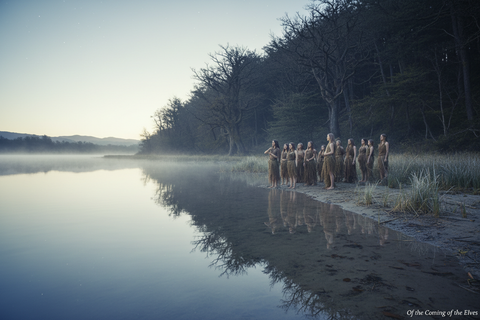
At Cuiviénen the Elves first awaken under the soft and ancient starlight, for
the Sun and Moon do not yet exist, and Tolkien’s tales remember that moment as
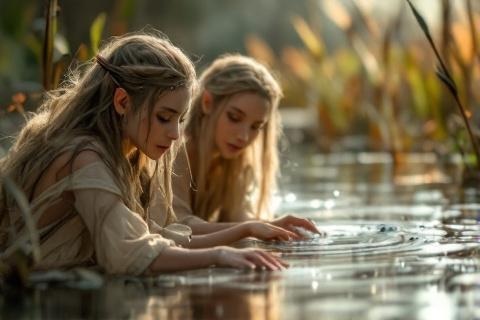
filled with reeds, gentle mists, and the sound of water on the shore. Groups of
Elves, later called the Minyar, Tatyar, and
Nelyar, awaken in pairs beside the lake, look up, and see
Varda’s stars shining in the black sky, and that sight becomes their first
vision of beauty and remains sacred to them ever after. The darkness is not yet
fearful but cool and clear, and the world around them is young, with no built
cities, no paths, and no speech but what they begin to shape. They wander among
the shadows of hills and the tall reeds by the water, learning slowly the sounds
of the world, and they give names to things as they discover them, so that their
language is born together with their awareness. This first experience under
starlight marks all Elvish memory, so that later they cherish the stars and call
Varda Elbereth, the Star-kindler, and many of their greatest songs and joys are
linked to night rather than to day.
Tolkien is careful to show Cuiviénen as a place apart, a primeval bay untouched
by later roads, kingdoms, and wars, standing in contrast to the more mapped and
storied lands of the First and Third Ages, and this helps the reader feel how
remote and half-forgotten the waking place of the Elves truly is. In The
Silmarillion it is said that few of the Eldar in later times know exactly where
Cuiviénen once lay, because the shape of Middle-earth changes when the Valar
make war on Melkor, break his strongholds, and alter the
seas and lands, so that the Water of Awakening is lost or transformed. This
distance in both time and geography gives Cuiviénen an air of holy memory rather
than of a place anyone can visit, like something half seen in a dream or a
legend told beside a fire. The quiet reeds and mists stand far from the thrones
of Tirion or the halls of Menegroth, reminding the reader that
all the glory and tragedy of Elven history grows out of a beginning that is
simple, silent, and sheltered. Thus Cuiviénen remains a symbol of innocence and
first wonder, preserved only in song and lore by peoples who have traveled far
from its shores.
Oromë's Discovery — The Quendi Are Seen
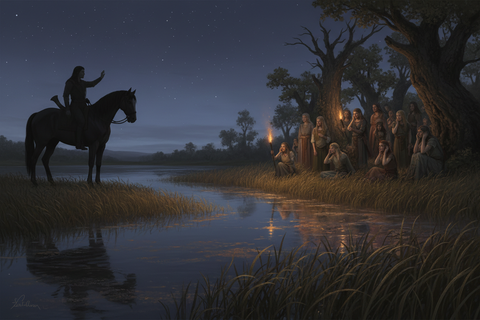
Oromë, one of the mighty Valar, is a hunter who rides often in Middle-earth
while most of his kin dwell in the light of Valinor, and it is
he who finally discovers the Elves at Cuiviénen and carries news of them back to
the West. While Melkor’s shadows lengthen in the world and dark creatures move
through the forests, Oromë still loves the great lands of Middle-earth and will
not wholly forsake them, so by chance or design he comes at last to the region
of the Water of Awakening. There he sees the newly stirred people and is filled
with joy and wonder, for they are the Children that Ilúvatar promised, and until
then the Valar had not seen them with their own eyes. Unlike some of the Elves,
who at first fear him because he is mighty and strange, Oromë loves them at once
and begins to speak with them, teaching and listening in turn. His discovery
marks a turning point in the history of Arda, because before that the Elves have
been alone with the stars and the distant music of the world, but now the great
Powers take notice and must decide what to do.
When Oromë first hears the Elves using speech, he gives them the name Quendi,
which in their own tongue means “those who speak with voices,” because he finds
it remarkable that they can shape thought into sound and share it with one
another. This detail shows how central language is to the Elves and to Tolkien's
world as a whole, for speech is the sign of their rational nature and of the
gift that comes from Ilúvatar alone, not from the shaping of the Valar. The name
Quendi also sets them apart from the beasts and from the many creatures that
Melkor has twisted, since no one else among the Children uses such formed and
subtle words at this time. Later, as their languages grow and divide, this first
name survives in lore as a reminder of how Oromë first knew them and of what he
valued in them. To call them Quendi is to remember that their voices are not
just sounds but bearers of thought, memory, and song, and that these things are
at the heart of their identity.
Oromë’s report to the Valar about the finding of the Elves leads directly to a
great council in Valinor, where the Powers must decide whether to leave the
Firstborn in Middle-earth or to draw them into the safety of the West, and from
this choice much later history flows. For a time the Valar have stayed apart
from Middle-earth after their earlier struggles with Melkor, but now they
realize that they cannot ignore the Children who have awakened in a land still
filled with danger and deceit. Mandos foretells that if the Elves remain under
the Shadow of Melkor, great troubles will come, and Ulmo speaks for leaving them
free, but in the end Manwë and his peers decide that their duty is to guard and
guide the Firstborn. This leads to the mighty War for the Sake of the Elves, in
which the Valar overthrow Melkor’s fortress of Utumno and break
his power for a time, clearing much of the land of his open terror. Only after
this victory do they send Oromë back with a summons, inviting the Elves to dwell
in Valinor, which begins the long division between those who go and those who
stay.
The Summons of the Valar — Invitation to Aman
Once Oromë brings word of the Elves to Valinor, the Valar gather in their ring
of doom and debate how they should deal with these new Children, and after long
counsel they choose to invite the Elves into the Blessed Realm rather than leave
them exposed in Middle-earth. They understand that the Elves have their own
will, yet they also feel a heavy responsibility, because the world that should
have been fair and whole has already been marred by Melkor’s cruelty. Manwë, as
the Elder King, listens to the thoughts of all, and though Ulmo warns that
drawing the Elves West will change the music of the world, the fear that Melkor
will enslave or corrupt them weighs more strongly. At last they agree that to
show the Elves the full light and beauty intended for them is better than to
leave them wandering under distant stars in a land of hidden perils. So the
decision is made to summon them to Valinor, and Oromë becomes the herald of this
invitation and the guide who will lead any who accept toward the Undying
Lands.
The summons to Aman is meant as an act of protection and teaching, offering the
Firstborn both safety from Melkor and the chance to learn from the wisdom and
craft of the Valar in the full light of Valinor. There the Elves are promised
peace, knowledge, and the sight of the Two Trees, the greatest lights in the
world at that time, as well as the company of the Powers who helped shape Arda.
The Valar believe that by dwelling close to them the Elves will grow to their
full stature and become strong and noble, able to reflect more clearly the
design of Ilúvatar. This invitation is not a command, but it carries the weight
of care and concern, for the Valar know well that Melkor has already begun to
spread lies and fear among the Elves in the dark lands. By calling the Elves
westward they hope not only to shield them from harm but to fill them with a joy
that might heal the damage already done by the Shadow that has haunted their
first years.
Yet the call of the Valar does not lead to one simple response; instead it
begins a great upheaval among the Elves, dividing families, testing loyalties,
and stirring fears, for some are eager to see the promised light and others
shrink from the unknown journey. Tales spread among them of Oromë’s might and
the strength of the Valar, and also of the dark Rider who has stolen some of
their kin, whom they later learn to blame on Melkor’s malice. Many fear that
going West means leaving forever the waters and hills they have first loved, and
they do not know what awaits them across the vast sea. Some hear only the
promise of beauty and wisdom and are ready to trust Oromë and follow him, while
others suspect a trap or simply cannot tear themselves from the starlit lands of
their birth. From these different reactions comes the first great sundering of
the Elven people, for those who will go and those who will not can no longer
remain one in path or in fate.
Eldar and Avari — The First Sundering
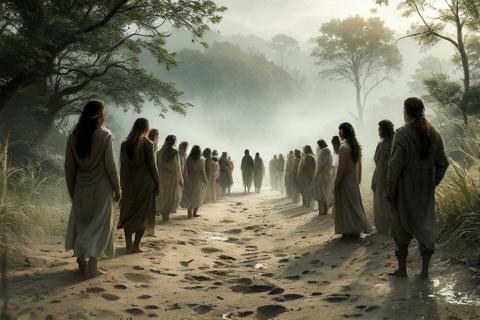
The Elves who accept the summons and agree to follow Oromë toward the West are
later known as the Eldar, “People of the Stars,” while those who refuse the
journey remain behind and are called the Avari, “the Unwilling,” and this first
choice sets two great branches in Elvish history. The Eldar leave Cuiviénen with
hope and curiosity, trusting in the promise of Valinor, whereas the Avari hold
fast to the lands of their awakening, whether from distrust, love of their home,
or simple fear of change. Tolkien makes it clear that the Avari are not evil,
but their decision means they do not share in the direct teaching of the Valar
or the light of the Two Trees. The Eldar in time will gain greater skill,
knowledge, and renown, yet they will also be pulled into the great tragedies
that grow around Valinor, while the Avari remain in the shadows of the East,
often forgotten by those who tell the tales of the West. Thus, from the very
beginning, the Elves are shaped by a matter of will and choice rather than by
nature alone.
As the Eldar go westward and the Avari stay in the east, the sundering between
them becomes not only a matter of distance but of different ways of life, and
this division lingers in languages, customs, and legends across all later ages.
The Eldar pass under Oromë’s guidance through lands that will later be known as
Rhovanion, Beleriand, and other regions, while many Avari settle by lakes,
forests, and mountains along the route or far away where no Eldarin ever come.
Over long years the tongues of East and West grow apart, and some of the Avari
fall into tales as ghosts or strange wanderers in the stories of Men, though
they are in truth Elves of an elder branch. The Eldar themselves are not one
single host but many peoples whose paths and loyalties change as they travel, so
that even within those who answered the summons there are further separations
and losses. In this way the single people who once awoke together at Cuiviénen
become the ancestors of many scattered kindreds whose stories touch the whole
map of Middle-earth.
Later lore draws another line upon this first division, speaking of the
Calaquendi, the Elves of the Light who have seen the Trees of Valinor, and the
Moriquendi, the Elves of the Darkness who have not beheld that light, and these
names arise as the Sundering deepens with time. All Calaquendi belong to the
Eldar, for they have traveled all the way to Aman and dwelt there for a time,
and their eyes and hearts are changed by the sight of Telperion and Laurelin,
while the Moriquendi include not only the Avari but also those Eldar who did not
complete the journey. This difference does not mean that the Moriquendi are
wicked or lesser in courage, but in the tales of the Noldor it often stands as a
mark of lesser knowledge or skill in certain arts taught by the Valar. Many of
the greatest lords and craftsmen, such as Fëanor,
Galadriel, and Finrod, are among the Calaquendi, but the
Moriquendi include noble peoples as well, like the Sindar of Beleriand. The
terms themselves show how deeply the memory of the Two Trees and their light
shape Elvish thought, for even when the Trees are long destroyed the distinction
between those who have seen that light and those who have not remains powerful
in legend and in pride.
Leaders of the Eldar — Ingwë, Finwë, and Elwë
Among the Eldar three great leaders arise to guide the main hosts on their
westward journey: Ingwë of the Vanyar, Finwë of the Noldor,
and Elwë of the Teleri, and each becomes not only a chieftain but the first High
King of his people. Ingwë leads the smallest yet most steadfast company, the
Vanyar or Fair Elves, and he is held in special honor by Manwë so that in later
times he dwells on Taniquetil near the Elder King. Finwë commands the Noldor,
the Deep Elves, whose hunger for knowledge and skill pushes them to learn all
the lore they can from the Valar and from Aulë in particular. Elwë, along with
his brother Olwë, guides the largest and most diverse host, the Teleri, who are
slow to move and deeply attached to waters and shores. These three chiefs speak
first for their people when Oromë brings the summons, and their acceptance draws
many others to follow, so that their decisions shape not only their own fates
but those of countless unnamed Elves who march in their train.
Each of the three lords reflects a different temper of Elvish nature: Ingwë
shows high spiritual devotion and love of the Valar, Finwë embodies the drive
for craft, lore, and making, and Elwë reveals a heart drawn to music, wide
lands, and the sea, and these differences help explain how Elven cultures
diverge. The Vanyar under Ingwë are golden-haired and most faithful to the
Powers, delighting in song and in the nearness of Manwë and Varda, and they take
little part in later wars in Middle-earth. The Noldor, following Finwë, throw
themselves into arts of hand and mind, shaping jewels, language, and thought
with restless energy that can become pride and possessiveness, as seen most
clearly in Fëanor. The Teleri, guided by Elwë and Olwë, are slow to decide yet
deep in affection, clinging to friends and places they love, and their music and
sea-longing color much of the later beauty of the Grey Havens and the shores of
Beleriand. In these three houses Tolkien shows how one people, all Firstborn of
Ilúvatar, can still unfold into several distinct cultures through different
loves and priorities.
The later history of the Elves in both Aman and Middle-earth is strongly marked
by the choices and fates of these three leaders, because where they settle their
people settle, and what they suffer shapes the stories of the ages. Ingwë’s
Vanyar remain in Valinor and become almost remote from the tales of war and
exile, yet their presence near the thrones of the Valar means they play a quiet
part in councils and in the final war against Morgoth. Finwë’s line becomes the
heart of the drama in The Silmarillion: his sons Fëanor,
Fingolfin, and Finarfin draw the Noldor into rebellion,
Kinslaying, and a long war in Middle-earth, and many of the chief heroes and
tragic figures of that age spring from his house. Elwë, who will later be known
as Thingol, lingers in Beleriand and becomes king of Doriath
with Melian the Maia as his queen, and
through him the Sindar and later Lúthien are
woven into the central tales of love, defiance, and doom. Thus the early
decision of each leader to follow the summons, and the paths they then walk,
determine much of the shape of Elven realms, alliances, and sorrows in the
First Age and beyond.
The Great Journey — Paths Westward
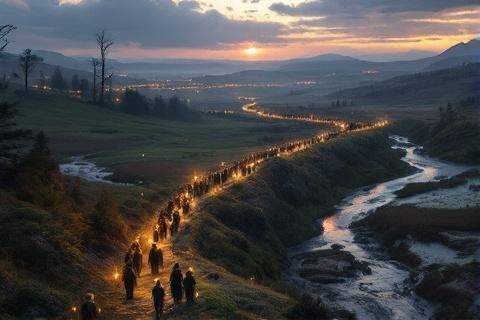
When the Eldar at last set out from Cuiviénen, they begin a long and difficult
Migration across Middle-earth, moving slowly westward through lands no one has
charted, crossing wide plains, deep forests, and mountain ranges under the
unchanging stars. Oromë rides before them on his great horse Nahar, and his horn
Valaróma sounds to scatter many dark things that might hinder their way, yet the
journey remains hard, for the Elves are on foot, carrying what little they own,
and many are young in mind and body compared to the ages they will later know.
They pass through places that in later times will be named and settled by Men
and Dwarves, yet at this point the land is wild and largely empty of any ordered
folk. Rivers and strange hills slow them, unknown beasts frighten them, and the
very size of the world becomes clear as years pass on the road. This long march
plants in many Elves a sense of wandering that will never fully leave them, even
after they build great cities and halls.
Not all the Elves who begin the journey to Aman finish it, because along the way
fear, weariness, or sudden love for a fair place lead many to stop and turn
aside, and from these delays and refusals new branches of the people arise. The
Teleri especially are often slow to move, lingering by rivers or on wide plains,
and some groups never catch up with the main host, becoming known in later lore
as Nandor or Laiquendi, the Green-elves, because they choose the forested lands
rather than the sea or Valinor. Others may feel that the West is too far, or
that the stories of the Valar are too strange, and they settle in valleys and
woodlands that feel like Cuiviénen, satisfied with starlight and running water.
Still others lose heart because of the hardships of the way, or cannot bear to
leave the tombs of their dead, and so a great people that began as one breaks
into many smaller and more local communities. Meanwhile those who press on grow
ever more determined, and perhaps more distinct from their kin who remain
behind, as every league of the march sets them apart in experience and hope.
Because the hosts do not move as one and do not all reach the same end, the
Migration itself seeds Elven presence across vast stretches of Middle-earth,
laying down the pattern of realms and kindreds that will matter in the ages to
come. Some of the Elves who stop or turn aside later form the basis of woodland
peoples, like those that will live in Lothlórien and
Mirkwood, while others become the Sindar and related groups
in Beleriand. These scattered settlements mean that when the Noldor return from
exile in Valinor they do not find an empty land, but cousins with their own
tongues, customs, and rulers. The wandering also familiarizes the Eldar with
many paths and regions, knowledge that later helps both Elves and their allies
in wars against Morgoth and, much later, Sauron. Thus the
journey to the West, though it aims at Valinor, at the same time writes Elven
presence into the map of Middle-earth, ensuring that the Firstborn will have a
stake in many lands and not only in the Blessed Realm across the sea.
Arrival in Aman and the Two Trees' Light
Those Elves who endure all the hardships of the road, cross the Great Sea with
the help of Ulmo, and finally set foot in Aman come to dwell beneath the light
of the Two Trees, Telperion and Laurelin, and they are known as the Calaquendi,
the Elves of Light. In Valinor they see a beauty far beyond starlight, for the
Trees bathe the land in shifting silver and gold, and their mingling light fills
the air with a kind of living radiance that changes how the Elves perceive all
things. The Vanyar and Noldor build shining cities there, such as Tirion upon
Túna, with its white walls and the high tower of Ingwë, and the Teleri later
raise the pearl city of Alqualondë along the coast. Under
this light the Calaquendi develop arts and wisdom that will make them the
greatest of all Elven peoples, so that even their language in later days is
regarded as noble and sacred. The sight of the Two Trees becomes the center of
their memory, a joy that will later burn keenly when that light is lost.
Valinor offers the Calaquendi not only protection from Melkor’s open malice but
also a place where they can learn directly from the Valar themselves, sharing in
the lore of Aulë, the music of the Teleri of the Sea under Ulmo’s care, and the
counsels of Manwë and Varda, and these gifts shape Elven arts and thought for
ages to come. The Noldor sit at the feet of Aulë and master the making of gems,
metals, and devices so subtle that later Men and Dwarves stand in awe of them,
while the Vanyar grow in song and poetry, joining often in the praises of the
Valar. The Teleri who come to Valinor become the greatest mariners and
shipwrights, fashioning swan-ships of rare beauty and learning the secret music
of the waves. In this realm death is rare and the Shadow seems far away, so that
the Elves’ natural talents flower as fully as they ever will in the history of
Arda. Many of the finest works named in The Silmarillion, including the
Silmarils themselves, are unthinkable apart from the
training and inspiration that the Eldar receive in this land of light.
Yet the great blessing of Valinor also gives rise to some of the deepest sorrows
in Tolkien’s story, because living so close to perfection sharpens the pain of
loss and can deepen envy and pride, setting the stage for rebellion and tragic
returns to Middle-earth. Melkor, once released from bondage, walks among the
Eldar and, though watched, begins to sow lies, whispering that the Valar have
brought them to Aman only to keep its treasures for themselves and deny the
Elves their rightful kingdoms in the wide lands of Middle-earth. Fëanor, the
mightiest of the Noldor, grows increasingly jealous and possessive of the
Silmarils, which hold the last unsullied light of the Two Trees, and his pride
feeds on Melkor’s poisoned words. When Melkor destroys the Trees with the help
of Ungoliant and steals the Silmarils, the Noldor fall
into anger and grief so intense that they swear a terrible oath and slay the
Teleri at Alqualondë for their ships. Their return to Middle-earth, driven by
vengeance and desire, brings with it both heroism and ruin, showing that the
light of Valinor, once misused or lost, can cast a shadow longer and more bitter
than any darkness the Eldar knew before they answered the summons.
The Sindar — Elwë's Staying and the Elves of Beleriand
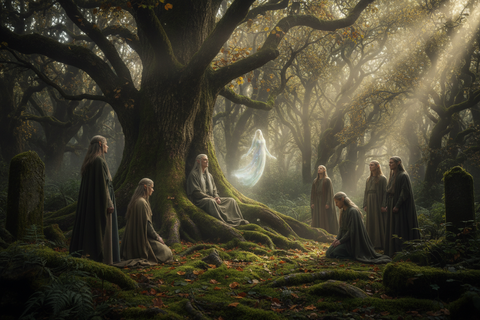
Elwë, the Telerin leader who will later be called Thingol, does not reach
Valinor with the rest of his kin because while the hosts pass through the great
forests of Beleriand he meets Melian the Maia in Nan Elmoth, and in that
enchanted wood he falls into a deep trance of love and wonder and lingers there
for long years. Melian is a spirit of great power who once dwelt in the gardens
of Lórien and learned songs from the Valar themselves, and when Elwë hears her
singing and sees her beauty, time seems to stand still around them. While he
remains lost in this enchantment, his people search and wait, but at last they
must decide their own path, and many go on to the sea without him while others
stay behind, hoping for his return. When Elwë finally awakes from his trance he
has changed, having been touched by a wisdom and power beyond that of ordinary
Elves, and Melian becomes his queen and lifelong companion. Together they turn
away from the journey to Aman and instead make Beleriand their home, a choice
that will affect the history of the First Age as deeply as any action of the
Noldor.
The many Teleri who do not complete the journey to Valinor, especially those who
remain in Beleriand around Elwë and Melian, become known as the Sindar, or Grey
Elves, and over time they develop their own distinct language, Sindarin, as well
as a culture shaped by starlight, forests, and the subtle guidance of a Maia
queen. Unlike the Calaquendi, the Sindar never behold the Two Trees, yet through
Melian they are not wholly cut off from the wisdom and power of Valinor, and
this gives their speech and arts a special refinement. They build Menegroth, the
Thousand Caves, with the help of Dwarves from the Blue
Mountains, carving halls deep under the earth and adorning
them with stone images of trees, beasts, and stars, so that their underground
kingdom reflects both forest and sky. Their language spreads widely in later
ages, becoming the common Elven tongue in Beleriand and even influencing the
speech of Men who come later. The Sindar’s blend of woodland life, stone craft,
and high lore gives them a gray or middle character between the Light-elves of
Aman and the darker, more rustic Elves of the East.
In the tales of the First Age the Sindar hold a central place, for Beleriand
becomes the main stage of the war against Morgoth, and Thingol’s realm of
Doriath stands at the heart of many great stories of courage, betrayal, love,
and doom. It is in Doriath that Beren first meets Lúthien,
Thingol and Melian’s daughter, whose beauty and power surpass those of any other
child of Elf and Maia, and their love leads to the recovery of a Silmaril from
Morgoth’s crown at terrible cost. The Sindar also rule or influence neighboring
lands, as allies or rivals of the Noldor when those exiles come back from the
West, and their alliances and quarrels help shape the fate of realms like
Nargothrond and Gondolin. Thingol’s
pride and caution concerning Men, his quarrel with the House of Fëanor, and his
demand for the Silmaril as a bride-price for Lúthien all help weave the complex
pattern of events that finally leads to the ruin of Doriath and much of
Beleriand. Yet even after their kingdoms fall beneath the sea, the memory of the
Sindar lives on in names, in songs, and in the Sindarin language that many later
Elves and even the Dunedain continue to use.
Gifts of the Eldar — Language, Craft, and Memory
From their earliest days the Elves bring into the world a level of music, clear
speech, and craft that has not been seen before, and their languages become the
roots from which many later tongues grow, either directly or through influence.
They create complex systems of sound and grammar such as Quenya and Sindarin,
shaping them with care and delight, and these languages carry rich layers of
meaning, history, and poetry in even simple words. Their songs praise stars,
rivers, and ancient deeds, and they also serve to teach lore and preserve
memory, so that an Elven lay can be both beautiful music and a detailed
historical record. In craft they invent new ways of working metal, stone, and
wood, making items both useful and fair, and they pass some of this knowledge to
Dwarves and later to Men, who adapt and change it in their own traditions. Thus,
the voices of the Elves echo through all later cultures, not only in songs
remembered by Hobbits in inns, but in the very structure of speech and the forms
of tools, weapons, and ornaments.
The Elves have a special gift for preserving memory, and they treat history as a
living treasure rather than a dry record, carefully keeping tales of the world
from its early ages so that later peoples can know something of what once was,
even after lands have sunk and mountains changed. Through long lives, written
records such as the Annals, and oral traditions carried in song, they remember
not only battles and kings but also small details of landscape, customs, and
lost beauty. In Valinor and in Middle-earth alike, Elven scribes and
lore-masters set down genealogies, chronologies, and poems that Christopher
Tolkien later presents in works like The Silmarillion and the volumes of The
History of Middle-earth. Without their efforts, the deeds of heroes like Beren,
Lúthien, and Túrin would vanish with the destroyed
kingdoms of Beleriand, and Men of later ages would know little of the long war
against Morgoth. In this way, Elven memory becomes a bridge across the great
gaps of time, allowing readers and characters alike to look back beyond the
limited span of human life.
The arts of the Elves in song, metalwork, and stone, along with weaving,
healing, and even the making of realms like Lothlórien, set standards of beauty
and skill that later Men and Dwarves admire and sometimes strive to match,
though they rarely equal them. The Noldor in particular become famed as
jewel-smiths and craftsmen of weapons and armor, forging blades like
Glamdring and Orcrist that remain
potent and sharp thousands of years later. Elven stoneworkers help Dwarves shape
Menegroth and later Nargothrond, joining their talents to create halls whose
wonder is often said to be unmatched in any later age. Human realms such as
Númenor and Gondor borrow much from Elvish
art and lore, from ship-building to script, and even when Men can no longer
remember where these traditions came from, traces of Elven influence still
appear in their architecture and poetry. In this sense, the Elves become
teachers of the younger races not only through direct instruction but also
through the shining example of works that inspire imitation and awe.
Legacy — Why the Coming of the Elves Matters
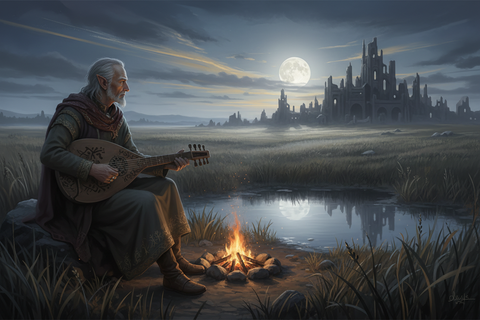
The awakening of the Elves at Cuiviénen marks the true beginning of the long
drama of Arda, because from that moment forward there are free children of
Ilúvatar whose choices matter in the struggle against Melkor and in the later
wars that shape the fate of the world. Before their coming, the Valar and Melkor
contend as great powers with little resistance from within the world itself, but
once the Elves wake there is a new center, for these Children are not under the
direct command of any Vala. In the earliest times the Elves themselves are
mostly concerned with survival, beauty, and their own discoveries, yet as
Melkor’s malice grows and as the Valar intervene, they are drawn into alliances
and conflicts that will reach their fiercest point in the War of the
Jewels. Great figures like Fëanor, Fingolfin, Thingol,
and later Gil-galad stand openly against Morgoth and then against Sauron, and
their bravery, skills, and mistakes all carry heavy consequences for elves and
mortals alike. Thus, the story of Arda is not only about divine beings but about
these Firstborn, whose lives and deeds make the vast themes of Tolkien’s
mythology feel close and personal.
The early divisions among the Elves, from the Eldar and Avari to the Calaquendi
and Moriquendi and then to Vanyar, Noldor, Sindar, Teleri, and others, explain
much of the variety of later cultures in Tolkien’s world, including who has seen
Valinor, who has learned from the Valar, and who has spent ages in Middle-earth
itself. Elves like Galadriel and Elrond carry both the
memory of the Blessed Realm and deep roots in the long wars of Beleriand, while
others, such as Thranduil’s people in Mirkwood, have older ties to the woodland
and lesser contact with the lore of Aman. These differences show in language,
customs, and attitudes toward Men, Dwarves, and the power of the One
Ring, as readers see in The Lord of the Rings when
Legolas, Galadriel, and
Glorfindel all act from somewhat different
perspectives. Some Elves are weary of the world and long to depart, while others
feel fierce loyalty to their homes and are slower to consider sailing West. All
these varied responses grow out of choices made long before, when the summons of
the Valar first rang at Cuiviénen and the hosts began to move.
Because Elves live so long and care so deeply about remembering, their tales and
songs keep the history of the world alive, linking the remote First Age of The
Silmarillion to the Third Age events in The
Hobbit and The Lord of the Rings, so that readers can feel the
weight of what has been lost and of what yet remains. When an Elf in
Rivendell sings of Beren and Lúthien, or when
Aragorn tells that story in the woods of
Breeland, it is not just an old legend but a living memory that
still shapes their sense of love and courage. Names like Gondolin, Númenor, and
Valinor are known to characters such as Elrond and Galadriel not as myths but as
places they or their forebears once walked. The survival of such lore allows the
Free Peoples in the War of the Ring to understand Sauron as the servant of a far
older enemy and to draw wisdom from ancient victories and failures. In this way
Elven memory acts like a long thread running from the first starlight by
Cuiviénen all the way to Frodo’s journey into Mordor.
Over the full span of Tolkien’s legendarium the story of the Elves reveals
themes of choice, exile, beauty, and the painful cost of longing for what has
been lost, starting with their decision to answer or refuse the summons to
Valinor and ending with their gradual departure across the Sea. Many of the
greatest joys in the tales, such as the love of Beren and Lúthien or the
splendor of Gondolin and Tirion, arise from Elven courage and creativity, yet
these very heights make their falls more bitter: the Kinslaying, the Oath of
Fëanor, the ruin of Doriath, and the fading of Elven
realms in the Third Age. Again and again Elves must choose between holding fast
to what they love and accepting change or loss, and often they choose in ways
that bring exile and sorrow as well as splendor. By the time Galadriel and
Elrond help Frodo and his friends, they carry a
burden of centuries of regret and hope, and their willingness to let the world
of Men rise while their own people diminish shows a final, hard-won wisdom. Thus
the coming of the Elves and all that follows from their first awakening give
Tolkien’s world its deep sense of history and its haunting mixture of beauty and
mourning.