
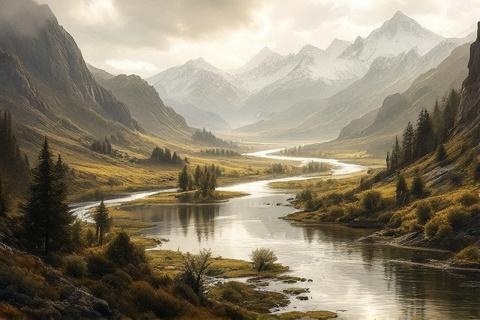
Anduin, the Great River: Lifeblood of Middle‑earth from the Misty Mountains to the Sea
From Isildur’s Doom to the Journey of the Ring – Tracing the Hidden History of the Anduin
Headwaters: Where the Anduin Begins in the Misty Mountains
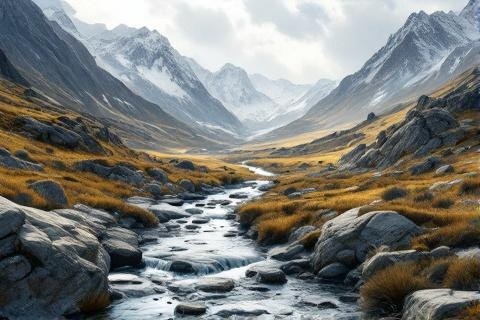
The Anduin, known as the Great River, begins its long journey high in the north
of Middle-earth. Its sources are found on the eastern
slopes of the Misty Mountains, close to where that great range meets the Grey
Mountains. It does not start as one mighty stream, but as a collection of
smaller springs and rivulets. These waters, fed by melting snows and ancient
mountain springs, gather together, gaining strength and volume as they flow down
from the cold, high peaks to form the young river that will one day become the
lifeblood of the lands below.
In its early stages, the Anduin is a wild and fast-flowing river. It tumbles
through narrow channels and steep-sided valleys that it has carved out of the
mountainside over countless ages. The water is cold and clear, racing over beds
of smooth stones and around large boulders. This youthful energy defines the
river's character in the upper reaches, making it a powerful and untamed force
of nature before it descends into the wider vales of Middle-earth and begins its
slower, more majestic course.
The terrain surrounding the river's source is a classic alpine landscape, rugged
and beautiful. Patches of snow can be found even in the summer months on the
high, stony ridges that tower above the river's first channels. In the valleys
and on the lower slopes, upland meadows are covered with hardy grasses and
mountain flowers. This remote and wild environment gives the Anduin its initial
strength, and it is from this lonely place that the river begins its epic
journey south to the Great Sea.
The Long Course: From Mountain Valley to Broad River
From its source in the northern mountains, the Anduin flows south for hundreds
of miles, creating a long, fertile valley that cuts through the heart of
Wilderland. As it travels, it grows steadily wider and more powerful, fed by
numerous tributaries that flow down from the Misty Mountains to the west and
other lands to the east. The melting snows of the mountains add to its volume
each spring, making it a truly great river long before it reaches the lands of
Men in the south.
The valley that the river creates changes dramatically along its course. In the
north, it runs through narrow gorges and is flanked by high hills. Further
south, the landscape opens up, and the Anduin becomes a broad, slow-moving
river. Its banks are often lined with thick woods, such as the great forest of
Mirkwood to the east, or they open onto wide plains where
ancient peoples made their homes. This change in character makes the river a
dynamic and ever-shifting feature of the landscape.
For much of its length, the Anduin serves as a crucial natural highway,
providing a clear path for travel by boat through the often-trackless wilds of
Middle-earth. It also acts as a major boundary. For many ages, it separated the
dark forest of Mirkwood from the lands to the west. Further south, it became the
great eastern border of the kingdom of Gondor, a defensive line
that was vital to the safety and security of the realm.
Lórien and the Silver Shore: The River at the Realm of the Galadhrim
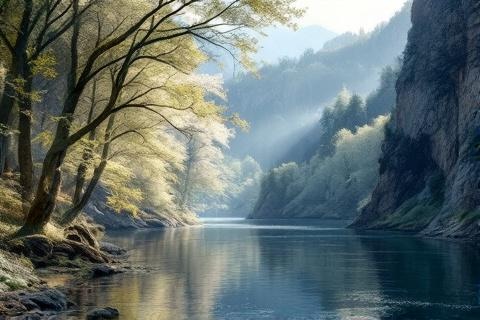
Where the Anduin flows past the golden wood of Lothlórien,
the river takes on a magical and serene quality. The water becomes a clear
mirror, reflecting the tall, golden-leaved mallorn trees that grow along its
western bank. On a clear day, the river's surface seems to shimmer with the
light of Lórien, and the entire scene is one of unmatched beauty and peace. This
stretch of the river is enchanted, protected by the power of the Elves who live
within the wood.
The western bank of the river, which belongs to Lórien, is high and sheltered,
offering a safe landing for those permitted to enter the Golden Wood. In
contrast, the eastern bank is lower and more open. Along the edges of the
forest, quiet shallows and small, sandy beaches meet the water. Here, the great
river seems to touch the enchanted land gently, creating a border that is both
natural and magical, a place where two different worlds meet.
A key feature of this region is the tributary river known as the Silverlode, or
Celebrant in the Elven tongue. This smaller river flows out of Lórien from its
heart and pours its clear, bright waters into the Anduin. The meeting point of
the two rivers is a place of special significance, where the ancient magic of
the forest groves mingles with the powerful current of the Great River as it
continues its journey south.
Gladden Fields: Lowlands of Reed and Memory
Further south from Lórien, the character of the Anduin changes once more as it
reaches the Gladden Fields. This area is a wide expanse
of marshy lowlands, where the main channel of the river slows down and spreads
out. It meanders through a network of smaller streams, reed-beds, and pools of
still water. It was here that the River Gladden flowed down from the Misty
Mountains to join the Anduin, creating this vast wetland over many centuries.
The landscape of the Gladden Fields is very different from the rest of the river
valley. It is a flat, open plain covered in tall grasses, sedges, and bright
yellow irises, which gave the fields their name. The ground is soft and often
flooded, with shallow pools of water reflecting the wide, pale sky. This open,
marshy terrain provides little cover, making it a place of historical
significance for a fateful ambush.
These lowlands mark a distinct transition in the river's journey. Before the
Gladden Fields, the Anduin is bordered mostly by forests and rolling hills.
After passing through the marshes, the river will eventually enter more rugged,
rocky lands as it nears Gondor. The Gladden Fields are a unique environment,
famous in history as the place where Isildur, High King of Gondor, was slain and
the One Ring was lost in the river's murky waters for over
two thousand years.
The Argonath and the Great Pillars of the River

As the Anduin approaches the ancient northern border of Gondor, it passes
between two of the most awe-inspiring structures in Middle-earth: the Argonath.
These are two enormous statues carved in the likeness of the first kings of
Gondor, Isildur and his brother Anárion. They stand on opposite banks of the
river, silent and imposing, representing the power and majesty of the kingdom in
its glory days. Each figure stands with one hand raised in a gesture of warning
to any who would dare to pass into Gondor with hostile intent.
The statues of the Argonath are not built upon the ground but are carved
directly from the living rock of the great river-ledges that form a narrow gorge
at this point. They appear to rise naturally from the cliffs, yet their features
are detailed and full of authority. For centuries, they have endured the wind
and the rain, standing as sleepless guardians at the entrance to the kingdom.
Their placement on these high cliffs ensures that they dominate the river and
are visible from a great distance.
The sense of scale at the Argonath is overwhelming. The river, which is very
wide before this point, is forced to flow through a much narrower channel
between the feet of the two stone kings. For anyone traveling by boat, like the
Fellowship of the Ring, the experience is
humbling. The monumental figures tower far overhead, their weathered stone faces
looking down with stern expressions, reminding all who pass of the ancient power
that once ruled these lands.
Emyn Muil and the Falls of Rauros: Rock and Water
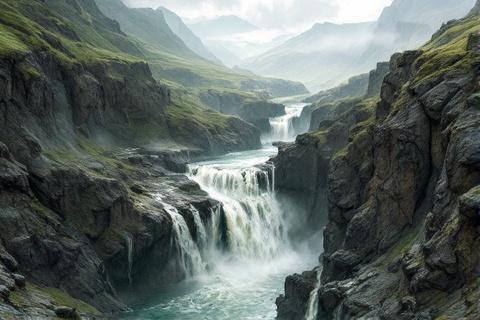
After passing the Argonath, the river flows into a desolate and treacherous
region known as Emyn Muil. These are the hills of dread, a
confusing maze of sharp, bare rock. The hills are broken and jumbled, forming
steep cliffs, deep ravines, and narrow ridges that make travel on foot nearly
impossible. The river itself coils tightly through this harsh landscape, trapped
between the towering, ladder-like walls of stone on either side.
At the southern end of Emyn Muil, the Anduin reaches a dramatic and impassable
obstacle: the Falls of Rauros. Here, the entire volume of the Great River
plunges over a massive cliff face into a deep basin far below. The sound of the
falls is a deafening roar that can be heard for miles, and a great cloud of
spray, like smoke, rises constantly from the churning water. No boat could ever
survive the descent, making the falls a complete barrier to river travel.
The landscape of this region offers a powerful contrast. The barren, grey stone
of Emyn Muil is harsh and lifeless, a place of danger and confusion. In the
middle of it all is the incredible power and life of the river, which carves its
way through the rock before its spectacular plunge at Rauros. Below the falls,
the river immediately broadens and slows, sweeping out into a wide, calm flow as
if its struggle with the hills is finally over.
Lower Anduin: Ithilien, Gondor’s Shores, and the Riverine Borderlands
Once past the Falls of Rauros, the Anduin enters its lower reaches and flows
through the fertile lands that border the kingdom of Gondor. On its western
side, the river passes the green and pleasant fields of Anórien. Further south,
it forms the eastern boundary of the Pelennor Fields,
the cultivated region surrounding the city of Minas
Tirith. The river nourishes these lands, making them rich
and suitable for farming and settlement.
Travelers on the river in this region would see many signs of Gondor's long
history. The banks are dotted with orchards and carefully tended terraces,
evidence of a prosperous and well-ordered society. However, there are also signs
of past conflicts and fading glory, such as the ruins of ancient watch-towers
and, most notably, the great ruined city of Osgiliath, which
straddles the river and stands as a sad reminder of past wars.
As the Anduin approaches its final destination at the Sea, it becomes a truly
immense waterway. The river widens significantly and its current slows, giving
it a broad, placid, and majestic character. It flows past the great port of
Harlond below Minas Tirith and continues its grand, unhurried journey through
the southern fiefdoms of Gondor, gathering its final strength before meeting the
ocean.
The Mouths of the Anduin and the Bay of Belfalas
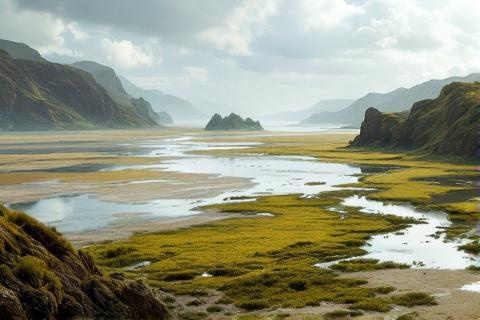
The final stage of the river's journey is the Ethir Anduin, or the Mouths of
Anduin. This is a wide estuary where the freshwater of the river finally meets
the saltwater of the Great Sea. The landscape here is a vast delta of
sand-flats, shifting channels, and tidal marshes teeming with seabirds. The
river loses its single, defined channel and breaks apart into many smaller ones
as it spreads out to embrace the ocean.
In a final, broad sweep, the waters of the Anduin flow out into the Bay of
Belfalas, a great body of water on the southern coast of Middle-earth. Here, the
strong river current finally gives way to the powerful tides of the Sea. This
meeting of river and ocean is a place of immense natural power, where the long
journey from the lonely mountains of the north finally comes to its end in the
endless waters of the world.
The river's exit to the ocean is framed by the distant coastlines and headlands
of Gondor's southern provinces. To the west lies the great fief of Belfalas, and
to the east, the lands of South Gondor. These coastal regions mark the last
territories touched by the Great River's waters before they become one with the
Sea, concluding the Anduin's path as one of the most significant geographical
features of Middle-earth.
Natural Character and Symbolism: Why the Anduin Matters
The Anduin is a river of many moods and forms, reflecting the diverse lands
through which it passes. It begins as a swift, narrow stream in the high
mountains, full of youthful energy. As it travels south, it transforms into a
broad, majestic river flowing through forests, marshes, and fertile plains. In
its final stages, it becomes a slow, wide waterway before spreading into a vast
delta at the sea, showcasing a complete and varied ecosystem along its banks.
Throughout the history of Middle-earth, the Anduin has served as a vital feature
for its peoples. It was a clear border between the wild lands to the east and
the more settled realms to the west. It acted as a great highway for trade,
travel, and the movement of armies. Most importantly, it was a lifeline,
bringing water and fertile soil to regions like Gondor, allowing great
civilizations to flourish along its shores.
More than just a geographical feature, the Anduin holds deep symbolic meaning in
Tolkien's world. It is a constant, moving presence that witnesses the rise and
fall of kingdoms and the great events of history. The river carried the One Ring
to its hiding place for centuries and later bore the Fellowship on a crucial
part of their quest. The Anduin represents the flow of time and destiny itself,
a great, silent character that shapes both the lands and the stories of
Middle-earth.