

The Quest of the Silmaril
The Daring Pursuit of the Unattainable Jewel
A Jewel Born of Light: Origins of the Silmaril
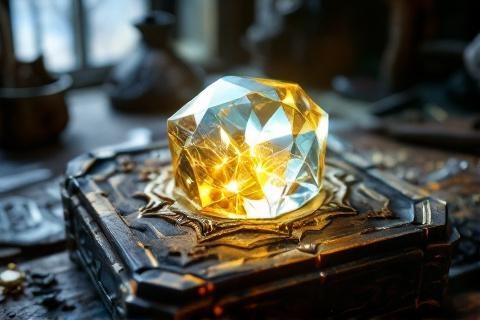
The Silmarils were three unmatched jewels crafted by
Fëanor, the most gifted smith of the
Noldor, in the Blessed Realm of Valinor,
before the world was darkened by Morgoth’s evil. Each gem was perfectly formed
and could not be broken or marred by any craft or power of Elves
or Men, and even the Valar held them in wonder.
Fëanor drew into them the unmarred light of the Two Trees, Telperion and
Laurelin, when their radiance still flowed over Valinor. Because of this, the
Silmarils were not merely ornaments or treasures but living works of art that
contained a fragment of the world’s earliest and holiest light. Their making
marked the height of Noldorin skill and imagination, and set Fëanor apart as
both a genius and a figure of destiny among his people.
The light within the Silmarils did not simply shine like fire or crystal, but
glowed with an inner life that changed with the world around them. They seemed
to hold dawn and starlight together, a mingling of silver and gold that echoed
the Trees themselves, and their radiance pierced all shadow that was not born of
the great marring of the world. In the darkened ages that followed, this light
became more precious because it reminded Elves and Valar of the lost glory of
Valinor before the Two Trees were slain. To mortals and Dwarves
who saw or heard of them, the Silmarils appeared like unattainable wonders that
no craft could copy. In the legendarium, they stand as unique relics of a time
before the Sun and Moon, and their brilliance makes all lesser gems seem dim
beside them.
Because the Silmarils held the last untainted light of the Two Trees, they
quickly gained a sacred place in the hearts of the Elves, especially the Noldor.
Many saw them as symbols of their greatest achievements and of their close
connection to the Blessed Realm and its beauty. Yet this same reverence stirred
up powerful emotions: pride in Fëanor’s craft, envy among those who could not
possess them, and desire in dark hearts that longed to control their power. The
jewels became central to the identity and honor of Fëanor’s house, until the
love of them grew twisted into obsession. As tales spread, other peoples of
Middle-earth came to fear and covet them as well, and the
Silmarils slowly changed from holy treasures into prizes that men and Elves
would fight, betray, and even kill to obtain, shaping the destinies of many
realms in the First Age.
Fëanor: The Maker and His Madness
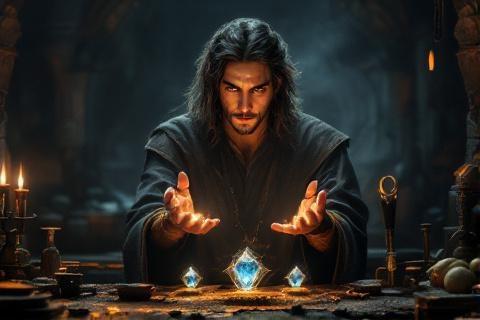
Fëanor, eldest son of Finwë, was recognized even by the
Valar as the most gifted of the Noldor in mind and hand, burning with a fire of
spirit that set him apart from all his kin. He forged new letters, crafted
wondrous works of crystal and metal, and poured his restless energy into
creations none had imagined. Yet his greatness was bound together with a fierce
temper, quick suspicion, and unbending will, so that love and wrath lived very
near each other in his heart. In the crafting of the Silmarils his genius
reached its peak, but this triumph also fed the inner flame of his pride,
turning him from a bold leader into one who would not accept counsel, even from
the Wise. Thus Fëanor stands in Tolkien’s legendarium as both a maker of marvels
and the seed of much ruin, for his nature could not bear limits or rival claims.
Fëanor’s love for the Silmarils went far beyond a craftsman’s satisfaction,
until the jewels became almost like living children to him, and he felt that no
other hand had the right even to touch them. When Melkor began to whisper lies
and stir fear in his mind, Fëanor grew more possessive and suspicious, believing
that others envied his work and might take it away. Even when the Valar wished
to keep the Silmarils safe after dark forebodings arose, Fëanor refused to yield
them, fearing to lose them more than he feared any danger. His words to those
who suggested that the Silmarils be surrendered showed how his heart had closed
around them, so that he put them even above the peace of Valinor. This refusal
deepened the rift between him and the Valar, and it prepared the way for his
later rebellion and all its consequences.
In the wake of the Darkening of Valinor and the slaying of Finwë, Fëanor’s grief
and rage erupted in fiery speeches that bound many hearts to his will. He called
the Noldor to abandon Valinor and to seek freedom and vengeance in Middle-earth,
but the harshest turning came when he and his seven sons swore their terrible
Oath. This Oath named the Silmarils as their rightful property and cursed any
who would keep or withhold them, whether Valar, Elf, or mortal, and even Death
itself was named as a foe to be defied. By calling upon Eru Ilúvatar as witness,
Fëanor made the Oath unbreakable, so that it clung to his line like a dark chain
that pulled them toward ever greater deeds of violence. From that moment, every
later attempt to claim, guard, or rescue a Silmaril would be tangled in the
binding words Fëanor had spoken in wrath.
The Oath of Fëanor demanded that he and his sons pursue the Silmarils endlessly
until they were recovered, no matter who might stand in the way or what promises
might be broken. This vow twisted loyalty into a weapon, for it compelled the
sons of Fëanor to choose the jewels even over kinship, mercy, or reason.
Whenever a Silmaril appeared in later ages, the Oath drove them to harsh demands
and cruel assaults, such as the attacks on Doriath and the
Havens of Sirion. Those who followed or opposed them were swept up in its
shadow, and entire realms fell or were scattered because the Oath allowed no
rest and no compromise. Thus the Oath turned a family’s honor into a curse that
spread suffering across Beleriand and stained nearly every
quest for the holy jewels with blood.
Melkor’s Theft and the First Betrayal
Melkor, the most powerful of the Valar who had turned to evil, grew jealous of
the light and beauty of Valinor and saw in the Silmarils a prize that could not
be matched by any work of his own. He whispered false tales among the Noldor to
stir pride and distrust, casting suspicion on the Valar and setting brother
against brother, especially between Fëanor and
Fingolfin. While he walked among them with feigned
humility, he learned much about their crafts and desires, planting seeds of
rebellion that would later bloom in open defiance. His coveting of the Silmarils
was not only for their light but also for the power they held over hearts, for
by controlling them he hoped to break the will of the Eldar and twist their
greatest beauty to his own dark glory. In this way, Melkor’s secret work of
corruption prepared the ground for the open theft that followed.
After he and Ungoliant destroyed the Two Trees and
plunged Valinor into darkness, Melkor’s next blow was aimed directly at Fëanor’s
heart and at the pride of the Noldor. He broke into Formenos,
the fortress where Fëanor had placed the Silmarils, slew King Finwë, and seized
the jewels from their guarded chamber. Fleeing back to Middle-earth, he set them
into his iron crown, which he never afterward laid aside, and carried them deep
into Angband, his dread fortress in the north. There the pure
light of the Silmarils burned against his own corrupted power, so that the
jewels tormented as well as glorified him, yet he would not release them. Locked
in the iron of Morgoth’s crown, the Silmarils became both trophies of his
victory and chains that bound his will ever more tightly to the defense of
Angband.
The theft of the Silmarils shattered what peace remained in Valinor and drove
Fëanor to a peak of rage and despair unlike any seen before. When he stood
before the Valar and learned that the jewels were gone, he rejected any counsel
of patience or submission, declaring that he would not accept the rule of the
Powers any longer. He named Melkor “Morgoth,” the Black Foe of the World, and
swore in his heart to pursue him to the ends of Arda. Soon after,
Fëanor stirred many of the Noldor to follow him into exile, promising freedom
and vengeance in Middle-earth and the recovery of their stolen treasures. Thus
the theft of the Silmarils not only strengthened Morgoth
but also tore the Noldor away from Valinor, beginning the long and bitter
history of their wars for the lost light.
The Kinslaying at Alqualondë
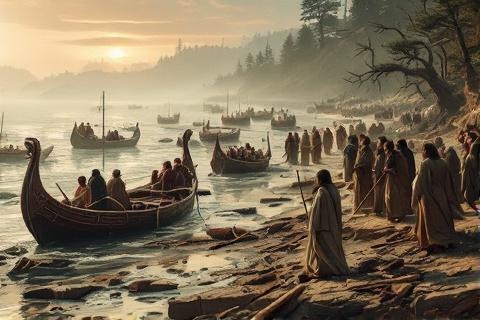
When Fëanor and many of the Noldor resolved to depart from Valinor and seek
Middle-earth, they faced the problem of crossing the Great Sea that lay between
the West and the Hither Lands. The Teleri, masters of the Sea
and keepers of the white swan-ships in the haven of
Alqualondë, had not shared in Fëanor’s rebellion and would
not willingly lend their vessels for this unblessed journey. At first, there
were tense words and pleas, with some among the Teleri pitying the Noldor’s
grief yet still refusing to betray the will of the Valar. As the impatience and
anger of Fëanor’s followers rose, they began to see the ships not as another
people’s cherished works but as tools they had a right to seize for their
desperate cause. This clash of desires turned a conflict of wills into a deadly
struggle beside the lamplit quays of the Haven of the Swans.
The moment of breaking came when Fëanor and his most fervent supporters moved to
take the swan-ships by force, and the Teleri resisted with whatever means they
had, including ropes and oars and their own bodies. In the narrow harbor and
along the piers, Elf fought Elf among the shining hulls, and the sea ran red
with kindred blood. Though some Noldor hesitated, the passion of Fëanor’s
rhetoric and the push of the crowd carried the battle forward until many of the
Teleri were slain, and the white ships were captured. This act, afterwards known
as the First Kinslaying, was especially grave because it took place in the
Blessed Realm, where no such violence had been known among the Eldar. The stolen
vessels then bore Fëanor’s host away from the scene of their crime, but the
memory of that night could not be left behind on the shore.
The slaughter at Alqualondë cast a dark shadow over the Noldor’s uprising and
stained their claim to justice in the eyes of the Valar and many of their own
people. Not long after the battle, the Doom of Mandos was spoken, foretelling
sorrow and loss for the exiles and naming the Kinslaying as one of the chief
reasons for their coming grief. Even those who had been swept unwillingly into
the fighting now carried a burden of guilt and doubt that followed them into the
hard lands of Middle-earth. The cause of avenging Finwë and recovering the
Silmarils was now bound to a secret shame, and the Noldor could no longer see
themselves as innocent champions against Morgoth. In later ages, whenever a son
of Fëanor raised the Oath to demand a Silmaril, the memory of that first
bloodshed on the quays of Alqualondë lurked behind it, reminding readers that
the quest for the jewels had been stained from the beginning.
Exile and the Hard Crossing of Helcaraxë
After the Noldor departed from Valinor under the weight of shame and Mandos’
prophecy, they still had to face the physical barrier of the Grinding Ice if
they wished to reach Middle-earth without ships. Those who were left behind when
Fëanor sailed away with the captured vessels, including Fingolfin and his
people, chose to cross the Helcaraxë in desperate determination rather than turn
back to the Valar. The Helcaraxë was a bitter strait of broken ice, with
shifting floes, sharp ridges, and dark cold waters between Aman and the northern
shores of Beleriand. There, no stars gave comfort, and the howling wind and
creaking ice made the journey feel like a slow battle against a hostile world.
This march turned what had begun as a proud rebellion into a long and humbling
struggle simply to survive.
On the Helcaraxë, countless unnamed Elves perished from cold, hunger, and the
treachery of moving ice that cracked underfoot and swallowed whole groups
without warning. Mothers lost children, and strong warriors fell with no foe
before them except frost and storm, while the shifting bridges of ice sometimes
carried survivors far off their path. The exiles abandoned many of their
belongings and even some of their dead, knowing they could not halt or they
would all fail, and so they pressed forward burdened with grief as well as
fatigue. The Sun had not yet risen, so the dim light of the stars gave only a
hard glimmer to the endless whiteness. By the time they stepped onto the shores
of Middle-earth, their numbers and strength were reduced, and their leaders had
seen suffering that no speech in Tirion had ever imagined.
This harsh crossing deepened both the resolve and the sorrow of the Noldor who
survived, and it weighed heavily on their memories whenever they thought of the
Silmarils that had drawn them into exile. Having endured such pain and loss,
many felt they could not turn back or question the path, for it seemed to
dishonor the dead if the quest were abandoned. At the same time, the Doom of
Mandos and the blood spilt at Alqualondë lay on their consciences, so that each
step toward Angband was also a step further into a fate they could no longer
escape. Leaders like Fingolfin walked with mingled pride and regret, knowing
that their people now bore scars that no victory could fully heal. In this way,
the Helcaraxë forged the Noldor into a harder people, but it also made their
pursuit of the Silmarils an even more tragic and costly endeavor.
Wars and the Fall of Doriath
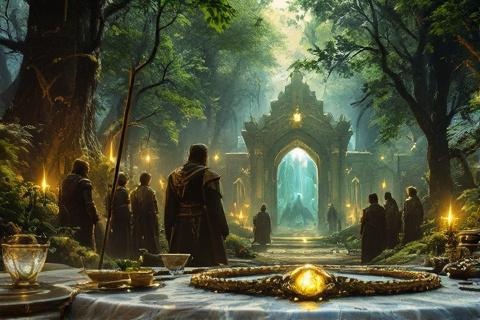
Once the Noldor reached Beleriand, they found that Morgoth had already
entrenched himself in the northern fortress of Angband, guarded by mountains and
filled with countless Orcs, Balrogs, and other creatures of dread. From there he
sent out armies to harry the new realms of the Elves, and the wars that followed
shaped the entire map of the First Age. The Noldor established strongholds such
as Gondolin, Nargothrond, and Himring,
and at first they achieved some measure of victory, hemming Morgoth in behind
the leaguer of the Siege of Angband. Yet the goal
behind many of these struggles was not only to defend free lands but also to win
a path to Angband and perhaps reach the Silmarils locked in Morgoth’s crown.
Each battle and alliance, even those simply for survival, remained linked in
thought and song to the far-off jewels whose recovery Fëanor had declared as the
central purpose of their rebellion.
In the southern woods of Beleriand lay Doriath, the kingdom of Thingol and
Melian, which was girdled by a mystic barrier that barred
enemies and protected its beauty and people. For many years Doriath stood apart
from the direct wars over the Silmarils, though Thingol was kin to many who
fought in the north. This changed after Beren and Lúthien’s
quest, when the Silmaril they had won from Morgoth’s crown came at last into
Doriath. The jewel’s presence in the Thousand Caves turned the hidden realm into
a focal point of desire and dispute, drawing the hatred of the Dwarves of Nogrod
and the attention of the sons of Fëanor. Doriath, once a safe refuge, became an
arena of betrayal and assault because of that single shining gem, and its doom
is a stark example of how the Silmarils brought tragedy even into the most
guarded sanctuaries.
Throughout the First Age, great battles with resonant names marked the rise and
fall of hope among the Eldar and Edain, and nearly all of them
were driven in part by the long struggle against Morgoth for mastery of the
North. The Dagor Bragollach, the Battle of Sudden
Flame, broke the long Siege of Angband when Morgoth spewed fire and sent vast
hosts forth, shattering the defenses the Noldor had built over centuries. Later,
the Nirnaeth Arnoediad, the Battle of Unnumbered Tears, destroyed the last great
hope of a united assault on Angband, as treachery and overwhelming force crushed
the Elf-Man alliance. These wars ruined kingdoms, killed many of the greatest
heroes, and left the lands scarred and depopulated. Even when leaders spoke only
of driving back Morgoth, the memory of the Silmarils under his crown lay behind
their hatred and fueled their determination, so that the quest for the jewels
blurred into the broader war that devastated Beleriand.
Beren and Lúthien: Love, Courage, and a Stolen Light
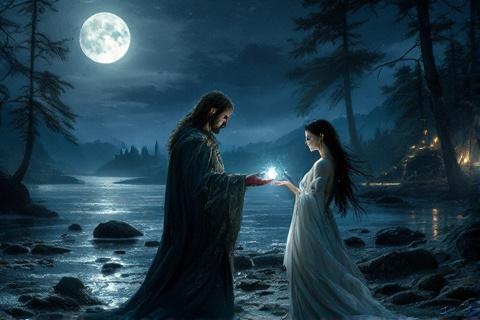
Among all the tales of the First Age, the story of Beren son of Barahir and
Lúthien Tinúviel stands out as the clearest and
most daring quest directly aimed at the Silmarils themselves. Beren was a mortal
Man, outlawed and hunted, who came as a weary wanderer into Doriath and dared to
love Lúthien, daughter of Thingol and Melian, the fairest of all the Children of
Ilúvatar. When Thingol sought an impossible bride-price to separate them, he
named as Beren’s task the cutting of a Silmaril from Morgoth’s iron crown,
expecting that no man could attempt such a deed and return. Instead, Beren
accepted the challenge, and Lúthien chose of her own will to follow him, leaving
behind the safety of her father’s halls. Thus a love that crossed the boundaries
between Elf and Man became bound to the highest and most perilous aim in the
world.
Their journey to Angband wove together stealth, song, and spiritual power in
ways rarely seen elsewhere in Tolkien’s legendarium. Lúthien used the arts she
had learned from her Maia mother to weave spells of sleep and enchantment, and
with the great Hound Huan they dared to pass the terrors of Morgoth’s realm.
Disguised and aided by Lúthien’s night-cloak, they approached the Dark Throne
itself, and Lúthien sang before Morgoth, casting him into a dream so deep that
Beren could go to the very edge of danger and draw his knife against the crown.
In this story, courage is not shown only in battle but in endurance, steadfast
love, and the trust that each put in the other, and their success marks a
turning point where even Morgoth’s might was pierced by the will of two small
figures in his vast hall.
Beren did indeed cut a Silmaril from Morgoth’s crown, and for a brief moment the
impossible was achieved: the holy jewel left Angband in the hands of a mortal.
Yet the cost of this success was immense, for in their flight they were attacked
by Carcharoth, the great Wolf of Angband, who bit off Beren’s hand that held the
Silmaril, and the burning jewel drove the beast into a mad rampage. Beren was
later mortally wounded in the hunt for Carcharoth, and though he and Lúthien
were granted a strange and brief return from death, the jewel’s path through the
world had become terribly complicated. It passed from wolf to hand, from the
wild to the courts of Doriath, and everywhere it went, it brought both wonder
and grief. In this way, their success did not end the story of the Silmaril but
instead pulled new realms and peoples into its perilous orbit.
The story of Beren and Lúthien reveals that the power of love, song, and
self-giving sacrifice can challenge even the greatest darkness, yet it also
shows that no one can hold the Silmaril without bearing a burden. Beren risked
his life, and Lúthien gave up her immortality, so that their bond might endure
beyond the circles of the world, and this gift is set side by side with the
prize they won from Morgoth. The Silmaril shines as both a symbol of their
victory and a cause of further tragedy, drawing the covetous eyes of Dwarves and
the fierce claims of the sons of Fëanor. Thus the tale stands as a microcosm of
the whole history of the Silmarils, where light and loss are always intertwined,
and it reminds readers that even the brightest treasure carries danger when so
many others have sworn oaths over it or dreamed of owning it.
The Silmaril’s Journey: From Doriath to the Sea
The Silmaril that Beren and Lúthien wrested from Morgoth did not rest peacefully
once it came to Doriath, but instead moved through many hands and forms, each
change bringing new trouble. Thingol, amazed by the jewel’s beauty and the proof
of Beren’s deed, desired to set it in a work that matched its splendor, and he
chose the Nauglamír, a famed necklace made by the Dwarves of old. By having the
Silmaril bound into this ancient treasure, he united two great works of craft,
one Elvish in origin and one Dwarvish, but he also created an object of almost
unmatched allure. The Nauglamír with the Silmaril upon it became a visible
crown-jewel of Doriath’s glory, yet its presence in the halls of Menegroth drew
the hidden greed and resentment of others, and made it a focus of future
quarrels rather than a simple heirloom.
When Thingol called upon the Dwarves of Nogrod to set the Silmaril into the
Nauglamír, they were at first amazed and obedient, yet as they worked their
thoughts turned toward the value of what they were shaping. Some among them
began to think that the necklace with the jewel rightly belonged to the Dwarves,
since their forefathers had made the Nauglamír and they themselves had now
labored to complete it. Disputes over payment and ownership led to harsh words,
and in their anger the Dwarves of Nogrod slew Thingol in his own halls, then
seized the necklace and fled. This treacherous act provoked pursuit and a bloody
conflict between the Elves of Doriath and the Dwarves, and the Nauglamír passed
back and forth through theft and battle, leaving corpses and bitterness in its
wake. The road of that single Silmaril through the Dwarven cities and the
ravaged lands shows how beauty can be twisted into a cause of murder when pride
and greed are stirred.
As the Nauglamír with the Silmaril continued its journey, it played a part in
the final dissolution of Doriath and later in the lives of Elwing and
Eärendil, drawing attacks from the sons of
Fëanor who still pursued their father’s Oath. Each new claim to the jewel seemed
to cut another bond between peoples, as alliances frayed and old friendships
failed under the strain of competing rights and memories. Those who believed
they had just cause to hold the Silmaril often found themselves assailed by
others who held vows or ancient grudges, and the more the necklace changed
hands, the more it spread mistrust across Beleriand. By the time it reached the
Havens of Sirion and then the brow of Eärendil, the trail of sorrow behind it
included not only the death of Thingol but also the ruin of Elven kingdoms and
the scattering of their folk. Thus the history of this single Silmaril
demonstrates how a holy object, once set in a world already hurt by pride and
fear, can splinter alliances and bring down entire realms.
Túrin, Fate, and the Shadow of the Jewel
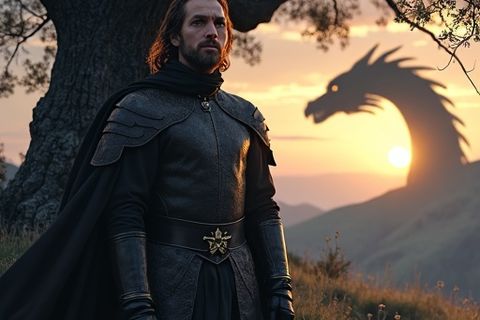
Túrin Turambar’s story, told at length in The Children of
Húrin, takes place within the same shattered landscape
created by the wars over the Silmarils, even though he himself never seeks or
touches one of the jewels. He grows up as a child of the House of Hador under
the shadow of Morgoth’s curse, after his father Húrin is captured at the
Nirnaeth Arnoediad and forced to watch the ruin of his kin. The lands Túrin
wanders through, from Dor-lómin to Doriath and Nargothrond,
are all marked by the weakening power of the Elves and the growing boldness of
Morgoth’s servants, conditions that arose from the long, fruitless struggle to
break Angband and perhaps regain the Silmarils. The Doom of Mandos lies on the
Noldor, and Morgoth’s malice is turned with special force against those Men who
stood beside them in battle. Túrin’s tragedy is therefore not isolated but
rather another branch on the great dark tree that grew from Fëanor’s Oath and
Morgoth’s theft.
In Túrin’s life, readers see how the curse and decay that spread from those
larger conflicts reach into individual fates and twist them into sorrow. The
proud realms that might have sheltered or guided him are weakened or falling,
and he often steps into places already wounded by earlier wars, such as
Nargothrond before its fall. Pride, rashness, and secrecy drive many of Túrin’s
choices, echoing the same faults that led the Noldor into rebellion and
Kinslaying, and Morgoth is able to turn these traits against him in cruel ways.
His friendships, like that with Beleg, are broken by misunderstanding, and even
his great deeds, such as the slaying of Glaurung, serve
only to reveal deeper layers of doom. The long reach of the Silmarils’ history
thus appears in Túrin’s life not as a shining light but as a background of
despair and broken trust that makes his personal curse more destructive.
Túrin’s story acts as a warning within the larger legendarium that great gifts
of courage and skill can be wasted or corrupted when the world around them is
already poisoned by older sins and unhealed grief. He is brave, strong, and
often noble in intention, but he refuses counsel, hides his name, and reacts
with anger when challenged, repeating on a smaller scale the same patterns that
drove Fëanor and his sons. Because the world he moves in is still shaped by wars
over the Silmarils, there are few safe havens and little wisdom left unshadowed,
so each of his missteps leads to heavier consequences. The curse on his house,
laid by Morgoth after Húrin’s defiance, interweaves with the larger Doom of
Mandos and the general ruin of Beleriand, until no single act of Túrin can
escape that web of fate. By the time his tale ends in self-destruction and
lament, readers can sense how the distant fire of the Silmarils has cast a long
and twisting shadow over even those who never sought their light.
Eärendil and the Ending: A Star, Two Thieves, and Final Loss
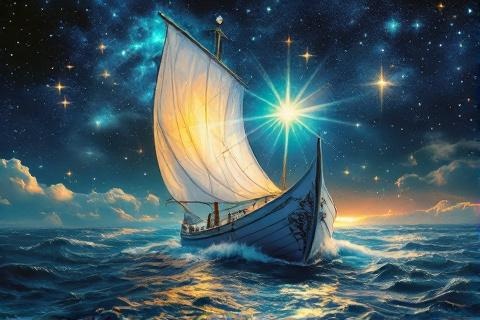
In the later years of the First Age, Eärendil son of Tuor and Idril arose as a
figure who would bring the long conflict over the Silmarils to a turning point,
not by war but by a daring voyage. He was descended from both Elves and Men and
married Elwing, who bore with her the Silmaril rescued from the ruin of Doriath
and the Havens of Sirion. When the sons of Fëanor attacked the Havens to reclaim
the jewel, Elwing cast herself into the sea rather than surrender it, and Ulmo
bore her, transformed, to Eärendil’s ship Vingilot. With the Silmaril bound upon
his brow, Eärendil sailed out of the world’s familiar seas and at last reached
the shores of Aman, daring to break the Ban so that he might plead for mercy on
behalf of Elves and Men alike. His coming before the Valar with the radiant
jewel became the final appeal that led to the War of
Wrath and the overthrow of Morgoth’s tyranny.
After Morgoth’s defeat in the War of Wrath, the Valar judged that the Silmarils
could no longer be given into the hands of the Eldar or Edain, especially to any
who had taken part in the bloodshed and betrayals surrounding them. The jewels
were now bound up with oaths, curses, and grievous sins committed by many of the
claimants, and their possession seemed always to lead to strife. Even so, the
sons of Fëanor still demanded the jewels as their right under the Oath, and in a
last tragic episode they stole two of them from the hosts of the Valar. The
attempt to hold those Silmarils revealed again how the holy light burned against
unworthy hands, for the pain and torment that followed showed that those who had
pursued the jewels through evil acts could find no peace in owning them. The
final fates of the Silmarils therefore became a kind of judgment on all the long
history of pride and bloodshed they had inspired.
Maedhros and Maglor, the last surviving sons of Fëanor, could not escape the
binding words of their father’s Oath, even when they saw how much ruin it had
brought upon the world and their own house. After stealing the remaining two
Silmarils, they found that the jewels scorched their flesh, for their hands had
been stained by Kinslaying and oath-driven crimes. Maedhros, maddened by pain
and despair, cast himself and his Silmaril into a fiery chasm in the earth, so
that one jewel was lost in the deep places of the world. Maglor, in similar
agony, threw his Silmaril into the sea and then wandered the shores in unending
sorrow, singing laments for all that had been lost. Through their end, Tolkien
shows that no vow against the will of Ilúvatar can be fulfilled without
destruction, and that clinging to a wrongful oath leads only to self-destruction
and endless regret.
The third Silmaril, the one borne by Eärendil, did not return to Middle-earth
but was set by the Valar upon his brow as he sailed the heavens in Vingilot,
becoming a star of hope to those below. In the skies it shines as a bright and
steadfast light, known later in Middle-earth as the evening and morning star
that guides mariners on the seas and offers comfort to the weary. Thus, while
two Silmarils vanished into the earth and sea, their light hidden from the
living, one remained as a visible sign that the holy light of the Two Trees had
not been entirely quenched. The mariner Eärendil became a symbol of intercession
and mercy, a bridge between Elves, Men, and the Valar, and his star appeared
again in the greater tales of later ages, such as in the gift of the Phial of
Galadriel to Frodo.
Through this enduring star, the legend of the Silmarils reaches beyond the First
Age into the memory and faith of later peoples.
The end of the Silmarils’ story combines a clear moral reckoning with a tender,
bittersweet note of preservation, showing both the cost of pride and the
endurance of grace. Those who pursued the jewels out of possessiveness,
vengeance, or blind loyalty to a corrupt oath found only torment and loss, and
none of the three great houses that touched them kept the jewels in the end. Yet
the light itself was not destroyed, for Eärendil’s Silmaril continues to shine
as a guiding star, reminding the peoples of Middle-earth of a beauty that came
before their sorrows and still watches over them. Tolkien presents this outcome
as both a warning and a comfort: the world cannot keep what it desecrates, but
some fragment of unfallen light remains to inspire repentance, courage, and
hope. The quest of the Silmarils thus ends not in pure despair but in a complex
harmony of judgment and mercy, fitting the mythic tone of The
Silmarillion.
Legacy: Why the Quest of the Silmaril Matters

Across the First Age, the Silmarils acted as central pivots of history, drawing
Elves, Men, and Dwarves into wars, oaths, alliances, and betrayals that reshaped
the map of Beleriand and the memories of all peoples. The exile of the Noldor,
the Kinslayings, the great battles against Morgoth, the ruin of kingdoms like
Doriath and Nargothrond, and the rise of mixed Elf-Man lineages such as
Eärendil’s all trace some part of their origin back to these three jewels. Men
who had never seen a Silmaril still fought and died under banners raised because
of them, as did Dwarves whose ancient grudges were sharpened by disputes over
the Nauglamír. Even the Valar’s decisions about intervention in Middle-earth
were influenced by the presence or absence of the Silmarils, especially when
Eärendil came before them bearing one. In this way, the jewels are not mere
background objects but engines of story, driving exile, heroism, and downfall
wherever their light appears.
The Silmarils embody several of the most important themes in Tolkien’s work,
especially the danger of clinging too tightly to beauty and the heavy price of
pride. Fëanor’s unwillingness to let the Valar guard the jewels, and his later
Oath, show how a good love for a created thing can twist into possessiveness and
rebellion. The desire of others to hold or control the Silmarils turns them into
tests of character: some, like Beren and Lúthien, treat them as means to a
greater good, while others, like Thingol and the sons of Fëanor, see them as
marks of status or claims of right. The conflicts that follow reveal how one
object of desire can spread unrest through entire cultures, as rumors, envy, and
fear push leaders toward brutal decisions. Tolkien uses the Silmarils to ask
what happens when something impossibly beautiful enters a flawed world and
becomes a measure of hearts already inclined toward either humility or
self-exaltation.
By following the Silmarils from their forging to their fates, Tolkien explores
deep questions of sacrifice, love, doom, and the tension between free will and
prophecy in his imagined history. Characters such as Fëanor, Beren, Lúthien,
Túrin, and Eärendil all stand at crossroads where their choices matter greatly,
yet they also move within larger patterns like the Doom of Mandos and Morgoth’s
long malice. The Silmarils become points where these patterns intersect: some
choose to give up life, home, or even immortality because of them, while others
choose to kill or to break sacred bonds. Through these stories, readers see that
even grave sins do not erase the possibility of courage and mercy, though the
consequences of wrongdoing cannot be simply undone. The legend of the Silmarils
thus becomes a rich vehicle for exploring how hope can persist and even grow in
a world marked by ancient guilt and unavoidable loss.
Even when the Silmarils themselves are lost to earth, sea, and sky, their
influence lingers in memory, tradition, and visible signs like the Star of
Eärendil, which continues to shine in later ages. Elves and Men remember the
light of the Two Trees through stories of the jewels, and their songs carry
forward warnings about pride as well as praises of sacrifice and steadfast love.
Mariners in the Second and Third Ages still look to Eärendil’s star for
guidance, often without fully knowing the long and sorrowful path by which that
light came to the heavens. The Phial of Galadriel given to Frodo, filled with
the light of Eärendil’s star, shows that the Silmarils’ radiance can still
strengthen the weak against present darkness. Thus, although the physical quest
for the Silmarils ended long before the War of the Ring, the echo of that daring
pursuit and its hard-won lessons continues to shape the hopes and imaginations
of Middle-earth’s later peoples.