
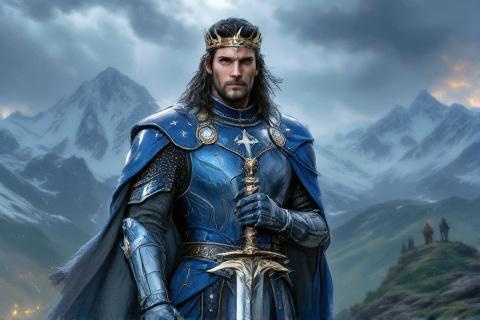
Fingolfin
The Valiant High King of the Noldor
Origins and Early Life
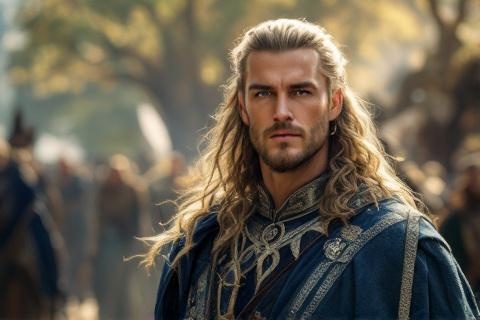
Fingolfin was born in the blessed realm of Valinor as the
second son of Finwë, the High King of the
Noldor, and his second wife Indis of the Vanyar.
His mixed heritage would later prove significant, as he inherited noble
qualities from both kindreds of the Eldar.
During the Years of the Trees, when Valinor was
illuminated by the light of Telperion and Laurelin, Fingolfin grew into an
exceptional figure among the Eldar. He demonstrated remarkable physical prowess
and keen intellect from an early age, earning the respect of many in the courts
of Tirion.
The relationship between Fingolfin and his older half-brother
Fëanor was complex and troubled throughout their lives.
While Fingolfin repeatedly demonstrated his loyalty and respect toward Fëanor as
the eldest son, Fëanor harbored deep resentment toward his father's second
family, viewing them as usurpers of his mother's place.
Physical Appearance and Character
Among the already tall and noble Noldor, Fingolfin stood out as an imposing
figure of exceptional height and strength. His commanding presence made him
instantly recognizable as a leader of his people, and his physical capabilities
would later prove crucial in his legendary deeds.
Fingolfin possessed the classical features of the Noldorin nobility, with
piercing bright grey eyes that seemed to reflect the light of the Two Trees and
dark hair that was characteristic of his father's people. These features marked
him unmistakably as a prince of the Noldor.
His unique heritage as the son of both Noldorin and Vanyarin parents blessed him
with remarkable qualities from both kindreds. From the Noldor, he inherited
their strength, craft, and determination, while from the Vanyar came their
fairness, wisdom, and devotion to the Valar.
What truly set Fingolfin apart was his remarkable character, combining wisdom
with valor in equal measure. His patience and judgment were legendary among the
Eldar, yet these qualities were matched by his courage and determination, making
him both a wise counselor and a fearsome warrior.
Titles and Leadership
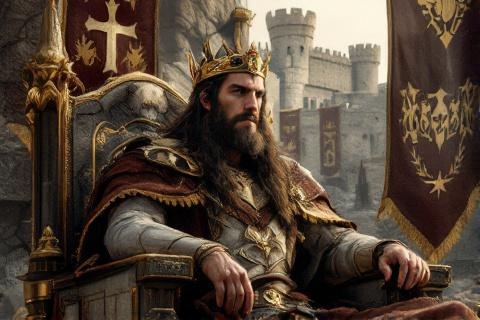
In Valinor, Fingolfin served as High Prince of the Noldor, earning respect for
his fair judgments and leadership abilities. His position in the court of Tirion
was one of great responsibility, and he carried out his duties with unwavering
dedication to his people's welfare.
Following the tragic death of Fëanor in Middle-earth, the
crown of the Noldor passed to Fingolfin as the eldest surviving prince of the
royal house. His ascension marked the beginning of a new era for the Noldor in
exile, as he provided stable leadership during their darkest hours.
Fingolfin established his seat of power at the fortress of Barad Eithel, which
he built at the eastern foot of the Ered Wethrin. This stronghold guarded the
Pass of Sirion and served as a vigilant watchtower against the threats from
Angband in the north.
The Great Journey and Exile
Despite his initial reluctance and wisdom that counseled against it, Fingolfin
chose to follow Fëanor and the Noldor into exile from Valinor. This decision
came after Fëanor's inflammatory speeches and the Oath that would doom their
people, though Fingolfin's motivation was primarily to not abandon his people to
an uncertain fate.
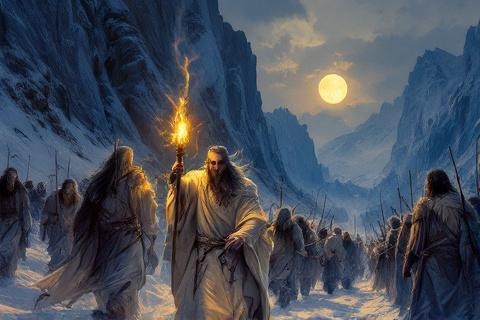
When Fëanor betrayed Fingolfin and his followers by burning the ships at Losgar,
Fingolfin led his people across the treacherous Helcaraxë, the Grinding Ice that
connected Aman to Middle-earth. This perilous journey claimed many lives but
demonstrated the unwavering courage and determination of Fingolfin and his
followers.
The host of Fingolfin finally arrived in Middle-earth with the first rising of
the Moon, marking a new beginning for their people. Their arrival was heralded
by the sounds of their trumpets, and their coming struck fear into the forces of
Morgoth, who had thought the Noldor destroyed in the
crossing.
Realm and Alliances
Upon settling in Middle-earth, Fingolfin established his kingdom in the region
of Hithlum, transforming it into a powerful stronghold against
Morgoth's forces. He fortified the borders and created a network of defenses
that would prove crucial in the long years of war that followed.
Fingolfin proved to be a skilled diplomat, forging strong alliances with the
Sindar of Beleriand and the newly arrived
Houses of Men. These partnerships strengthened the resistance against Morgoth
and helped establish a period of relative peace and prosperity in Beleriand.
Under Fingolfin's leadership, the Noldor maintained the Siege of
Angband for nearly four centuries, containing
Morgoth's forces within their fortress. This period, known as the Long Peace,
allowed the Noldor and their allies to strengthen their realms and develop their
cultures in relative security.
Together with his nephew Maedhros, Fingolfin worked to create the Union of
Maedhros, a great alliance that sought to finally defeat Morgoth. This coalition
represented the greatest combined military force of Elves and Men ever assembled
in the First Age, though it would ultimately face tragic consequences.
The Dagor Bragollach
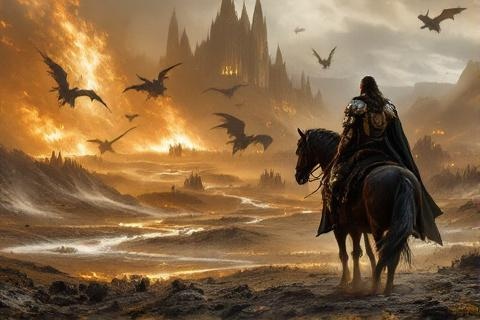
The relative peace of Fingolfin's realm was shattered when Morgoth launched his
surprise attack in the Battle of Sudden Flame, or
Dagor Bragollach. Rivers of fire poured forth from Angband, devastating the
forces of the Noldor and their allies in the north.
The breaking of the Siege of Angband marked a devastating turning point in the
war against Morgoth. The carefully maintained defenses that had contained the
Dark Lord's forces for centuries were suddenly overcome, leading to widespread
destruction and death.
Fingolfin watched in anguish as many of his strongest allies fell or retreated
before Morgoth's onslaught. The defeat of the Noldor's forces and the death of
many noble lords filled him with both grief and a terrible resolve that would
lead to his final, legendary act.
Final Challenge and Sacrifice
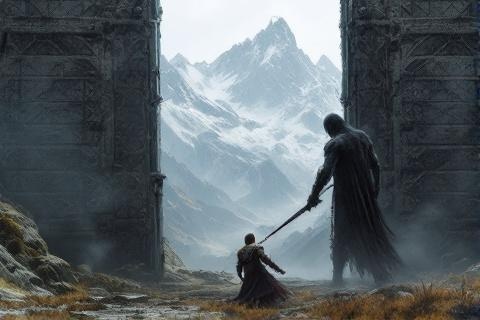
In what would become one of the most renowned acts in the history of
Arda, Fingolfin rode alone across the dusty plain of Anfauglith
to challenge Morgoth to single combat. His stallion Rochallor bore him swiftly
to the gates of Angband, where he sounded his challenge with such force that
Morgoth could not ignore it without losing face before his servants.
During the epic duel, Fingolfin wielded his sword Ringil with incredible skill,
managing to wound Morgoth seven times despite the Dark Lord's enormous size and
power. The light of Valinor that still lived in his eyes struck fear into
Morgoth, causing the Dark Lord to forever walk with a limp from his wounds.
Though Fingolfin ultimately fell beneath Morgoth's great hammer Grond, his last
defiant act was to stab through his enemy's foot, causing Morgoth eternal pain
and marking him with a permanent injury that would never heal.
Legacy and Impact
Fingolfin's final battle stands as the most courageous act ever performed by any
of the Children of Ilúvatar. His challenge to Morgoth represented not just
personal valor but the defiance of all free peoples against tyranny and evil,
becoming a symbol of resistance that would inspire generations to come.
The tale of Fingolfin's courage spread throughout all the lands of Middle-earth,
inspiring both Elves and Men with its example of ultimate sacrifice and bravery.
His deed became a standard against which all later acts of valor were measured,
and none were found to equal it.
The legacy of Fingolfin lived on through his children, particularly his son
Fingon the Valiant and his daughter Aredhel, who continued to lead the Noldor in
their struggle against darkness. His bloodline would produce some of the most
important figures in the history of Middle-earth.
The songs of Fingolfin's final battle were sung throughout all the ages of
Middle-earth, preserved in both Elvish and human lore. These tales spoke not
only of his physical prowess but also of his indomitable spirit, which refused
to submit to despair even in the darkest hour.