

Welcome to Bree: The Crossroads of Middle-earth
Unveiling the Mysteries and Charm of Tolkien’s Most Iconic Village
A Meeting Place of Peoples
Bree was a very old village, founded by Men long ago in the history
of Middle-earth. It was located in the region of Eriador,
just east of the Brandywine Bridge that marked the border of the
Shire. The village was nestled on the western slope of a large
hill, also called Bree-hill, and stood near the edge of the quiet and mysterious
Old Forest. Its origins stretched back to the Second
Age, making it one of the most ancient settlements of Men
still inhabited west of the Misty Mountains. This long history gave the village
a feeling of stability and tradition, as if it had always been there and always
would be.
The village of Bree was the largest and most important part of a small,
populated area called Bree-land. This region was a little patch of civilization
in the middle of the empty lands around it. Besides Bree itself, Bree-land
included three other villages that felt like extensions of the main town.
Staddle was located on the southeastern side of the hill and was mostly home to
Hobbits who farmed the land. Combe was set in a deep valley to
the east, inhabited mainly by Men, as was Archet, which was hidden away in the
nearby Chetwood. Together, these four villages formed a tight-knit community,
looking to Bree as their center.
One of the most remarkable things about Bree-land was that it was the only place
in Middle-earth where Men and Hobbits lived together in the same community. For
centuries, the Big Folk and the Little Folk had shared the same land, living as
peaceful neighbors. This arrangement was completely unique, as Hobbits usually
kept to their own lands in the Shire, and Men had their own towns far away. The
easy-going friendship between the two peoples in Bree was a rare example of
different cultures living side-by-side without conflict, a small sign of harmony
in a wider world often troubled by distrust.
Within Bree-land, the Men and Hobbits each had their own ways of life but
managed to live as one community. Hobbits, who mostly lived in Staddle or on the
outskirts of Bree, tended to be farmers and gardeners. The Men of Bree were
often crafters, traders, or keepers of inns and shops. Despite these different
roles, they met and mingled every day. They shared the same inn, The Prancing
Pony, traded goods in the market, and gossiped about the same local news. This
daily interaction created a shared identity, and they all considered themselves
Bree-landers first and foremost.
The unique blend of Men and Hobbits living together made Bree a truly special
place in Middle-earth. It was not quite like the Shire, with its exclusive focus
on Hobbit life, nor was it like the scattered towns of Men in other regions.
Bree was a bridge between these two worlds, a place where different customs met
and mixed. This cultural blend, combined with its location at a major
crossroads, gave the village a character all its own, making it a memorable and
important stop for some of the most famous travelers in the history of the
Third Age.
At the Crossroads of the World

Bree's importance came from its strategic location at the meeting point of two
of the most significant roads in the north of Middle-earth. The village was
built directly at the intersection of the Great East Road and the Greenway. This
crossing of paths made Bree a natural resting place for anyone journeying across
the wild lands of Eriador. For travelers who had been on the road for days or
weeks, the sight of Bree's smoking chimneys was a welcome promise of safety, a
warm meal, and a soft bed.
The Great East Road was the main artery of travel across the northern lands.
This ancient road stretched all the way from the Grey Havens on the western
coasts to the distant lands beyond the Misty Mountains, where places like the
Lonely Mountain lay. It was heavily used by Dwarves traveling
between their homes in the Blue Mountains and their kinsfolk in the east.
Merchants, messengers, and adventurers of all stripes also used this road, and
their journeys almost always led them through the gates of Bree, making the
village a constant hub of activity.
The other road, the Greenway, had once been a great royal road known as the
North-South Road. It was built in a much earlier time to connect the great
northern kingdom of Arnor with its southern counterpart,
Gondor. By the end of the Third Age, the northern kingdom was
long gone, and the road was mostly deserted and overgrown with grass, which is
why it was called the Greenway. Even so, it was still used by a few hardy
travelers, especially the Rangers of the North, who patrolled the forgotten
lands.
Because it stood at this vital crossroads, Bree saw a constant stream of
visitors from all over Middle-earth. Dwarves were a common sight, often
traveling in groups on their way to or from their mountain homes. The mysterious
Rangers of the North, cloaked and grim-faced, would also appear from the
wilderness from time to time, seeking rest or news. The constant flow of
different people meant that the villagers of Bree were more accustomed to seeing
strangers than the Hobbits of the Shire, even if they were still a bit
suspicious of them.
This position as a meeting place for travelers made Bree the best place in the
region to hear news and stories from the outside world. All the rumors, tales,
and warnings from distant lands eventually found their way to the common room of
Bree's inn. News from the Shire, tidings from the Elves of
Rivendell, and reports from the Dwarves in the mountains were all
shared over a pint of ale. For the local people, this connection to the wider
world was a source of endless curiosity and entertainment, making their small
village feel like the center of the world.
A Village Behind Walls
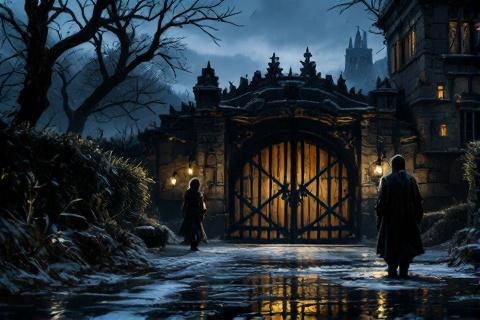
The people of Bree knew that the lands outside their small territory were
dangerous, so they took serious measures to protect their village. Bree was
encircled by a deep ditch, or dike, that ran all the way around the inhabited
part of the hill. On the bank of earth thrown up from this ditch, they had
planted a tall and very thick hedge of thorny plants. This combination of a dike
and a hedge created a strong defensive barrier that was difficult for unwelcome
visitors, whether they were wild animals or darker things, to cross.
There were only two ways to get into the village of Bree through its protective
barrier. On the western side, where the Great East Road entered from the
direction of the Shire, was the West-gate. On the southern side, the road from
the Greenway led to the South-gate. These gates were sturdy wooden structures
built into the hedge-wall, and they were the only official points of entry and
exit. All travelers had to pass through one of these gates, allowing the
Bree-landers to keep track of who was coming and going.
To ensure the village was secure, Bree employed gate-keepers who were on duty
day and night. These guards, like the grumpy Harry Goatleaf who watched the
West-gate, were responsible for opening the gates for friendly travelers and
questioning strangers. At night, the gates were shut and locked, and no one was
allowed in or out until morning. This strict policy helped the people of Bree
sleep peacefully, knowing that their defenses were being carefully watched and
that the dangers of the wilderness were kept outside.
These defenses were absolutely essential for Bree's survival. In the late Third
Age, the vast lands of Eriador were mostly empty and wild. The great kingdom of
Arnor that once ruled the region had been destroyed over a thousand years
earlier, and its cities had fallen into ruin. In this empty landscape, Bree-land
and the Shire were like small islands of light and warmth in a great, dark
ocean. Without their hedges, dikes, and watchful gate-keepers, the folk of Bree
would have been exposed to the many dangers that roamed the lonely lands.
The Prancing Pony: A Famous Inn
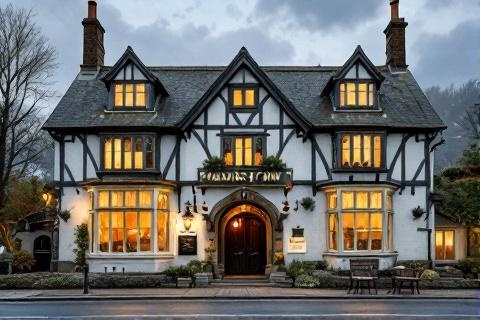
At the very center of life in Bree was its famous inn, The Prancing Pony. This
establishment was much more than just a place for travelers to spend the night;
it was the main social hub for the entire Bree-land region. Locals from Bree,
Staddle, Combe, and Archet all gathered here to talk, drink, and share news. The
inn's reputation for comfort and good company was known for many miles in every
direction, making it a destination for anyone seeking shelter and a friendly
face.
The Prancing Pony was an impressive building, standing three stories tall with
many windows. It was built by the Butterbur family long ago and was nestled into
the side of the Bree-hill, with its front facing the main road. Because it was
built against the hill, some of the windows on the upper floors looked out from
ground level at the back. A large, beautifully painted sign hung over the
entrance, showing a fat and cheerful white pony standing on its back legs. This
welcoming image was a famous landmark for all who traveled the Great East Road.
The inn was cleverly designed to serve both the Big Folk and the Little Folk who
lived in and visited Bree. The main building had rooms of a comfortable size for
Men and Dwarves. A special wing, built on the ground floor, offered smaller
rooms with round windows and hobbit-sized furniture, perfect for visiting
Hobbits from the Shire or Bree-land. The stables were also thoughtfully
arranged, with stalls for full-sized horses and separate ones for the smaller
ponies that Hobbits and Dwarves often rode.
The most famous part of The Prancing Pony was its large common room, which was
always filled with warmth and lively conversation. A great log fire burned in
the hearth, and the room was filled with tables and benches where a diverse
group of people could be found. Local Bree-landers would sit next to travelling
Dwarves, and curious Hobbits might listen to tales told by grim-faced Rangers
from the wild. The excellent ale served there was known throughout the region
and helped to make the atmosphere cheerful and welcoming to all.
The owner and innkeeper of The Prancing Pony was a man named Barliman Butterbur.
He was a short, fat, and friendly man who was always bustling about, trying to
make sure his guests were comfortable and happy. While he was a good and honest
man, Barliman was also famously forgetful, and his memory often failed him when
it came to names, messages, and important details. Despite this flaw, he was a
pillar of the Bree community and a friend to all peaceful folk who passed
through his door.
The Bree-folk
The Men who lived in Bree were a distinct people, with brown hair and a stocky
build. They were descendants of the earliest groups of Men who had traveled into
the western parts of Middle-earth, and they were believed to be distantly
related to the Dunlendings who lived far to the south. They were not related to
the Dúnedain, the noble Men of the West, and their culture and traditions were
simpler and more rustic. They were an independent people who had managed their
own affairs for centuries without kings or lords.
The Hobbits of Bree-land were also unique. They had settled around Bree-hill
long before the Hobbits of the Shire had even crossed the Brandywine River, and
they proudly claimed to be the oldest Hobbit community in the world. These
Bree-hobbits were a bit different from their cousins in the Shire. Having lived
alongside Men for so long, they were less shy around Big Folk and were more open
to the wider world. They were also the first Hobbits to start living in houses
instead of holes, a custom that later spread to other Hobbits.
Despite living at a busy crossroads, the people of Bree-land were generally
inward-looking and did not travel much. They were suspicious of the outside
world and referred to anyone from beyond Bree-land or the Shire as an 'Outsider'
or a 'Southerner'. They viewed the wider world as a strange and dangerous place,
full of troubles that did not concern them. Their main interests were local
news, farming, and the simple pleasures of life, and they preferred to keep to
their own business as much as possible.
Even though they were wary of strangers, the Bree-landers were not unfriendly.
In fact, they were known to be cheerful and good-natured people. Their greatest
passion was for news, and they were incredibly curious about the events
happening in distant lands. Any traveler who stopped at The Prancing Pony would
quickly be surrounded by locals eager to hear stories and gossip from the road.
This curiosity provided them with a link to the world they otherwise avoided,
and they often knew more about what was happening than one might expect.
A Haven in the Wild
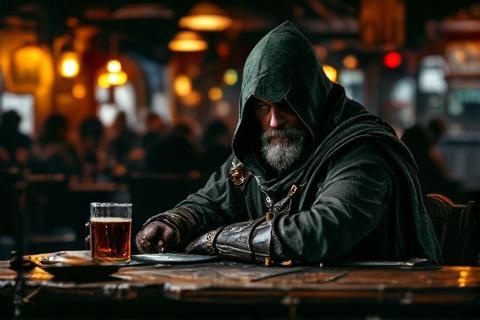
The safety and peace of Bree-land stood in sharp contrast to the lands that
surrounded it. The region of Eriador was vast, but by the end of the Third Age,
it was mostly an empty wilderness. The ancient northern kingdom had been
destroyed in wars long ago, and its great cities and fortresses were now just
silent ruins covered in grass and trees. Dark creatures and wicked men roamed
these lonely lands, making travel dangerous for anyone who was not well-armed
and wary. Bree was a tiny point of civilization in a great, untamed wild.
From time to time, mysterious and weather-beaten travelers would arrive in Bree
from the wild lands. These were the Rangers of the North, and the local people
of Bree did not trust them. The Rangers were grim and secretive, often dressed
in worn green and brown clothes, and they rarely spoke of their travels. The
Bree-landers thought they were strange and possibly dangerous, giving them
nicknames like 'Strider' to show their distrust. They did not understand who
these men were or what they were doing wandering the wilderness.
In truth, these mysterious Rangers were the secret protectors of Bree-land and
the Shire. They were the last descendants of the ancient kings of Arnor, and
they had taken on the duty of guarding the north against the forces of evil.
They tirelessly patrolled the borders of the settled lands, fighting off
Orcs, trolls, and other monsters that came down from the
mountains. The peace that the people of Bree enjoyed was largely due to the
courage of these Rangers, a fact of which the Bree-folk were completely unaware.
In a dark and dangerous world, Bree served as a vital sanctuary. Its location at
the crossroads made it a necessary stop for those on important journeys, and its
strong defenses made it a safe place to rest. It was a small beacon of
community, warmth, and ordinary life in a landscape that had become lonely and
threatening. Bree was a symbol that even in a fading age, life could go on
peacefully, thanks to strong hedges, brave gate-keepers, and the silent,
watchful guardians who walked in the shadows of the wild.