
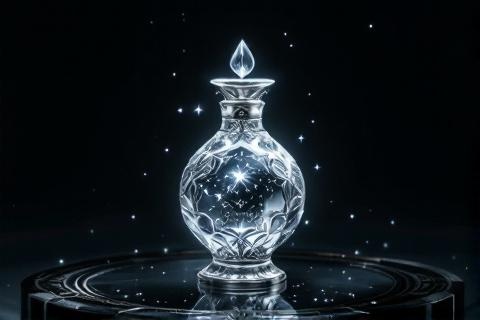
Phial of Galadriel: Light in the Dark
The Star-glass That Defied Shadow
A Gift of Light and Hope

As the Fellowship prepared to depart from the
ethereal realm of Lothlórien, the Lady
Galadriel presented Frodo
Baggins with a remarkable gift that would prove
invaluable in his quest. The giving of this precious object took place during
the farewell ceremony in which each member of the Fellowship received gifts
suited to their needs and nature.
The phial contained water drawn from Galadriel's fountain, which itself
reflected the ancient light of Eärendil's
star. This sacred water had captured the pure starlight, transforming it into a
lasting source of illumination that would serve as a beacon in times of
darkness. The light within the phial was not merely a reflection but a true
capture of the holy light of the heavens.
Among the parting gifts bestowed upon the Fellowship by the Lady of the Golden
Wood, the phial stood out as one of the most significant. It was presented
alongside other notable gifts, such as the Elven cloaks and the golden belt
given to Gimli, yet its importance would prove to be beyond measure in the dark
times that lay ahead for the Ring-bearer.
Physical Description and Craftsmanship

The vessel itself was a masterwork of Elvish craftsmanship, displaying the
extraordinary skill for which the Elves were renowned. The
crystal phial was fashioned with the utmost precision and artistry, reflecting
the timeless elegance characteristic of Elvish design. Its transparency was
flawless, allowing the light within to shine forth unimpeded.
The phial's silver fittings and decorative elements were wrought with
exceptional attention to detail, featuring delicate patterns and intricate
designs that spoke of its noble origins. These embellishments were not merely
ornamental but served to enhance the phial's ability to channel and focus the
light it contained. The silver work caught and reflected the inner radiance,
adding to its effectiveness.
The size of the phial was thoughtfully designed to be practical for a hobbit to
carry, being neither too large to be burdensome nor too small to be useful. It
could be easily concealed within a pocket or worn on a chain, making it an ideal
companion for the Ring-bearer's perilous journey.
The most remarkable aspect of the phial was its unique appearance when filled
with the light of Eärendil's star. Though made of crystal clearer than any
earthly glass, it contained what appeared to be living light that moved and
shifted within its confines. This light would pulse and change in intensity
depending on need and circumstance, responding to both external dangers and the
bearer's will.
The Light of Eärendil's Star
The true power of the phial lay in its contents: the captured light of
Eärendil's star preserved in the waters of Galadriel's fountain. This
combination united two sources of ancient power, as Galadriel's fountain was
itself blessed with the ability to reveal things unseen and unknown. The merging
of these elements created an object of remarkable potency against the forces of
darkness.
Eärendil's story is central to understanding the phial's significance. As the
bearer of a Silmaril through the heavens, Eärendil became
the Evening Star, a symbol of hope for all the free peoples of
Middle-earth. The Silmaril he carried was one of the
three jewels that contained the unmarred light of the Two Trees of Valinor,
making his star one of the most powerful sources of light in all of
Arda.
The symbolic importance of the phial as a source of hope and guidance cannot be
overstated. Just as Eärendil's star had guided mariners and travelers for ages,
the phial would serve as a beacon for Frodo and Sam
in their darkest hours. It represented the enduring light of the West that could
never truly be extinguished by the Shadow in the East.
Power Against Darkness

The phial proved to be particularly potent against creatures and beings aligned
with darkness and shadow. Its light was anathema to such entities, causing them
physical discomfort and forcing them to retreat from its radiance. This property
made it an invaluable tool in the dangerous regions through which the hobbits
would travel.
One of the most remarkable properties of the phial was its ability to grow
stronger in the presence of great evil. Rather than being diminished by
darkness, the light within would intensify, as if responding to the need for its
power. This characteristic proved especially valuable in the most perilous
situations faced by its bearers.
The phial demonstrated remarkable resilience, as neither water nor wind could
quench its light. This durability ensured that it remained a reliable source of
illumination and protection regardless of the conditions its bearer faced.
Unlike ordinary flames or artificial lights, the star-glass maintained its
potency through all manner of adverse conditions.
Words of Power
The power of the phial was activated through the utterance of specific Elvish
words: 'Aiya Eärendil Elenion Ancalima.' These words were not merely a command
but a direct invocation of Eärendil himself, calling upon the power of the
Evening Star. The phrase served as both activation and prayer, connecting the
user to the ancient power contained within the phial.
The meaning of these words, 'Hail Eärendil, brightest of stars,' carried deep
significance in the lore of Middle-earth. This phrase acknowledged Eärendil's
role as a bearer of light and hope, while also serving as a reminder of the
ancient connections between the Elves and the Valar. The words themselves were
in Quenya, the most ancient and noble of Elvish tongues.
The effectiveness of the phial was greatly enhanced when these words were spoken
with genuine faith and desperate need. The light would respond not just to the
words themselves, but to the spirit in which they were uttered. This aspect of
the phial's power demonstrated the importance of personal conviction and courage
in facing darkness.
Major Moments of Use

The phial faced one of its greatest tests in the lair of
Shelob, where its light proved to be a formidable weapon
against the ancient spider. In this confrontation, the light blazed forth with
unprecedented brightness, driving back the creature that had haunted the passes
of Cirith Ungol for ages. This encounter demonstrated the
full potential of the phial's power against creatures of darkness.
Within the tower of Cirith Ungol, the phial served not only as a source of light
but as a beacon of hope for both Frodo and Sam. Its light helped Sam navigate
the treacherous tower and ultimately find and rescue Frodo from captivity. The
presence of the phial provided courage and clarity in a place where all other
lights were extinguished.
Throughout their journey in Mordor, the phial helped Frodo and
Sam find their way through the oppressive darkness of Sauron's realm. Even in
the land where shadows lay deepest, the light of Eärendil's star remained
undimmed, guiding the hobbits through their most difficult trials.
Legacy and Symbolism
The Phial of Galadriel stands as one of the most powerful symbols of hope in
Tolkien's narrative. Even in the darkest circumstances, when all other lights
failed, the phial remained as a reminder that darkness could not triumph
completely. This symbolism reflects one of the central themes in Tolkien's
works: the persistence of hope against seemingly insurmountable odds.
The phial represented the lasting influence and power of the Elves in
Middle-earth, even as their time was drawing to a close. It contained not just
light, but the wisdom, craft, and blessing of the Eldar, serving as a testament
to their role in the struggle against evil. The gift of the phial demonstrated
the continued involvement of the Elves in the fate of Middle-earth, even as they
prepared to depart its shores.
Light plays a crucial role in Tolkien's mythology, representing goodness,
knowledge, and divine grace. The Phial of Galadriel connects directly to this
symbolic framework, drawing its power from one of the purest sources of light in
Middle-earth. This connection to light's significance in Tolkien's world
enriches the meaning of the phial beyond its practical uses.
Among all the gifts given to the Fellowship in Lothlórien, the phial proved to
be one of the most crucial for the success of the quest. Its combination of
practical utility and symbolic significance made it an invaluable aid to Frodo
and Sam, helping them complete their journey when all other hope seemed lost.
The phial stands as a testament to Galadriel's wisdom in choosing gifts that
would prove most needful in the darkest hours.