
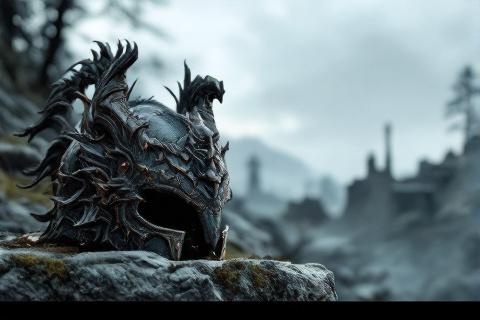
Dragon-helm of Dor-lómin
The Helm That Defied the Shadow
Introduction: The Helm and Its Name
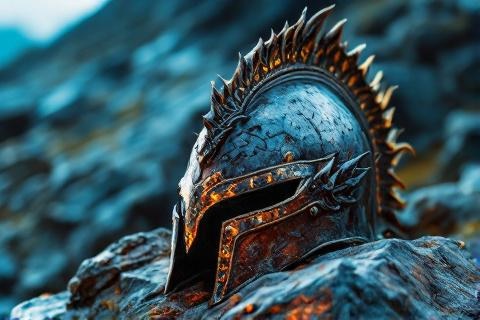
The Dragon-helm of Dor-lómin is presented in Tolkien’s
legendarium as one of the greatest treasures of the House
of Hador, bound to their stronghold in the northern land of Dor-lómin and
carried by its lords in war and council alike, so that it becomes almost a
second face of that people before friend and foe. Tolkien ties the helm closely
to Hador Lórindol and his descendants, so that when readers meet the
Men of Dor-lómin in The Silmarillion and The
Children of Húrin, they often meet them through the
image of this heavy helm with its dragon-crest, looming out of mist or battle
smoke. Because of this, the helm is not just a useful piece of armor but a
marker of identity, signaling that wherever it appears, the strength and pride
of the Edain of the North have arrived. Over time, the helm’s
presence in the tales turns Dor-lómin from a distant place on the map into a
living culture with its own symbols, memories, and style of war.
Tolkien uses the Dragon-helm to connect themes of lineage, pride, and doom,
showing how a family name can be both a crown and a burden. Whenever the helm
passes from father to son, as from Hador to Galdor and to Húrin and
Túrin, it reminds readers that the deeds of one
generation shape the hopes and fears of the next. The helm draws attention to
the noble pride of this house, for they face Morgoth’s darkness with bold
challenge, yet the same proud defiance also brings them under the weight of
Morgoth’s curse, as seen in the bitter story of Túrin Turambar. Tolkien lets the
helm stand beside its wearers at moments of glory and of disaster, making it a
visible sign that the fate of the House of Hador is never simple victory but a
hard path of honor walked beneath the looming shadow of the Enemy.
In this article the Dragon-helm of Dor-lómin is followed from its origin in
Tolkien’s texts through its physical appearance, its cultural and symbolic
meaning, and its later legacy in Middle-earth and beyond. The discussion moves
from how the helm enters the history of the Edain, to what it looks and feels
like as a crafted object, and then to how it functions as a sign of leadership
and doom among the Men of Dor-lómin. The final sections look at how the helm’s
story ends or disappears within the legendarium, and how scholars, artists, and
readers have treated it as a compact symbol of northern heroism and tragic fate.
Through this path, the helm can be seen not only as a piece of war-gear but as a
powerful tool of story-telling in Tolkien’s First Age tales.
Origins: Where the Helm Came From
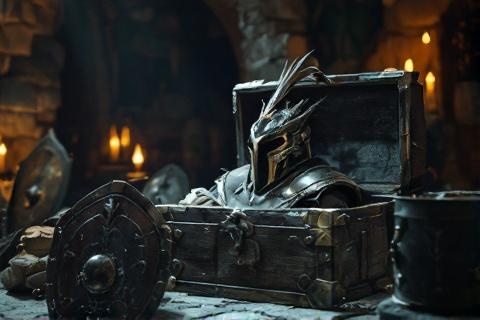
Tolkien firmly plants the Dragon-helm in Dor-lómin by naming it as the chief
heirloom of the House of Hador, tied to that wind-swept land between the Ered
Wethrin and the plains of Ard-galen. In The Silmarillion it appears in the
chapter “Of Túrin Turambar” as the ancient war-helm of Hador’s house, and in
The Children of Húrin Christopher Tolkien gives
more detail, stressing that it was worn by Hador himself, then by his son
Galdor, and passed on to Húrin Thalion. Because the helm is always mentioned in
connection with these lords and their homeland, its very name, the Dragon-helm
of Dor-lómin, becomes shorthand for the proud northern chieftains who held the
guard of the passes against Angband. Thus the helm’s
“belonging” is not just ownership but a deep link to the land, the people, and
their long service to the High Kings of the Noldor.
In the published Silmarillion the maker of the helm is not stressed, and it
first appears as an already ancient treasure, a thing whose crafting lies far
back in the early days of the wars of Beleriand, yet
Christopher Tolkien later draws on his father’s writings to reveal that it was
forged by Telchar the smith of Nogrod for Azaghâl, Lord of Belegost. According
to these fuller accounts in The Children of Húrin and the later volumes of The
History of Middle-earth, the helm then passes as a gift from Azaghâl to
Maedhros, after the battle where the Dwarves aid the
Elves against Glaurung, and from Maedhros
it comes to Fingon, and only then to Hador Lórindol. Even when this chain of
smiths, Dwarf-lords, and Elven princes is not fully told in the main narratives,
the texts still present the helm as something “very ancient,” suggesting that it
has seen many ages and masters and has gathered a weight of memory before it
ever rests in the halls of Dor-lómin.
Because of this long history, the fame of the Dragon-helm grows together with
the renown of those who bear it, so that object and family become tightly bound
in the reader’s mind. When worn by Hador and Galdor, the helm stands for strong
defense against Morgoth and faithful service to the Eldar;
when it sits upon the head of Húrin at the Nirnaeth Arnoediad, it becomes a
token of unyielding courage in the face of certain defeat; and when Túrin later
puts it on and takes the name Gorthol, the Dread Helm, its image becomes darker
and more fearful. Each new wearer adds fresh stories and new shades of meaning
to the helm, and in turn those stories cling to the House of Hador, so that by
the time of Túrin the helm is almost like a visible history book resting upon
his brow, reminding all who see it of the long, hard road that has led to that
hour.
Craftsmanship and Materials
Tolkien describes the Dragon-helm as a solid piece of war-gear, made for true
battle rather than ceremony, which suits the harsh northern life of the House of
Hador who guard the passes into Hithlum. In The Children of
Húrin it is called a “great dwarf-mask,” suggesting massive weight and thick
plates that would shield the skull, cheeks, and neck of the wearer from heavy
blows. The language around the helm emphasizes endurance more than beauty, and
each time it appears it seems to belong naturally among mail-coats, great
shields, and long spears, as if it were simply one of the hard tools that Men
must carry if they are to stand against the dark of Angband. This sense of
solidity helps explain why the helm becomes legendary, because it is not easily
broken, and so it survives to be passed on from one lord to another through many
campaigns.
The material of the Dragon-helm is not laid out in careful technical terms, but
the references to Dwarven smithcraft and to its great weight point toward thick
iron or steel, beaten and shaped by many strokes of the hammer. Tolkien speaks
of its dark visage and grim aspect, which fits with a surface that has aged and
darkened over time, possibly through smoke, weather, and the touch of many
hands. The impression given in The Children of Húrin is of something that looks
old even when newly polished, bearing the marks of ancient forging and countless
journeys. Readers can almost imagine the faint ripples of hammer-work or the
dull sheen of metal that has seen years of rain and war-light, forming a kind of
patina that proclaims its age and toughness without the need for jewels or
bright enamels.
Though Tolkien does not stop to give a craftsman’s manual, the texts imply that
the Dragon-helm has leather within it, straps and padding that allow it to be
worn close in battle despite its weight. It is said that only men of great
strength can bear it for long, which suggests that the Dwarves built it to rest
heavy yet steady on the head and shoulders, spreading the load through
well-fitted linings. Such leather would naturally wear and need repair over
time, and while this is not shown in the main narrative, the continued use of
the helm over several generations points to ongoing care by the armorers of
Dor-lómin. These hidden fittings are part of what makes the helm more than a
showpiece, because they tie it to the daily work of craftsmen and the rough life
of soldiers who must keep it ready for the next call to arms.
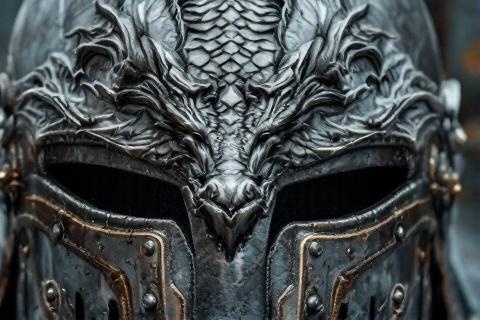
Most striking of all is the dragon-crest that gives the helm its name, a carved
or beaten likeness of a dragon that runs along its crown and brow and sets it
apart from ordinary helms. In The Children of Húrin this crest is described as a
gilded figure of Glaurung the dragon, and in some versions as a stylized drake,
so that when Túrin wears it his enemies think that some fell creature has risen
against them. The crest turns the helm into a symbol as well as a shield, since
it marks the wearer as one who dares to take the image of the dragon, Morgoth’s
own monstrous servant, and set it above his eyes in defiance. Thus the
dragon-crest is not merely decoration but a visible challenge that the Men of
Dor-lómin send back toward Angband, declaring by their very appearance that they
will not be cowed by the creatures of the Dark.
Physical Description: What the Helm Looked Like
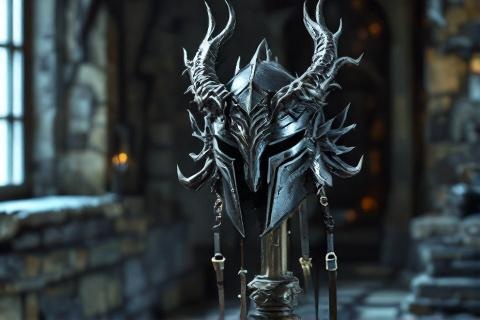
As a piece of armor, the Dragon-helm is imagined as a heavy, full war-helm that
covers most of the head and face, resembling the deep visored helms of northern
lords rather than the open caps sometimes worn by lighter troops. Tolkien’s
phrase “dwarf-mask” in The Children of Húrin suggests that the front of the helm
is shaped to conceal much of the face, leaving only the eyes visible from within
a shadowed opening, so that the wearer appears larger and more terrible than an
unhelmeted man. Such coverage would protect the jaw, nose, and cheeks from
sword-cuts and flying splinters, and it would also help the helm sit firmly in
place when the rider or warrior moves quickly. In this way, the full form of the
helm matches the grave and weighty role its bearers must play on the
battlefield.
The dragon motif along the brow and crest gives the helm its unique and
unmistakable profile, making it instantly recognizable in the tales whenever it
is mentioned. Tolkien does not provide a precise drawing, but his words hint at
a rearing or crawling dragon shape, perhaps with the head near the wearer’s
forehead and the body and tail running back along the crown of the helm. In some
texts the dragon is said to be gilded, which would cause it to catch the light
of sun or fire, so that the helm seems to blaze with golden menace when its
owner strides forth. This fearsome appearance helps explain why Túrin, under the
name Gorthol, becomes a figure of dread to the Orcs, who may see
in that dragon crest a grim echo of their own monstrous ally turned against
them.
Tolkien hints at the long years of service carried in the metal and leather of
the Dragon-helm by noting its age and repeated use, allowing readers to imagine
dents and scars left by many battles. Though he does not list specific marks on
its surface, the fact that it has passed through wars from the time of Azaghâl
to the days of Túrin implies that it has been struck by axes and swords, brushed
by spears, and soaked in the sweat and blood of many campaigns. The leather
straps and padding mentioned earlier would naturally fray, darken, and need
renewal, so that each generation of the House of Hador would add their touch to
the inside of the helm even while its outer form remained constant. These signs
of wear make the Dragon-helm feel like a living veteran among objects, scarred
yet unbroken, and this contributes to its aura of authority and endurance.
Unlike the bright and intricate helm-work of the Noldor or the jewel-studded
gear of great Elven lords, the Dragon-helm is not described as a piece of fine
ornament but as a grim tool whose power lies in its age, function, and
symbolism. The only flash of richness is the dragon-figure itself, and even that
seems meant more to awe foes and lift the courage of allies than to serve as
decoration for feasts. Tolkien presents Dwarven craft here not as something
delicate and beautiful but as tough, enduring work built for the hardest edges
of war, which suits the rough lands and bitter battles of Hithlum. In this way,
the helm’s visual impression reinforces its story-role as a badge of stark,
northern courage rather than elvish elegance, and that simplicity of design lets
the emotional and moral weight of the object stand out more strongly.
Lineage: The Helm as Heirloom
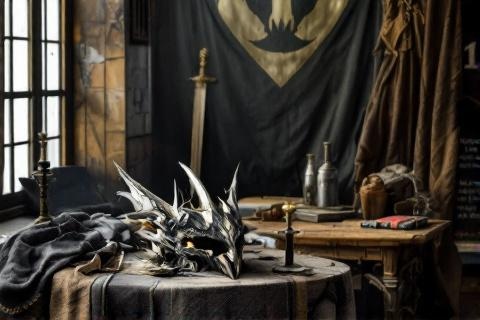
Within the story, the Dragon-helm is clearly marked as the chief heirloom of the
House of Hador, passed from father to son as a visible sign that the new lord
has taken up the place of his forefathers. Hador wears it as the trusted vassal
of Fingolfin, High King of the Noldor, and thus the helm becomes linked to the
broader defense of the West, while still remaining distinctly a treasure of Men.
After Hador’s death it goes to Galdor, and then to Húrin Thalion, who carries it
in his youth when he fights beside the Elves and wins renown. Each transfer is
not just a change of ownership but a quiet ceremony of continuity, announcing
that the line of Hador still stands and that its new head is ready to bear both
the helm’s weight and the heavy duties that come with it.
Possession of the Dragon-helm strengthens the noble title and honor of its
bearer, acting as a kind of crown for a people who live far from the large Elven
cities and courts. When a man appears before his folk wearing the helm, he is
recognized not only as a warrior but as the rightful leader who must protect the
land, judge disputes, and answer the calls of their allies. In The Children of
Húrin, when Húrin prepares to ride to the Nirnaeth Arnoediad, the mention of his
ancient helm underlines the gravity of his mission and the trust placed in him
by his people and by the Elven kings. The helm thus carries with it unspoken
expectations of courage, wisdom, and willingness to sacrifice, reminding its
wearer that he bears not only his own life but the hopes of many.
The history of the Dragon-helm is bound tightly to the proud yet tragic story of
the House of Hador, whose fortunes rise high before being cast down in the wars
against Morgoth. In the days of the Siege of
Angband, when the power of the Eldar and Edain holds
the North in watchful peace, the helm stands for strength, order, and the
bravery of Men who keep the passes. Yet after the breaking of the siege and the
catastrophe of the Nirnaeth Arnoediad, the same line is scattered, enslaved, or
slain, and the helm becomes associated with exile and sorrow, as seen when it
later comes to Túrin and then to Doriath. Each shift in the
family’s fate is mirrored in the way the helm appears in the narrative, whether
shining in battle or carried away from ruined homes, and in this mirroring the
reader feels more sharply how far the House of Hador has fallen.
Tolkien uses the Dragon-helm to mark descent and the burden of inherited fate,
especially in the figure of Túrin, whose story is one of both great valor and
deep woe. When Túrin dons the helm and fights in the woods of Brethil and the
wild lands between Dor-lómin and Doriath, he does so as a son of Húrin trying to
live up to the name and memory of his house. Yet Morgoth’s curse lies upon that
line, and the more Túrin tries to stand tall beneath the ancient crest, the more
tightly he becomes trapped in doom and misunderstanding. The helm thus becomes
almost a visible sign of the curse itself, reminding readers that in Tolkien’s
world the glory of ancestry can carry hidden griefs, and that to inherit a
mighty name and heirloom is to inherit a path already twisted by past deeds and
the designs of the Enemy.
Tolkien’s Short Account of the Helm in Events
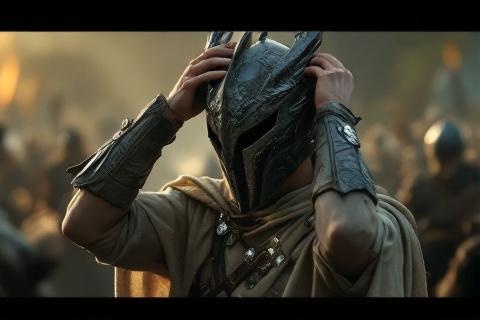
In Tolkien’s narratives the Dragon-helm is shown at key turning points, first on
the heads of Hador and Húrin and later on Túrin, so that its appearance often
marks important shifts in the story of Men and Elves in the North. The
Silmarillion notes that Hador received the land of Dor-lómin and was given rich
arms, with the Dragon-helm among them, making it part of the establishment of
his house. In The Children of Húrin, the helm appears when young Túrin first
leaves home, and later when he takes it up again under the name Gorthol, so that
it becomes linked to his attempts to fight Morgoth’s servants and escape the
shadow hanging over his kin. By tying the helm to such decisive moments, Tolkien
turns it into a companion of the characters’ greatest choices and challenges.
The texts themselves do not dwell on detailed battle scenes focused on the helm,
but rather give a clear chain of custody that lets readers track its movement
through the tale. From Azaghâl to Maedhros, from Maedhros to Fingon, and from
Fingon to Hador and his descendants, the helm moves quietly as a gift between
allies before settling as an heirloom, and then it shifts again when Túrin
leaves Dor-lómin and later when he abandons it in
Nargothrond. The Children of Húrin mentions these changes
in a concise way, so that the helm’s path can be followed like a thread through
the larger tapestry of wars, journeys, and courtly intrigues without needing to
pause for long technical descriptions. This chain of ownership helps underline
the connections between Dwarves, Elves, and Men, and shows how a single crafted
object can outlast many kingdoms and battles.
Once established, the Dragon-helm becomes a constant symbolic presence whenever
the story turns darker for the House of Hador and for Túrin himself, almost like
a shadow that falls across each new stage of their history. When Túrin sets it
aside in Nargothrond against Finduilas’s advice, this act hints at a shift away
from his inherited identity and toward new errors and pride. Later, when the
helm comes to Doriath, it serves as a silent witness to the grief of Morwen and
Niënor and to King Thingol’s concern for the fate of his foster-son. Even when
it is not physically on stage, the memory of the helm lingers, reminding readers
of the lost strength of Dor-lómin and the unfulfilled hopes tied to the house
that once wore it into battle.
Symbolism and Cultural Meaning
The dragon crest on the helm serves as both a personal badge of the House of
Hador and a darker emblem of doom and resistance, since it echoes the figure of
Glaurung, Morgoth’s great dragon, while defiantly turning that dread image into
a weapon of morale. In The Children of Húrin, Túrin’s enemies come to fear the
sight of the dragon-figured helm, thinking him some spirit of vengeance, and
this shows how the crest builds a legend around its wearer. At the same time,
readers who know that Glaurung will later play a cruel part in Túrin’s fate can
feel the crest as a foreshadowing of sorrow, for the hero walks beneath the sign
of the very creature that will help bring about his ruin. Thus the dragon image
becomes a double-edged symbol, blending proud challenge with hints of the
tragedy to come.
For the people of Hador, the Dragon-helm came to stand for steadfastness,
courage, and the heavy weight of kin-honor that could not easily be laid down.
To see their lord beneath that helm was to be reminded of the long watch against
Angband and of the unbroken line of warriors who had kept their borders safe at
great cost. When Húrin rides to the Nirnaeth Arnoediad wearing the helm, he
carries with him not just his own bravery but the collected bravery of fathers
and grandfathers who bore the same burden. This helps explain why Túrin later
clings to the helm as he tries to fashion himself into a champion in exile,
because by wearing it he reaches back to an image of courage that he hopes will
guide him even as his life grows more tangled and grim.
Tolkien often uses named items like the Dragon-helm to show how objects can
gather the weight of history and then press on the choices of those who inherit
them, and this helm is a clear example of that pattern. In The Children of
Húrin, Túrin’s decision to take up or set aside the helm affects how others see
him and how he sees himself, and these shifting self-images influence his later
actions in battle and in pride. The helm does not force his doom, but it shapes
the stage upon which that doom unfolds, giving him a certain role in the eyes of
Men and Orcs alike. In this way Tolkien explores how things crafted by hands
long ago can still shape the hearts and paths of those who come after, embodying
shared memories and expectations that are hard to escape.
Preservation, Loss, and Fate
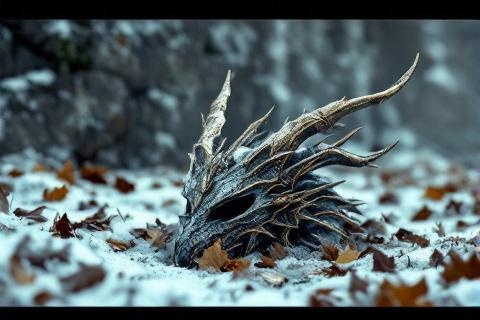
Throughout Tolkien’s writings the Dragon-helm is bound to the fortunes of the
House of Hador, so that its movements and changes of state follow the rising and
falling of that proud line. When Hador’s house is strong and honored, the helm
shines as a sign of trust and alliance, resting in the lord’s halls as a
treasured possession. As the curse on Húrin’s family deepens and the North falls
into ruin after the Nirnaeth Arnoediad, the helm is drawn into flight,
concealment, and exchange between realms, reflecting the brokenness of the
people to whom it once so clearly belonged. In this way the object’s fate
becomes a subtle map of the wider political and spiritual decay spreading
through Beleriand.
At the moments when homes are destroyed and families driven into exile in
Tolkien’s tales, heirlooms like the Dragon-helm hang in the balance, able to be
stolen, hidden, or surrendered to others in desperate bids for safety. The
Children of Húrin shows Túrin leaving the helm in Nargothrond after his counsel
leads that realm to reckless war, and later the recovered helm is brought to
Thingol in Doriath as a token connected to Túrin’s lost story. Such episodes
suggest that when war overwhelms a house, its prized gear may end up buried in
ruined halls, carried far away by strangers, or mounted as trophies by enemies.
Though Tolkien does not always trace every step, he lets readers feel that the
survival or loss of such items is part of the emotional cost of defeat and
exile.
In the case of the Dragon-helm, the texts leave its final fate somewhat
uncertain, hinting at disappearance or quiet storage rather than a clear ending,
which fits the broader tragedy of the House of Hador that fades away in sorrow
as the First Age moves toward its violent close. After its time in Doriath and
its link with Túrin’s last deeds, the helm passes out of the main narrative, and
Christopher Tolkien does not record any later use for it in the surviving
materials. This silence suggests that, like many relics of Beleriand, it may
have been lost in the ruin of that land or else lay forgotten in some hoard or
tomb until the world itself was changed. That possible loss or fading parallels
the way Túrin’s own memory becomes a mournful legend, and it reminds readers
that even the mightiest symbols of courage can vanish when the lands that gave
them meaning are drowned or destroyed.
Legacy: Why the Dragon-helm Still Matters
As an element of story, the Dragon-helm of Dor-lómin works as a compact device
that carries the whole history and fate of a family in its shape and name,
allowing Tolkien to hint at much with only a few words. When a character puts on
or sets aside the helm, readers immediately recall the long chain of makers and
wearers behind it, from Dwarven smiths to Elven kings to Men of the Edain. This
allows Tolkien to deepen scenes without long explanations, since the mere
mention of the helm invokes ideas of northern courage, old alliances, and the
looming shadow of doom. In this way the Dragon-helm shows how a single named
object can serve almost like a character in its own right, moving silently
through the tale and giving extra weight to each appearance.
Scholars and readers often view the Dragon-helm as a symbol that brings together
themes of noble courage, inherited burden, and the hard culture of the North in
Tolkien’s First Age. Academic discussions in commentaries on The Silmarillion
and The Children of Húrin note how the helm embodies the tension between glory
and curse in the story of Túrin, since it calls him to live up to his ancestors
even while he is trapped in Morgoth’s malice. Fans of the legendarium also see
in the helm a clear image of how Men in Beleriand tried to fashion their own
style and honor beside the more ancient Elves, using strong, plain gear that
suited their harsher lives. The Dragon-helm thus becomes a touchstone for
thinking about how Tolkien imagined the early cultures of Men, their strengths,
and their tragic limitations.
The power of the Dragon-helm’s image has inspired later authors, artists, and
illustrators who work with Tolkien’s themes of doom, honor, and the strange life
of objects in mythic stories. Many visual interpretations of Túrin show him with
the great helm and its dragon-crest, using that silhouette to convey his fierce
yet doomed heroism even to viewers who may not know all the details of the text.
Writers of secondary commentary and adaptations often point to the helm when
exploring how Tolkien uses material culture to enrich his world, giving physical
form to ideas like unfaltering defiance or the weight of legacy. By focusing on
the helm, these creators draw out the emotional contrast between its proud
appearance and the sorrowful fate of those who wear it.
Within the wider legendarium, the Dragon-helm reminds readers that objects in
Tolkien’s world can hold moral and emotional weight, shaping the choices of
characters and the meanings of events just as much as swords, rings, or jewels
do elsewhere in his tales. Like the Silmarils or the
Rings of Power, though on a smaller scale, the helm
gathers stories around itself and then influences how people act when they come
into contact with it, encouraging them to live up to its history or to break
from it. It stands as a quieter example of Tolkien’s belief that things made by
hands are never just tools, but can become bearers of memory, hope, pride, and
even doom. Through the Dragon-helm of Dor-lómin, readers see how a single piece
of armor can come to speak for an entire house, a lost land, and a way of facing
the Shadow with unyielding, if tragic, resolve.