

Gondolinic mail
Armour Forged for Heroes of the Hidden City
What is Gondolinic mail?
Gondolinic mail is the famed chain-mail armour forged in the hidden
Elven city of Gondolin during the First
Age, a place of secret strength and radiant beauty described in
The Silmarillion and in The Fall of
Gondolin. In Tolkien’s writings Gondolin stands apart
as a city where craft, light, and high nobility come together, and its armour
reflects that special character. The mail belongs to the tradition of the
Noldor, who brought with them from Valinor a
deep knowledge of metalwork and subtle arts, then refined those skills in their
concealed mountain city. Though Tolkien never gives a technical manual for its
making, the stories consistently hint that the armour of Gondolin was of
exceptional quality, remembered long after the city’s ruin as something rare and
almost legendary. When readers speak of “Gondolinic mail,” they mean this
bright, close-linked chain that protected the champions of the Hidden City in
its glory and in its fall.
In the early tales, especially in the version of The Fall of
Gondolin published by Christopher Tolkien, the armour
of Gondolin’s warriors is described as shining, intricate, and nobly made, which
suggests careful craftsmanship rather than crude war-gear. Tolkien often lingers
on visual details: glittering hosts, bright mail, and helms and shields that
flash with light as the people of Turgon march or defend their walls, and such
descriptions imply a level of smithing far above that of most Men and even many
Elves. The captains of the city’s Houses appear in gleaming harness that marks
them as leaders, while even their followers are described in equipment that is
clean, polished, and well kept. These hints, though brief, build an image of
armour that is both technically superior and aesthetically refined, matched to
the city that produced it. From such scattered notes, readers understand that
Gondolinic mail was not ordinary chain, but a high point of Elvish defensive
craft in the Elder Days.
The mail itself, as readers imagine it from Tolkien’s cues, combined serious
battlefield protection with an elegant, almost jewel-like appearance, worthy of
the high court of Turgon and the lords of the Twelve Houses. The armour is not
portrayed as clumsy or brutish; instead it lies close to the body, glancing back
light like water or precious metal, and harmonising with the banners, emblems,
and colours of each House. Such mail would have been worn over fine fabrics and
often paired with crested helms, decorated shields, and belts set with gems,
completing a look that joined splendour and strength. In this way, Gondolinic
mail communicated the pride of a hidden people who still remembered the Two
Trees and the high days of Valinor, and who tried to mirror that lost brightness
even in the gear of war. The armour of Gondolin is therefore imagined as both a
practical defence and a visible symbol of the city’s unique beauty and rank.
Origin: the smiths and workshops of Gondolin
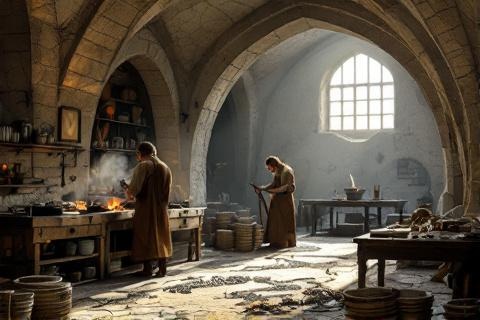
Gondolin itself was a secret stronghold of the Noldor in
Beleriand, founded by Turgon son of
Fingolfin after a long search guided by Ulmo, and it
became famous in the lore for its many craftspeople and smiths, whose skills
flourished behind encircling mountains. Cut off from most of the outside world
and protected by strict secrecy, the people of Gondolin developed their arts in
relative peace for many years, using the time to perfect metalwork, stonecraft,
and many finer trades. Tolkien notes in The Silmarillion that Turgon’s city
shone in white stone and tall towers, and such architectural mastery implies a
culture where craft in every material, including metal, reached a high peak. The
Noldor were already renowned among the Eldar for their knowledge and love of
craft, and in Gondolin this talent was concentrated in one fortified, sheltered
place, creating the ideal conditions for the making of peerless weapons and
armour. Thus, the mail that bears the city’s name must be seen as a natural
fruit of that long period of hidden labour and refinement.
Within this guarded city, skilled Elven smiths and armourers worked for the
king, for the lords of the Twelve Houses, and for the picked warriors who held
the walls and gates, often in workshops that were private and closely bound to
each noble household. Tolkien’s early narrative of The Fall of Gondolin lists
the Houses and hints at their distinctive devices and styles, which suggests
that each lord maintained his own artisans to equip his men with armour that
matched his colours and emblems. These smiths did not operate mass forges for a
huge army of conscripts, but rather crafted for a smaller, elite host, allowing
time and care to be lavished on each hauberk and helm. The armourers answered
directly to captains like Ecthelion and Glorfindel, who
would demand both reliability in war and honourable display before the king, and
this pressure drove the craftsmen to ever more excellent work. In these
conditions, the armour became as personal and carefully fitted as a fine
garment, shaped to the wearer by name and rank.
Gondolinic mail arose from this deep-rooted craft tradition as a product of
small forges, deliberate hammer-strokes, and the patient linking of thousands of
individual rings by hand, rather than any idea of hasty mass production.
Tolkien’s writings never pause to describe an armourer at work, but the time and
quiet enjoyed by Gondolin before its fall allows readers to infer a culture in
which long, careful processes were normal. Wire must be drawn, rings must be
formed, ends must be closed and strengthened, and all must be joined in a
pattern that spreads weight and stress evenly; this sort of labour suits the
Noldor, who are repeatedly shown as tireless and enduring. Over years, such
workshops would refine techniques, improve their tooling, and pass down secrets
from master to apprentice, so that each generation of armour grew subtly better.
When one speaks of Gondolinic mail, one is really speaking of the culmination of
many such incremental advances in a city devoted to perfection in craft.
For the smiths and citizens of Gondolin, making this mail was more than a
practical trade; it was both an art and a solemn duty that expressed and
protected the hidden glory of their city in the face of Morgoth’s darkness.
Turgon’s people knew that their safety depended on secrecy and strong defence,
so to forge armour was to serve the survival of their kin, and this gave the
work moral weight. At the same time, the Noldor saw beauty as part of their
identity as exiles from Valinor, and they tried to keep alive some echo of the
Blessed Realm in everything they made, including weapons and harness. Thus,
every polished ring of chain, every fitted hauberk that sat smoothly on a
captain’s shoulders, bore witness both to their longing for lost light and to
their readiness to defend their hidden refuge. In Tolkien’s legendarium,
Gondolin’s mail therefore stands as one more example of the Elves’ desire to
heal and adorn the world, even as they arm themselves for bitter war.
Materials and craftsmanship
Tolkien does not fully name the exact metals used in the mail of Gondolin, but
when bright armour is mentioned in connection with the city, the language dwells
on shining surfaces, pale gleams, and fine polish rather than on dull iron,
suggesting alloys of high quality or silver-like steel. In The Silmarillion and
related texts, Elven-made gear is often described as fair and radiant, while
specifically Dwarven metal is sometimes called dark and hard, and this contrast
helps shape expectations. Readers may think of metals such as Galvorn or mithril
from other tales, yet Gandalf later says mithril was found
above all in Khazad-dûm rather than in Beleriand, so its
use in Gondolin remains uncertain and should not be lightly assumed. What can be
said is that Gondolinic mail would have used the best ores that the Noldor could
obtain in the Echoriath and nearby lands, smelted and refined by their deep lore
to a purity that held a high sheen and little weight. The repeated emphasis on
brightness shows that the very material of the mail was chosen and treated to
catch and reflect light.
However strange or rare the base metals, the making of such mail would still
have required artisans to draw thin wire or form small rings, then link them
with care to build up a dense but flexible sheet of armour, a process long known
across Middle-earth. While Tolkien does not describe the
exact pattern, the basic act of linking rings through others is implied by the
term “mail” and by comparisons with other chain garments mentioned in his works,
such as the hauberks of the Rohirrim and the corslets of
Dwarves. For Gondolin, one should imagine craftsmen patiently
pulling wire through drawplates, winding it into tight coils, cutting ring after
ring, and then closing each ring, perhaps with a small overlap or rivet. This
fine work needs keen sight, steady hands, and the kind of tireless concentration
often attributed to the Noldor, who could spend long years perfecting a single
craft. Through thousands of repetitions, the smiths turned raw metal into a
living fabric that moved and folded like cloth while still turning blades.
The finished armour, shaped from such linked rings, struck a careful balance
between lightness and strength so that warriors could move with speed and
agility yet remain well defended against common weapons of the time. Gondolin’s
champions needed to fight upon city walls, in streets, and on steep mountain
paths, and heavy, rigid armour would have been a grave hindrance in such places.
Tolkien’s comments about the Elves often show them as swift and lithe, even when
armed, which implies that their armour did not encase them like stone, but
worked with their natural grace. By varying the thickness of links, the pattern
of overlap, and the layers at vital points, Elven armourers could give extra
protection where needed while keeping the whole hauberk manageable in weight. In
this way, Gondolinic mail allowed a captain like Glorfindel to climb, run, and
strike from horseback or on foot without being slowed into clumsy movements, an
advantage of life and death in the fierce street-fighting during the city’s
fall.
Beyond structural design, the smiths of Gondolin gave their mail a high finish
and polish that produced a radiant appearance, chapter after chapter echoing the
city’s love of light and beauty even in instruments of war. The metal would have
been smoothed, burnished, and perhaps even lightly etched or treated to deepen
shine, so that every movement sent clear glints across the battlefield.
Tolkien’s descriptions of the hosts of Gondolin often include words like
“gleaming,” “shining,” and “bright,” which are not accidental adornments but
part of the core image of the city as a place where light is cherished against
surrounding gloom. The brilliance of the armour also reinforced its elite
nature: this was not rusting iron dragged from a common forge, but something
more akin to a crafted jewel, worn openly as a sign of Gondolin’s high standing.
When sunlight or torchlight struck such mail, it would answer with a soft,
many-pointed glitter that marked out the wearer as one of Turgon’s people.
The very best suits of Gondolinic mail were further distinguished by small,
thoughtful touches in their construction, such as tightly made hems that
resisted unravelling, strengthened shoulders to bear the weight of helms and
shields, and neatly trimmed edges that did not catch or fray clothing beneath.
Tolkien does not list these details, yet they follow naturally from the culture
he describes, where Noldorin smiths sought flawless craft in great and small
things. A tightly bound hem at cuffs and skirts helped keep the ring pattern
stable over years of wear and strain in battle, while reinforced shoulders
spread the load of mail and cross-belts so the warrior could fight longer
without fatigue. Edges were likely shaped to follow the body, perhaps scooped or
split where necessary, and carefully finished so that they lay flat and did not
cut into under-garments or bite the skin. Such refinements separate the work of
master armourers from that of lesser craftsmen and show why Gondolin’s armour
was remembered with awe long after the city was lost.
Design: pattern, color, and elven ornament
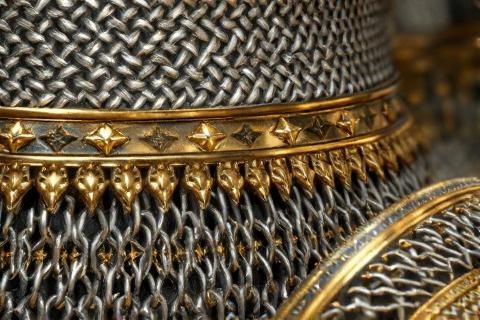
Gondolinic mail did not remain purely plain; it often carried subtle ornament
such as patterned hems, star-like devices, or woven bands at cuffs, collars, and
skirts that echoed the personal symbols and colours of Gondolin’s noble Houses.
In The Fall of Gondolin, Tolkien lovingly lists the emblems of those Houses –
golden flowers, fountains, the King’s white tower, and others – and though he
speaks more of shields and banners, such devices almost certainly influenced how
armour was finished. A band of slightly different weave near the wrists or along
the bottom of a hauberk might echo the geometry of a House’s badge, while single
tiny studs or inlaid plates could suggest stars or petals among the rings. The
Elves rarely let any surface remain without at least some hint of design, but
their taste in Gondolin seems dignified rather than gaudy, so these touches
would have been restrained and harmonious. In wearing such ornament, a warrior
showed loyalty to his House and king without sacrificing the seriousness of
battle gear.
The colours of Gondolinic mail were chiefly those of bright, unpainted metal:
the pale silver of polished steel or white metal and, when the light struck at
an angle, a warmer sheen that might suggest a hint of gold in the alloy or in
small decorative bands. Tolkien’s descriptions of Gondolin emphasise whiteness,
brilliance, and clear light, so armour in stark, shining metal would have fit
naturally with the white walls and tall towers of the city. Under sun, moon, or
torch, the thousands of small rings would catch lights of different hues, so
that a host of armoured Elves might seem at a distance like a shifting field of
silver fire. Any use of actual gilding likely appeared in limited areas such as
trim, clasps, or small plates at breast or throat, keeping the overall
impression bright but not overly showy. By holding to these pure metallic tones,
Gondolin’s mail joined with the city’s architecture and heraldry in one unified
vision of radiant strength.
In its overall form, the design of Gondolinic mail emphasised graceful lines and
thorough yet elegant coverage, so that each hauberk fitted its wearer closely,
almost like a second skin that moved as he moved. Tolkien’s Elves are often
described as tall and fair, with a natural poise, and their armour was shaped to
work with that physique rather than fight against it. The cuts of the garments
would have followed the shoulders and waist, perhaps flaring slightly at the
hips to allow motion, while sleeves and skirts were tailored to the right length
for each warrior’s usual weapon and stance. This attention to fit made the mail
wrap the body evenly, reducing chafing and places where folds might catch a blow
and twist. At the same time, the coverage remained practical, protecting chest,
back, upper arms, thighs, and often the head through coifs or mail veils,
leaving only what needed to be free for sight and breath. Such harmony between
form and function perfectly matches Gondolin’s character as a city that joined
art and discipline in every work.
How Gondolinic mail performed in battle
As functional armour, Gondolinic mail gave its wearers strong protection against
slashing and many stabbing attacks, turning aside sword-cuts and dulling
spear-thrusts, while still letting joints bend, shoulders roll, and hips twist
in combat. The interlocking rings spread the force of blows across a wider area,
so that even if a strike did not glance away, it was often robbed of its
deadliest edge before reaching the flesh beneath. Against arrows and spears
driven with great strength the mail might be pierced, yet it would still slow
the weapon and lessen the wound, often making the difference between death and
survival. In the narrow ways of Gondolin’s streets and gates, where fighting
closed to spear-length and closer, such armour gave the defenders a significant
advantage over foes with lesser gear. It formed a tough but responsive shell
that matched the Elves’ need to parry blows from many angles while keeping their
own weapons moving freely.
Because the armour was carefully fitted and not excessively heavy, champions of
Gondolin could sprint along battlements, climb towers or stairs, and fight with
all the speed and grace for which the Eldar were famed, suffering less of the
clumsiness often associated with encasing armour. In the tales, Elven lords are
seen performing feats of great agility even in battle – such as Glorfindel’s
struggle with the Balrog upon the mountain – and while Tolkien
does not dwell on what each is wearing at such moments, their usual equipment
must have allowed those movements. A hauberk that hung correctly from shoulders
and hips, with skirts cut to permit running and strata of rings thinned where
flex was needed, would help rather than hinder the warrior’s natural stride.
This mobility was vital in the chaotic fighting during the fall of Gondolin,
when defenders had to rush from gate to gate, ascend and descend levels of the
city, and sometimes retreat through rough, broken ground. Gondolinic mail
therefore functioned not as a cage but as a finely balanced tool that preserved
the wielder’s speed.
The shining surface and refined ornament of Gondolinic mail also played a
tactical and moral role on the battlefield, making leaders visible to their
followers and helping to inspire courage when fear and confusion threatened to
break the lines. Tolkien often shows how the sight of a familiar standard or the
gleam of a known captain at the fore can rally wavering hearts, as with
Fingolfin before Angband or later with the captains of the West. In the same
way, a bright corselet that caught the sun atop the walls of Gondolin would mark
out Turgon’s champions and reassure those who fought beneath them. In war,
appearance can shape spirit, and a host that seems ordered, fair, and undaunted
in its mail and livery may dismay enemies while strengthening its own resolve.
Thus, Gondolinic armour doubled as visible proof that the city still stood proud
against Morgoth, even as fire and dragons closed in.
Yet even the finest Gondolinic mail, for all its craftsmanship and beauty, could
not render its wearer invulnerable, and when the city’s defences finally failed,
armour only delayed the tragedy rather than preventing it. The Fall of Gondolin
describes terrible foes: dragons of fire and iron, Balrogs, and orc-hosts backed
by overwhelming force, and against such powers no single piece of gear could be
a sure safeguard. Warriors perished in burning streets, were crushed under
falling stone, or were cast from heights where no mail could save them, and
heroes like Ecthelion and Glorfindel met their foes in struggles where courage
mattered more than metal. Tolkien is careful to show that in his world, even the
greatest craft of Elves cannot stand alone against fate and the designs of the
Valar and Morgoth. Gondolinic mail therefore stands as a noble but limited
defence, a symbol of resistance that ultimately yields to the larger currents of
doom in the First Age.
Symbolism and status within Gondolin
To put on Gondolinic mail was to wear not only protection but also visible signs
of rank and of the city’s exalted standard of craft, since such painstaking
armour could not be owned by everyone. In a hidden realm where numbers were
limited and secrecy vital, the distribution of the finest gear naturally marked
those with leadership roles or particular trust from Turgon. A captain’s shining
hauberk signalled to his followers that he bore responsibility for their lives
and fought in the forefront, while his presence in such armour at the king’s
side confirmed his closeness to Gondolin’s ruling house. Visitors or allies,
rare though they were, would have read these signs at once in the glittering
mail and rich harness of the city’s foremost warriors. Thus, the armour acted
like a badge of office, as important for its meaning in the eyes of others as
for the steel rings that stopped a blow.
The very concept of Gondolinic mail, which fused high practicality with striking
beauty, reflected the city’s deep belief that art and war were not wholly
separate but could be held together in one noble ideal. For the Noldor of
Gondolin, the making of fair things was part of their identity, a memory of
Valinor and the Light of the Trees; yet they lived in exile under threat from
Morgoth, so they could not ignore the need for weapons and defences. Their
solution was to shape armour and swords that were as pleasing to the eye as any
work of sculpture or jewelcraft, so that even in preparing for bloodshed they
still pursued harmony and grace. Tolkien’s writings often return to this
tension, showing that the Elves both love peace and excel in war, and their gear
mirrors this dual nature. In this sense, every mail shirt from Gondolin carried
a quiet statement that beauty and courage might march side by side against the
darkness.
Among the people of the city, the very finest pieces of Gondolinic mail were
reserved for Elven lords, their chosen captains, and select guards who stood
watch at the most important gates and halls, while more ordinary soldiers wore
simpler but still serviceable equipment. The Twelve Houses, each with its own
emblem and honour, would see to the arming of their main body of warriors in a
way that matched the resources and wealth of their lord. A prince such as Turgon
or a mighty captain like Ecthelion could command the greatest smiths to labour
for long months on a single suit, perhaps with extra reinforcement or more
intricate trimming. By contrast, a common guard might receive a plainer hauberk,
solidly made but with fewer decorative bands and less perfect finish, though
still far better than what most Men could hope to own. This layering of quality
did not mean that lesser folk were neglected, but simply that in a limited and
hidden city, the very highest achievements of craft were focused on those who
bore the heaviest burdens of command.
Over time, the mail of Gondolin came to stand in memory as a symbol of the city
itself: hidden brilliance, carefully wrought and jealously cherished, shining in
secret hollows of the world until the day of doom. After the fall, survivors
like Tuor and Idril carried the story of Gondolin’s lost glory to other lands,
and listeners would hear of gleaming halls, proud warriors, and armour that
flashed like starlight, all wrapped in the sorrow of what had been destroyed. In
songs and later tales, such images condensed into the idea of Gondolinic craft,
with its mail at the forefront as something both practical and strangely
hallowed. Just as the city had tried to keep alive the memory of Valinor, so the
memory of its armour kept alive an echo of Gondolin’s own light in the minds of
Elves and Men. Thus, long after every forge of the Hidden City went cold, the
thought of its mail still shone in the histories of Middle-earth.
Notable wearers and a concise account of events
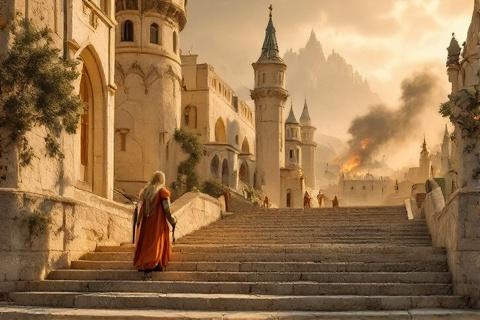
During Gondolin’s years of peace and power, its famed defenders – the captains
and heroes who led the Twelve Houses – would have worn its mail in parades
before the king and in the vigilant watches upon the city’s walls. Tolkien’s
early text on The Fall of Gondolin names leaders such as Ecthelion of the
Fountain, Glorfindel of the Golden Flower, Rog of the Hammer of Wrath, and
others, each associated with specific arms and devices. Though the focus often
rests on their banners and deeds, these lords must also have been arrayed in
armour worthy of their stations, and for Noldorin nobles that meant chain of the
finest make. When they assembled their companies in the Great Square or stood
beside Turgon in council of war, the light would catch on ranks of polished
mail, giving physical shape to the reputation of Gondolin’s host as tall,
well-ordered, and magnificently equipped. To those few outsiders who ever saw
it, such a sight would leave a lasting impression of disciplined splendour.
In Tolkien’s narrative of the city’s last days, especially in the detailed early
version edited by Christopher Tolkien, gleams of bright armour are noted among
the host of Gondolin as the alarm sounds and the defenders hurry to their
appointed gates. The Houses are described as they rush to battle: the Fountain
with silver and blue, the Golden Flower with their sunlike devices, the Harp,
the King’s House, and others, and while attention often rests on shields and
standards, the underlying image is of warriors already accoutred in gleaming
gear. As dragon-fire and shadows enter the tale, that brightness stands in stark
contrast to the black iron and flame of Morgoth’s forces, underlining the tragic
nobility of the Elves who take their stand amid ruin. Even in quick phrases, the
mention of shining armour reminds readers that these are not ragged refugees but
a high people brought low, still bearing the marks of their skill and pride as
they meet their doom.
In the account of the Fall of Gondolin, Gondolinic mail appears as one of the
last and most treasured defences of the city, yet the outline of events remains
swift and sorrowful: the secret way is betrayed, the enemy enters by fire and
siege, fierce battle rages, and at last the city is overthrown. The defenders,
whatever their armour, are faced with war-engines and beasts against which no
chain can stand for long, and they fight from street to street until the hosts
of Turgon are slain, scattered, or forced into desperate retreat. Tolkien
stresses heroism rather than equipment in the final combats; Ecthelion defeats
Gothmog at the price of his own life, and Glorfindel later falls to a Balrog
while protecting the fugitives, and their mail, however fair, cannot turn aside
destinies shaped by higher powers. As towers fall and fires spread, Gondolin’s
armour, weapons, and treasures vanish in the ruin, leaving behind only
survivors’ memories and the few heirlooms they carry out. Thus, in the great
tragedy of the city’s fall, Gondolinic mail passes from living craft into
legend.
Legacy: survivors, salvage, and echoes in later tales
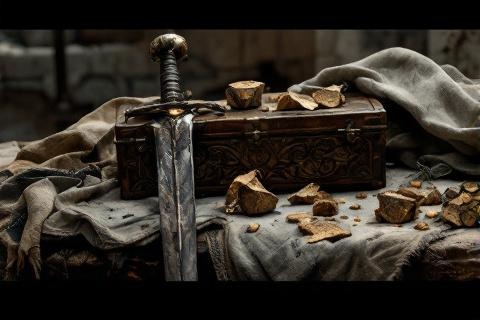
After Gondolin’s destruction, only scattered remnants of its once-great craft
survived into later ages, and most of the city’s treasures, including much of
its armour, were either buried beneath ruins or seized and lost among the spoils
of Morgoth’s servants. Tuor and Idril led a remnant of the people out by a
secret path, taking with them children, a few precious belongings, and perhaps a
handful of arms and mail that could be carried in the flight. Over years, those
survivors mingled with other folk, and whatever Gondolinic equipment they had
either wore out in later struggles or passed into obscurity. Tolkien rarely
specifies individual pieces from Gondolin that endure, which underlines the
completeness of the city’s fall. In the great histories, what remains most
clearly is not the physical armour but the memory of its making.
Nevertheless, some items from Gondolin – such as certain swords, jewels, and
possibly a few suits or fragments of armour – made their way into the hands of
other peoples or lived on in the songs told by exiles and their descendants. The
most famous surviving objects linked to Gondolin are the swords
Glamdring and Orcrist, and also
Sting, which Gandalf and Thorin’s company
later find in a troll-hoard in The Hobbit, though Tolkien does
not spell out exactly when or how they left the city. These blades, described as
beautiful, well-balanced, and keen, hint at the wider armoury of Gondolin, of
which they were once a part. Even if no complete mail-shirt from Gondolin is
mentioned in the Third Age, its style and reputation would have been preserved
verbally by Elves like Elrond, who knew of Turgon and the
Hidden City. Through such stories, Men and Hobbits hear second
or third-hand tales of Elven harness that glowed with a living light.
Over centuries, the workmanship of Gondolin influenced later Elven smithing and
fed into the broader image of noble armour in Middle-earth, even though direct
lines of apprenticeship are only dimly recorded. The Exiles who left Gondolin
carried their knowledge and taste into other realms, and their children and kin
would have tried, as far as possible, to recreate what had been lost or at least
to honour it in their own work. In regions like Imladris and
among the Noldor who remained west of the Blue Mountains,
the idea of armour that is both strong and fair surely remained a goal,
reinforced by memories of Gondolin’s glory. Even when the exact patterns of its
mail were no longer known, the story of its excellence set a standard against
which later efforts were measured, much as the Naugrim always looked back to the
works of ancient Khazad-dûm.
In the ages that followed, Elven historians and mortal lore-masters alike drew
on these remembered images when describing ancient Elven craft, and Gondolin’s
armour became a touchstone for the very idea of peerless mail. The Red Book of
Westmarch, from which The Hobbit and The Lord of the
Rings derive, mentions Gondolin by name and hints at
its greatness, and readers can assume that tales of its armour lay in the
background of such references. Scholars within the story-world, whether in
Gondor, Rivendell, or other centres of learning, would gather
fragments of verse and anecdote that spoke of shining hosts and secret cities,
building a composite picture of what had been. Their reconstructions, much like
those of modern readers, rely upon scattered phrases and treasured heirlooms,
filling gaps with informed imagination. In this way, Gondolinic mail remained
vivid not in the armoury but in the lore.
Imagining Gondolinic mail today
Today, modern readers and artists piece together their vision of Gondolinic mail
from Tolkien’s brief but suggestive cues, imagining bright, closely linked
rings, a trim and almost tailored fit, and tasteful Elven ornament that hints at
the heraldry of the Twelve Houses. Because the original texts give only flashes
– a mention of shining armour here, a list of emblems there – much of the
detailed look is left open, encouraging creative interpretations. Illustrators
tend to favour long shirts or hauberks that cover from neck to mid-thigh, paired
with elegant helms and flowing cloaks that reflect Gondolin’s high culture.
Writers of secondary material often describe the mail using metaphors of water,
starlight, or moon on silver, echoing the language Tolkien himself uses for
Elven things of great beauty. Through these reconstructions, the mail of
Gondolin continues to grow in the shared imagination of readers.
Most serious re-creations of Gondolinic mail, whether in detailed artwork,
costuming, or written description, emphasise fine, tightly linked chain with
perhaps some small decorative additions, rather than heavy plate armour that
would feel out of place in Tolkien’s early First Age world. Real-world
chain-mail techniques offer a helpful guide, showing how a dense weave of small
rings can produce exactly the flexible, shining surface suggested by the texts.
Artists might add narrow engraved plates at the chest or shoulders or restrained
patterns at hems, drawing on the city’s heraldic devices without turning the
armour into fantasy ornament with no grounding in the books. This approach
respects Tolkien’s tendency to describe Elven arms as graceful and efficient,
avoiding the bulky, baroque style sometimes seen in unrelated fantasy art. By
keeping decoration modest and structure believable, modern depictions keep
Gondolinic mail closely tied to its literary roots.
The enduring appeal of Gondolinic mail lies in how it combines technical skill,
cultural meaning, and poetic beauty, all central to the picture of Gondolin in
Tolkien’s tales, and this is why the idea continues to fascinate readers and
creators. It is not just armour; it stands for a way of life in which people
pour their best talents into both art and defence, knowing that their haven is
precious and precarious. The image of bright mail flashing on Gondolin’s walls,
set against dragons and darkness, captures the wider theme of the First Age: a
brave, doomed stand of light against overwhelming shadow. In remembering or
imagining such armour, readers touch again the sadness and splendour of the
Hidden City, feeling both admiration for its works and grief for its loss. Thus,
even with so few lines devoted to it, Gondolinic mail has become a lasting
symbol within Tolkien’s legendarium and within the broader culture of those who
love his world.