

Inside the Shire: A Journey Through Hobbiton and Beyond
Unveiling the Heart of Middle-earth's Most Idyllic Land
Geography and Boundaries
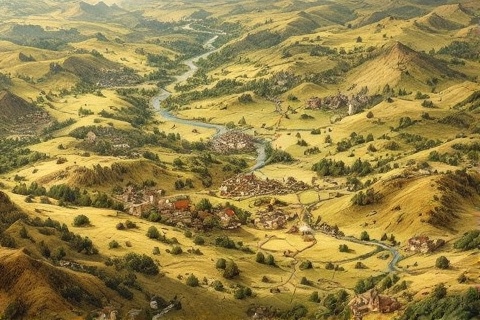
The Shire occupies a privileged location in the northwest region of
Middle-earth, nestled against the ancient Blue Mountains
that stand as majestic guardians along its western border. This peaceful realm
stretches approximately 120 miles from east to west and 150 miles from north to
south, making it a modestly sized but significant portion of Eriador.
The Brandywine River, known in Elvish as the Baranduin, creates a natural
eastern boundary for the Shire, its waters serving both as a defensive barrier
and a vital trade route. The river's broad waters separate the Shire proper from
Buckland, which was settled later by Oldbuck family members who crossed the
river and established their own community.
The administrative organization of the Shire divides the land into four distinct
Farthings: North, South, East, and West, meeting at a central point marked by
the Three-Farthing Stone. This system, established during the days of the North
Kingdom, has remained unchanged since the Shire's founding by the
brothers Marcho and Blanco in Third Age 1601.
The landscape of the Shire exemplifies the fertility and natural beauty that
made it so attractive to its hobbit inhabitants. Rolling hills covered in rich
grass transition into well-tended woods and productive farmland, creating a
patchwork of agricultural abundance. The soil proves particularly suitable for
growing crops, vegetables, and the famous pipe-weed that later became sought
after throughout Middle-earth.
Hobbit Architecture

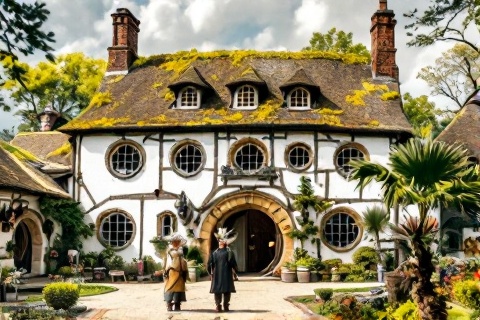
The iconic architecture of hobbit-holes features perfectly round doors and
windows set into hillsides, a design choice that reflects both practicality and
aesthetic preference. These circular portals, often painted in bright colors
with brass knobs exactly in the middle, have become synonymous with hobbit
architecture throughout Middle-earth.
Hobbit smials represent masterworks of underground architecture, featuring
networks of tunnels and rooms that extend deep into hillsides. These comfortable
dwellings maintain consistent temperatures year-round and typically include
multiple bedrooms, kitchens, dining rooms, and pantries, all arranged on a
single level for convenient access.
In the Shire's villages and towns, traditional wooden buildings with thatched
roofs stand as testament to hobbit craftsmanship. These above-ground structures,
while less common than hobbit-holes among the wealthy, serve as homes, shops,
and public buildings, particularly in places like Hobbiton and Michel Delving.
Gardens hold special significance in hobbit architecture and daily life, with
virtually every hobbit-hole featuring a well-tended garden space. These gardens
combine ornamental flowers with practical vegetable plots, reflecting the
hobbits' love of both beauty and good food, while window boxes
and climbing vines often adorn the fronts of their homes.
Agricultural Life
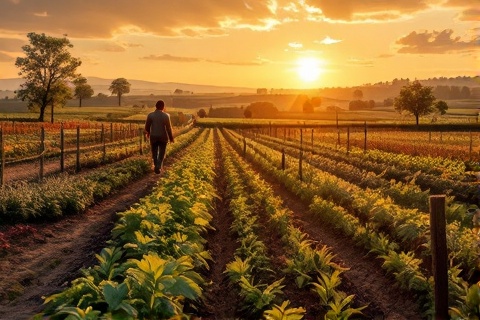
The South Farthing has gained remarkable fame throughout Middle-earth for its
exceptional pipe-weed cultivation, particularly the prestigious Longbottom Leaf.
This prized crop, first grown by Tobold Hornblower in 2670, demonstrates the
agricultural expertise of the Shire's farmers and has become one of the region's
most celebrated exports.
The fertile soil of the Shire supports extensive farmlands that produce an
abundance of crops including corn, wheat, barley, and root vegetables. These
agricultural areas, carefully maintained by generations of hobbit farmers,
ensure the prosperity and self-sufficiency of the region, providing enough food
to support multiple meals per day as per hobbit custom.
Throughout the Shire, carefully tended orchards produce various fruits while
wild and cultivated mushroom fields provide a particularly cherished food source
for hobbits. Apple orchards prove especially common, producing fruit for eating,
cooking, and the brewing of cider, while mushroom gathering has developed into
both an art and a competitive hobby among hobbit families.
The agricultural practices of the Shire reflect centuries of accumulated
knowledge passed down through hobbit families. These traditional farming
methods, developed since the settling of the region, emphasize sustainable
practices and careful crop rotation, ensuring the land's continued fertility and
productivity across generations.
Social Establishments
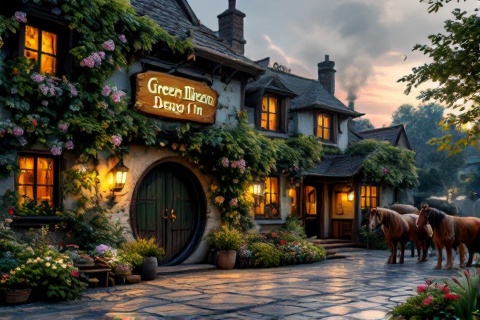
The inns and taverns of the Shire serve as vital social hubs where hobbits
gather to share news, stories, and meals while enjoying the comfortable
atmosphere these establishments provide. These gathering places maintain the
social fabric of hobbit society, fostering connections between families and
communities throughout the Farthings.
Among the Shire's many public houses, The Green Dragon in Bywater and The Ivy
Bush in Hobbiton stand out as particularly renowned establishments. These inns
gained special prominence in Tolkien's tales, serving as meeting places where
notable hobbits such as Bilbo and Frodo Baggins
would often encounter their neighbors and friends.
Regular markets and fairs held in the Shire's main towns create important
opportunities for trade and celebration. These events, taking place in locations
like Michel Delving and Bywater, allow farmers and craftsmen to sell their goods
while providing social occasions for hobbits from different parts of the Shire
to meet and interact.
The reputation of the Shire's public houses rests firmly on their excellent food
and ale, with each establishment taking pride in its unique recipes and brewing
techniques. These establishments serve multiple meals throughout the day,
accommodating the hobbits' preference for frequent dining, while their ales,
often brewed from local barley and hops, receive praise throughout the region.
Government and Organization
The Mayor of Michel Delving holds the position of primary civil leader in the
Shire, serving seven-year terms as the head of the Shire's minimal government
structure. The Mayor's duties include presiding over banquets and managing the
Messenger Service and the Watch, though the role involves more ceremonial
functions than actual governance.
The hereditary position of Thain, held by the Took family since the fall of
Arthedain, represents the traditional military leadership of the Shire. Although
the role became largely ceremonial after the Battle of Greenfields in 2747, the
Thain maintains the authority to call a Shire-muster and commands the Shire-moot
in times of emergency.
The Master of Buckland, traditionally the head of the Brandybuck family, governs
the semi-independent region east of the Brandywine River. This position carries
significant authority in Buckland and the eastern regions of the Shire, working
in cooperation with the Mayor and Thain to maintain order and tradition.
The Shirriffs, numbering only twelve for the entire Shire during peaceful times,
perform basic law enforcement duties with characteristic hobbit restraint. These
volunteers, marked by feathers in their caps, primarily help lost travelers and
maintain general order, reflecting the Shire's remarkably peaceful nature and
the hobbits' general preference for minimal governance.
Natural Landmarks
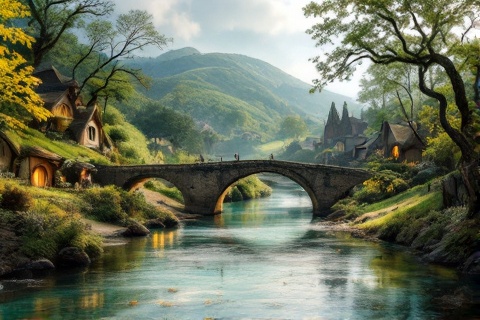
The Water, a significant river flowing through Hobbiton, shapes the geography
and daily life of the central Shire. This waterway provides essential irrigation
for surrounding farms and gardens while powering various mills along its course,
including the Old Mill in Hobbiton that features prominently in local industry
and architecture.
At the heart of the Shire stands the Three-Farthing Stone, marking the point
where the Westfarthing, Eastfarthing, and Southfarthing meet. This ancient
marker serves as both a geographical reference point and a traditional meeting
place, standing along the Great East Road that runs through the Shire.
Woody End, located in the Eastfarthing near the village of Woodhall, offers some
of the Shire's most beautiful forests and walking paths. This area, popular
among hobbits for hiking and mushroom gathering, features old-growth trees and
provides shelter to various wildlife, making it a beloved natural retreat.
The Green Hills form one of the Shire's most distinctive geographical features,
providing spectacular views across the countryside and hosting numerous
hobbit-holes in their gentle slopes. These hills, running through the
Westfarthing, offer prime locations for hobbit dwellings and farmland while
creating the rolling landscape that characterizes much of the Shire's beloved
terrain.