
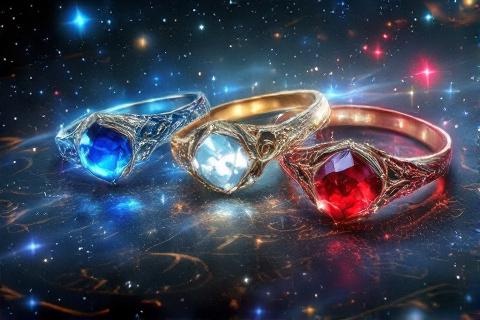
The Three Elven Rings: Vilya, Nenya, and Narya
Guardians of Beauty and Power in Middle-earth
The Forging of the Three
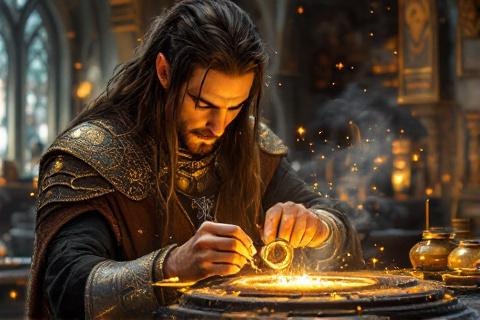
In the year 1590 of the Second Age, Celebrimbor, the greatest
elven-smith since his grandfather Fëanor, forged the Three
Rings of Power in Eregion. As a
master craftsman and leader of the Gwaith-i-Mírdain, he poured his skill and
knowledge into creating these magnificent artifacts, which would become the most
powerful and unsullied of all the Rings of Power.
Unlike the Seven Rings of the Dwarves and the Nine Rings of
Men, the Three Rings were crafted by Celebrimbor alone, without
Sauron's direct involvement or corruption. This crucial
distinction allowed them to remain free from Sauron's malevolent influence,
though they were still bound to the One Ring through the
craft Celebrimbor learned from Sauron.
The Three Rings were uniquely designed with noble purposes, embodying the elves'
desire to understand, heal, and preserve rather than to dominate or control.
These rings represented the highest aspirations of the Eldar, focusing on the
protection of beauty, wisdom, and life itself in
Middle-earth. Their powers were meant to maintain and
enhance rather than to change or destroy.
Vilya, the Ring of Air
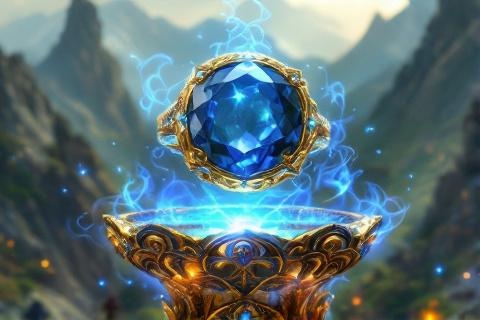
Vilya, the Ring of Air, was renowned as the mightiest of the
Three Rings. Set with a brilliant sapphire stone, its blue glory reflected its
connection to the element of air and the vast powers it commanded. The ring's
strength was said to rival that of the One Ring itself, though its powers were
of a completely different nature.
Initially wielded by Gil-galad, the High King of the Noldor,
Vilya was later entrusted to Elrond Half-elven before
Gil-galad's death in the War of the Last Alliance. This transfer of power
ensured that Vilya's strength would continue to protect and serve the Free
Peoples of Middle-earth through one of their wisest leaders.
Throughout its history, Vilya demonstrated remarkable powers of healing and
preservation of knowledge. These abilities aligned perfectly with Elrond's own
gifts as a healer and loremaster, enhancing his natural talents and wisdom.
Under Elrond's stewardship, Vilya played a crucial role in maintaining
Rivendell as a sanctuary of peace and learning. The ring's
power helped create and sustain the hidden valley's protective boundaries,
preserving it as a haven where both elves and other Free Peoples could find
refuge from the growing darkness of Middle-earth.
Nenya, the Ring of Water
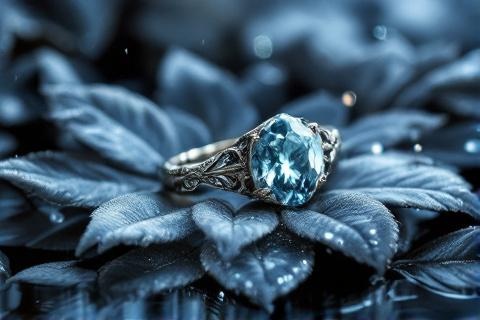
Nenya, the Ring of Water, was crafted from the precious metal
mithril and adorned with a stone of adamant that shone like the stars
themselves. Its brilliant white radiance reflected the pure and preservative
nature of its powers, making it a perfect match for its bearer.
The Ring of Water found its home with the Lady
Galadriel, who wielded it in the realm of
Lothlórien. As one of the oldest and most powerful of the
Eldar in Middle-earth, Galadriel used Nenya's powers with unmatched skill and
wisdom, enhancing her own considerable abilities.
Nenya's powers were strongly associated with preservation, protection, and
concealment. The ring granted its wielder the ability to maintain things
unstained, to protect them from the ravages of time, and to hide them from
unfriendly eyes. These abilities were particularly suited to Galadriel's role as
the guardian of Lothlórien.
Within the Golden Wood, Nenya's power worked its greatest magic, helping to
maintain the timeless beauty of Lothlórien. Under its influence, time seemed to
stand still within the realm's borders, preserving the ancient forest in an
endless state of spring and summer, untouched by decay or winter's cold.
Narya, the Ring of Fire
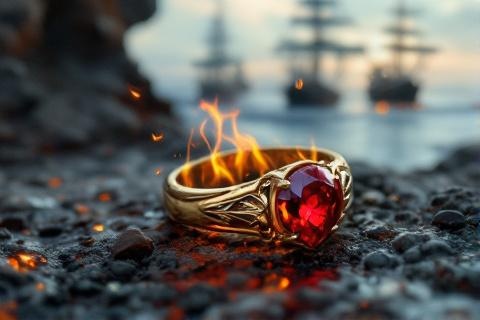
Narya, the Ring of Fire, was distinguished by its setting with a brilliant ruby
stone that glowed with an inner fire. The ring's red stone embodied its nature
as a source of inspiration and resistance against the darkness, making it unique
among the Three.
Initially, Narya was entrusted to Círdan the
Shipwright, the Lord of the Grey Havens.
However, recognizing the greater need, Círdan later gave the ring to
Gandalf upon the Istar's arrival in Middle-earth. This
decision proved crucial in the struggle against Sauron, as Narya's powers
perfectly complemented Gandalf's mission to unite and inspire the Free Peoples.
The Ring of Fire possessed the power to kindle the hearts of others, inspiring
hope and courage in the face of despair. This ability proved invaluable in the
fight against Sauron, as it helped strengthen the resolve of those who would
stand against the growing shadow in Middle-earth.
Among Narya's most significant powers was its ability to ward off the weariness
of time, preserving its bearer from the exhaustion of long labors and the weight
of years. This aspect of the ring's power proved particularly valuable to
Gandalf during his centuries-long mission in Middle-earth, helping him maintain
his strength and purpose through countless trials.
Powers and Properties
Each of the Three Rings possessed unique abilities that reflected their
elemental associations: Vilya with air, Nenya with water, and Narya with fire.
These elemental connections influenced not only their appearance but also the
nature of their powers and how they could be used most effectively by their
bearers.
The primary powers shared by all three rings centered on preservation,
understanding, and healing. These abilities reflected the deepest desires of the
Eldar to maintain and protect the beauty and wisdom they had brought to
Middle-earth, rather than to dominate or control as Sauron's Ring sought to do.
One of the most remarkable abilities shared by the Three was their power to slow
the decay of time within their respective realms. This power manifested
differently in each location: in Rivendell as a preserve of lore and healing, in
Lothlórien as an unchanging garden of ancient beauty, and through Narya as a
force for kindling hope and resistance.
The Three Rings significantly enhanced the natural powers and abilities of their
bearers. Elrond's healing abilities, Galadriel's power to protect and preserve,
and Gandalf's capacity to inspire and encourage were all amplified by their
respective rings, though the full extent of these enhancements remained largely
hidden from the eyes of most inhabitants of Middle-earth.
The Three and The One

Though the Three Rings were created without Sauron's direct involvement, they
were still bound to the fate of the One Ring due to the fundamental principles
of their making. This connection meant that while Sauron could not corrupt them
directly, their powers were still vulnerable to his influence through the One
Ring.
During the periods when Sauron possessed the One Ring, the bearers of the Three
were forced to remove and hide their rings, leaving them unused to avoid falling
under his dominion. This necessity highlighted both the rings' greatest strength
their freedom from direct corruption and their greatest weakness their binding
to the One Ring's power.
The bearers of the Three possessed the ability to perceive anyone using the One
Ring, as demonstrated when Frodo offered the One
Ring to Galadriel. This connection worked both ways, however, as Sauron would
have been able to perceive and potentially dominate the bearers of the Three had
they used their rings while he possessed the One.
Following the destruction of the One Ring, the powers of the Three began to
fade. While they did not lose their powers immediately, the breaking of the One
Ring marked the beginning of the end for the great works that had been preserved
by the Three Rings' power.
Legacy and Fate
Throughout the Third Age, the Three Rings played an essential
role in preserving the last remnants of elven culture and power in Middle-earth.
Their influence maintained the great elven realms of Rivendell and Lothlórien as
bastions against the growing shadow, while Narya helped Gandalf in his mission
to unite the Free Peoples against Sauron.
The destruction of the One Ring, while necessary for defeating Sauron, also
marked the end of the Three Rings' power in Middle-earth. As their strength
faded, so too did the ability of the elven realms to maintain their timeless
nature against the effects of age and decay.
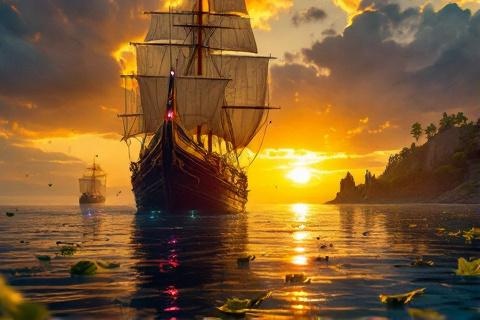
When the time came for the last of the High Elves to depart
Middle-earth, the Three Rings were carried over the sea to the Undying
Lands. This journey represented both an end and a
beginning, as the rings' departure marked the final sunset of the elven age in
Middle-earth.
The passing of the Three Rings symbolized the end of the elven realms in
Middle-earth and the transition into the Age of Men. Their
departure marked the conclusion of an era of great beauty and power, leaving
Middle-earth forever changed and diminished, though their legacy would live on
in memory and song.