
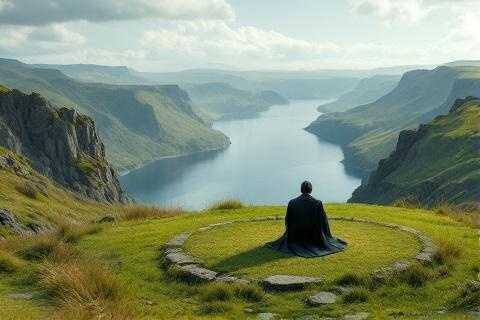
Parth Galen: The Breaking of the Fellowship's Final Stand
Explore the pivotal shores where Frodo chose his path, Boromir fell, and the War of the Ring truly began. A deep dive into the history, geography, and fateful events at Amon Hen's green lawn.
Name and Meaning
Parth Galen is introduced in The Lord of the Rings as
a quiet green place on the western side of the Great River,
just below the western shoulder of Amon Hen, and its Sindarin
name “Green Bank” or “Green Lawn” fits what the hobbits
actually see when they land there. Tolkien writes of a smooth sward of grass
running down almost to the water, where the
Fellowship beaches their boats before the
breaking. The name Parth Galen is used as a short, almost casual label, yet it
fixes the image of this bright, open patch of turf between river and hill. That
simple meaning makes the spot easy to picture and sets up a sharp contrast with
the darker woods and shadowed rocks that surround it.
Amon Hen, the height that rises above Parth Galen, carries a more weighty
Sindarin name: the “Hill of Sight,” which Tolkien clearly links to its function
in the story. The hill is not only a physical vantage over the Anduin and the
lands beyond, but also a place where vision is sharpened and troubled, as
Frodo discovers when he sits in the Seat of Seeing.
The name suggests that long before the War of the Ring, the
Númenóreans or Gondorians understood this
height as a watch-point over their northern frontier. Tolkien uses the name to
give the hill a sense of long history, even though he never describes any
buildings or clear remains of an old fortress on its summit.
The Seat of Seeing is the most striking man-made feature at Parth Galen, a great
stone chair set close to the edge of the hill’s green lawn, and its plain
descriptive name tells the reader at once what it is for. Frodo climbs to it
alone and finds a high seat open to every wind, with space for only a single
watcher at a time. When he sits there, he does not find carvings or
inscriptions, but rather a bare, hard stone that lifts him above the world.
Tolkien’s naming focuses not on power or kingship but on the act of looking, so
the chair is remembered as a tool for vision rather than as a throne for rule.
Across these names, Tolkien draws attention to sight, hearing, and the living
surface of the land instead of walls or towers, so Parth Galen and Amon Hen
never feel like a ruined castle or a lost city. Readers hear of “green lawn,”
“hill of sight,” and “Seat of Seeing,” and they picture grass, air, and wide
horizons rather than battlements. This emphasis shapes how the Fellowship
experiences the place: they camp in the open, rest on the turf, and only climb
to the high seat in moments of choice. The landscape is therefore not a
fortification but a natural stage on which decisions are made and fates are
revealed, guided only by stone, sky, and river.
Topography and Layout
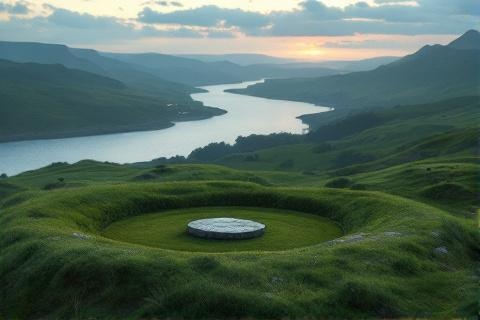
At the top of Amon Hen, Tolkien describes a level or nearly level space of
grass, a green lawn that forms a kind of natural circle before the land drops
away, and this is Parth Galen in its most precise sense. The Fellowship comes to
it from the riverside, and when Frodo later reaches the summit he steps out of
trees into this short turf like a clear island of openness. The roughly rounded
shape of the sward gives the impression of a prepared place, though it is not
paved, and the smoothness of the grass sets it apart from the rougher slopes
below. This green ring is where Boromir will fall, and
where the Fellowship’s last shared ground is truly marked.
Around this lawn Tolkien notes a brink or lip to the hilltop, a sort of shallow
rim that separates the grassy center from the sudden drop of the outer slopes.
Frodo comes to the edge and looks out, and the text stresses how the world seems
to fall away before him beyond that grassy boundary. The brink is not a sheer
cliff everywhere, but it is enough to give a feeling of height and exposure, as
if the watcher stands on the very edge of Middle-earth.
Beyond it the land runs down in steeper faces and broken ground toward the
Anduin, so the lawn feels like the top of a great natural tower.
Within this ring of turf, Tolkien does not give a picture of smooth grass alone;
he also mentions stones and ledges that interrupt the surface. Low outcrops
break through the sward, catching sun and shadow, and they give Frodo and later
Aragorn footing as they move across the summit.
These mixed patches of rock and grass help readers imagine a real hilltop rather
than a perfect field, and there is a sense that the living turf clings to
ancient stone beneath. Such details make Parth Galen feel like a natural place
touched lightly by men, not a carefully designed park or garden.
Most notable among the stones is the single great stone chair that stands at or
near the brink, separated from the rest by its size and placement, so that all
approaches lead the eye toward it. Tolkien sets it where the lawn almost meets
the drop, so that the sitter is lifted not just above the hill but above the
land on every side. From this chair, a person can turn and see in all
directions, and so the seat becomes the focus of both the lawn and the reader’s
attention. The whole shape of the summit seems arranged to lead up to this one
object, which turns Amon Hen from just another hill into a place of watching and
decision.
The Seat of Seeing
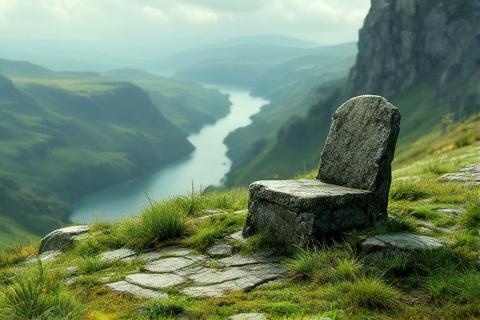
The Seat of Seeing itself is described as a high chair of weathered stone,
raised up on a small dais of rock and reached by a few steps, giving it an air
of age and purpose without any fine decoration. Frodo finds it empty, exposed to
every wind, with room for only one at a time, so that the act of sitting there
feels lonely and solemn. It is not carved into an image of a king or a god, and
there is no suggestion of comfort; it is a tool, not a throne, and it has
endured long years of sun and rain. The very plainness of the seat invites the
reader to think less about who made it and more about what a person may see from
it.
Placed on the very edge of the hill’s green crown, the seat faces not inward but
outward, over the broad Anduin and the lands beyond, which shows that its makers
intended it for watching the world rather than ruling a local domain. When Frodo
sits, he looks first to the south, where he sees the great river bend and the
smoke of war over distant lands, and then to other quarters of the compass. The
chair’s outlook covers north, east, south, and west, though Tolkien pays special
attention to the river’s line and the lands of Gondor far away. This wide view
matches the idea that Amon Hen served as a northern watch-point for the
Men of Gondor in the days of their strength.
The simple shape of the seat, which Tolkien does not burden with runes or
figures, combined with its careful placement on the brink, shows a clear
purpose: to lift a watcher where nothing blocks the view in any direction. The
dais and steps make it higher than the rest of the lawn, so sight is extended
just a little farther, and the sitter becomes part of the hilltop itself. Frodo,
overcome by many visions when he sits there with the Ring, experiences not a
spell laid on the seat but the natural power of a far-reaching view sharpened
and twisted by the Ring’s influence. The stone chair thus joins human craft and
natural height into one instrument of seeing.
Because of this, Parth Galen is shaped, in the reader’s mind, by the presence of
the Seat of Seeing, which turns the quiet lawn into a place meant for long
watching and listening across distance. Tolkien has Aragorn later stand where
Frodo sat and try to read signs in the land below, which shows the hill’s
continuing role as an outlook in times of danger. The chair becomes the silent
witness to Frodo’s choice to go east alone and to Boromir’s defense of the
hobbits, even though no words are carved upon it. In this way, the seat gives
the green summit a kind of character: a lonely high place where all paths can be
surveyed and where the great choices of the story are weighed.
Vistas and Sightlines
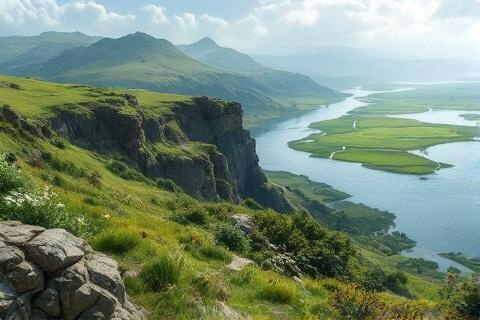
From Parth Galen, the view over the Great River Anduin stretches far to north
and south, so that the sitter on the Seat of Seeing can follow the river’s line
for many leagues. Tolkien has Frodo look southward and see the Anduin winding
away, the haze over the Emyn Muil behind him, and the growing darkness over
lands nearer to Mordor. To the north, the river comes down past
Tol Brandir and the falls of Rauros, framed by great cliffs and hills. These
sweeping views make clear how important the river is as a road and boundary in
the Third Age, and they explain why Men of Gondor would keep
watch from this height.
Looking eastward from the green lawn, a watcher can see across the water to the
twin hill called Amon Lhaw, the Hill of Hearing, on the opposite bank of the
Anduin. Tolkien notes that the two hills face each other across the river, a
kind of pair that once must have formed a single system of watch and warning for
Gondor. Although the text gives far less detail about Amon Lhaw, its name and
position suggest that those who kept guard here once valued both far sight and
keen hearing over the river. For Frodo and the reader, the glimpse of the
eastern hill deepens the sense that Parth Galen is only half of a larger design
laid upon the land by earlier men.
The open top of Amon Hen means that, on a clear day, distant mountains, forests,
and bends of the river stand out like features on a great map laid at a
watcher’s feet. Frodo sees far-off ranges to the south and west, and he senses
the reach of Rohan’s plains, Gondor’s coastlands, and even the Ephel Dúath that
guard Mordor. The horizons are wide enough that he feels almost lost in the
sweep of the world and overwhelmed by how much lies beyond his power. For
Aragorn later, this same breadth of view is a help, as he looks for signs of
Frodo and the orcs among all that distance and detail.
Tolkien also makes clear that light, haze, and weather control how far sight can
reach from Parth Galen, so the hill is powerful but not magical in itself. When
Frodo sits in the Seat of Seeing, it is a fair day, and he sees more than any
mortal might normally see, yet the text hints that the Ring sharpens and
distorts his vision, mixing real distance with spiritual threat. In ordinary
times, a watcher might see campfires, smoke, or banners along the river, and
perhaps storms building over the mountains, but not the whole spread of
Middle-earth. By choosing this site for the Breaking of the Fellowship, Tolkien
places the moment of decision on a hill where the world itself can be read, yet
still veiled by cloud and time.
Ground Cover and Vegetation
When Tolkien first shows Parth Galen, he calls attention to it as a “green
sward” where the grass is short and smooth, making a clear, open space that
stands out from the darker trees and rocks nearby. The Fellowship draws up their
boats at the foot of this green place, and the hobbits walk and rest on its soft
turf after the long days on the river. The strong color of the grass gives a
living brightness to the scene, which stands in contrast to the grey water and
looming falls of Rauros above. This simple patch of lawn, therefore, becomes the
last truly peaceful resting place the group shares before everything breaks
apart.
At the edges of this sward, however, the reader is reminded that the hill itself
is stony, and that the turf ends where rock shouldered through, so exposed stone
and grass mingle. Frodo’s climb to the summit and Aragorn’s later search both
pass over these transitions, where the smooth lawn gives way to scattered stones
and rougher ground. The mixing of turf and rock shows that Parth Galen is not a
neat garden but a natural outcrop that has partly grown a green robe. This helps
the place feel real, as if one could trip on a stone while moving from the soft
center to the hard outer rim.
Tolkien is careful to note that the top of Amon Hen is open, not crowned with
dense trees, which is why the lawn can exist and why the views from the Seat of
Seeing are unbroken. There may be trees lower down the slopes, and the approach
from the river runs through some woodland, but the summit itself is kept clear.
This openness exposes anyone who stands there to the sun and to the gaze of
anyone looking up from the river, but it also lets the wind sweep across the
grass. For the Fellowship, this lack of cover means that the final quarrels and
choices happen out in the open, with nowhere to hide from each other or from
fate.
Though Tolkien does not state the exact season by name, the steady greenness of
the place, even as the Company nears the end of winter and the beginning of
spring, gives Parth Galen a feeling of timeless life. On a bright day, the lawn
might shine golden-green; under clouds or at dusk it might seem darker, but the
text continues to call it green. This constant color suggests that the hilltop
has a kind of endurance amid the changing storms of the world. While snow may
still lie in higher places, and war clouds gather far away, here the reader is
allowed to imagine unfading turf beneath weary feet, until it is stained with
Boromir’s blood.
Paths, Access, and Human Traces
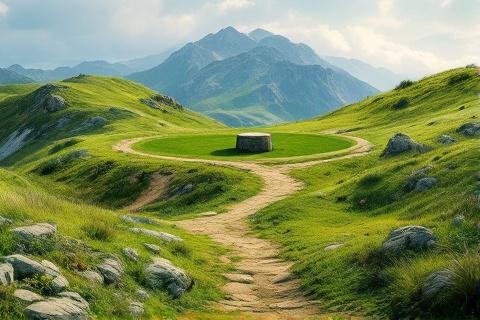
The text mentions a worn path leading from the river up the side of Amon Hen,
showing that many feet have climbed to Parth Galen before the Fellowship arrived
and that the hill has long served as a lookout and resting-point. Aragorn leads
the company by this track when they leave their boats, and later he follows it
in haste as he seeks signs of Frodo’s choice. The fact that the path is already
there tells readers that this is not some forgotten, untouched height, but a
known place on the route along the Anduin. Even if no guards now stand there for
Gondor, the track marks the memory of many earlier watchers and travelers.
As the Company makes this climb, Tolkien notes that the way is steep in places
and that the hill rises clearly above the river-bank and valley floor, so there
is a real effort involved in gaining the summit. The hobbits, unused to such
hills in the Shire, feel the strain, and even Boromir, a man of
Gondor, must labor among the trees and rocks. This steepness is part of what
makes Amon Hen a good watch-hill, since height always costs effort. The climb
also gives a sense of separation: once at the top, a person is truly apart from
the river and the camp below, as Frodo is when he goes there alone to decide his
course.
Despite the long history that the place seems to hold, Tolkien plainly states
that there are no buildings or standing walls on the summit; human presence is
shown mainly by the carved seat and the worn tracks. There is no house of
guards, no tower, no ring of stones like a fortress, only the bare necessities
of a look-out. This absence of heavy construction suggests that Gondor or its
Númenórean forebears could once afford to maintain watch from
a simple post, relying on the strength of the hill itself. For the reader, it
keeps the focus on the land and on the people who pass through, rather than on
ruins or relics.
Because Amon Hen is so visible from the river, with its high crown and open
sides, it would naturally draw the attention of travelers who move along the
Anduin or its banks, and so it becomes a likely place to pause and survey the
way ahead. The Fellowship does exactly that when Aragorn calls a halt there to
debate their future path, and he chooses it partly for the view he hopes to
gain. Boatmen, messengers, or patrols from Gondor in earlier days might also
have landed there to rest, scout, or light beacons. In this way, Parth Galen
fits into a practical network of travel and watch that stretches up and down
Middle-earth’s greatest river.
Neighbouring Landforms and the River
Amon Hen rises on the western side of the Great River Anduin, and the summit
above Parth Galen looks out across a broad reach of water where the river
gathers its strength before plunging over Rauros. Tolkien’s map and descriptions
together place the hill at a key turn in the river’s course, where boats must
choose whether to brave the falls or land on safer banks. From the lawn, the
sound of the river is constant, and the view of its shining surface links the
green height to the wider story of the Company’s journey downstream. The hill
and the river form a single scene, one of land towering over water at the edge
of great change.
On the far side of the Anduin stands Amon Lhaw, the Hill of Hearing, which the
text names as a counterpart to Amon Hen, and together they form a kind of double
gate along this part of the river. Even though Tolkien gives almost no detail of
Amon Lhaw’s surface, its very pairing suggests that the Men of Gondor once kept
a matched watch on both banks, using sight from one hill and sound from the
other. This balance hints at a time when the river was more fully guarded and
controlled. For readers, the twin hills frame Parth Galen not as a lonely knob
of land, but as half of a designed system that has partly fallen into neglect by
the end of the Third Age.
Beyond the two hills stretches a wider valley, with slopes, shoulders, and
plains that run down to the river, and Parth Galen sits within this larger
pattern of heights and banks that shape the Anduin’s middle course. Tolkien has
Frodo, from the Seat of Seeing, look not only at the river but also at distant
ridges, forests, and plains that fan out from it, so the lawn belongs to a whole
riverside country rather than to a single isolated cliff. In earlier centuries,
this region would have been well known to gondorian travelers, captains, and
scouts. The green lawn is therefore best understood as a favored point within a
chain of natural lookouts and river-terraces that guide movement up and down the
land.
Closer at hand, the banks and surrounding slopes fall steeply from the crown of
Amon Hen down toward the water, creating shelves, terraces, and sudden drops
that define the approach from the river. The Fellowship beaches their boats at a
landing place below, then climbs through these broken levels to reach the
summit. These steep sides help protect the top from easy surprise, but they also
make escape difficult, as Merry and Pippin learn when they flee the orcs across
the uneven ground. In this way, the shape of the land around Parth Galen both
shelters the watchers on the hill and traps those who must fight and run among
its banks and ledges.
Literary Role and Symbolic Shape
Tolkien’s use of the name “Hill of Sight” does more than describe the height of
Amon Hen; it also underlines the hill’s role in the story as the place where
vision and decision come together. Frodo climbs there to seek a chance to think
alone, and instead he receives a flood of images that show him the scale of the
war and the reach of the enemy’s eye. The name tells readers that this is where
the hidden things of the world come into view, forcing the Ring-bearer to choose
his path. Thus the literal meaning of “hill of sight” becomes part of the moral
and narrative meaning of the scene.
Parth Galen’s open lawn, combined with the lonely Seat of Seeing, turns the
summit into a symbol of watching, judgment, and perspective, where characters
must look out beyond their own wishes. Frodo, when he sits in the chair, sees
not only lands and armies but also senses the searching will of
Sauron, and he realizes that he cannot safely stay with his
friends. Aragorn, arriving too late, stands there and weighs his duty between
chasing Frodo or saving the captured hobbits. The clear, bare nature of the
place supports these acts of judgment, as if the land itself has stripped away
shelter and distraction so that only choice remains.
The simplicity of the scene, with only turf underfoot, a single stone seat, and
the vast horizon around, gives Parth Galen a sharp, memorable outline in the
reader’s mind, almost like a stage set on which a few key figures act. There are
no banners, statues, or ruined halls to draw attention away from Frodo and
Boromir at the moment of their struggle. Instead, the green circle, the stone
chair, and the sweep of sky form a frame for their conflict and for Frodo’s
escape. This stark shape also means that later, when Aragorn,
Legolas, and Gimli stand there, the reader can easily
picture them in the same bare space, facing the same immensity of land and
choice.
Because Tolkien describes no houses, walls, or other built works at Parth Galen,
apart from the Seat of Seeing itself, the hilltop reads as a natural high place
that men have only lightly touched, giving it purpose by setting a single stone
there. This keeps the focus on the meeting of human will and the wild world,
rather than on the ruins of a lost kingdom. The old Númenórean or Gondorian
builders are present only as a memory in that one carved chair, which now serves
whoever dares to sit. In this way, Parth Galen stands as a kind of altar of
decision made out of earth and rock, where the fate of the Fellowship and, in
some measure, of Middle-earth, is turned by choices taken in the open air.