

The Fourth Age: Middle-earth's Unwritten Epic
Exploring the Hidden Legacy Beyond the Lord of the Rings
The Dawn of a New Era: When Did the Fourth Age Begin?

The dawning of the Fourth Age was marked by a pivotal moment in
Middle-earth's history: the departure of the White Ship
from the Grey Havens in the year 3021 of the Third Age. Upon
this vessel sailed the Ring-bearers Bilbo and Frodo
Baggins, along with
Galadriel, Elrond, and other
notable Elves, bearing with them the last of the Three
Rings across the Sea to Valinor. This
momentous journey represented not just a departure but a fundamental transition
in the fabric of Middle-earth.
The onset of the Fourth Age heralded the end of the Eldar's dominion over
Middle-earth, a reign that had lasted since the First Age. The
power and influence of the Elves, which had shaped the fate of Middle-earth for
millennia, began to wane as the Dominion of Men rose to prominence.
This shift had been long foretold, as Men were deemed the Secondborn of Ilúvatar
and destined to inherit the stewardship of Middle-earth from the Firstborn
Elves.
With the advent of the Fourth Age came significant changes to how time itself
was recorded in Middle-earth. King Elessar
established a new calendar system in Gondor, marking the year
of his coronation and the departure of the Ring-bearers as Year 1 of the Fourth
Age. This calendar reform reflected the profound changes occurring in
Middle-earth and established a new way of recording history that would continue
through the age of Men. The previous dating system, which had been in use since
the Second Age, was carefully preserved in historical records
but gradually gave way to the new reckoning.
King Elessar's Reign: The Restoration of Gondor
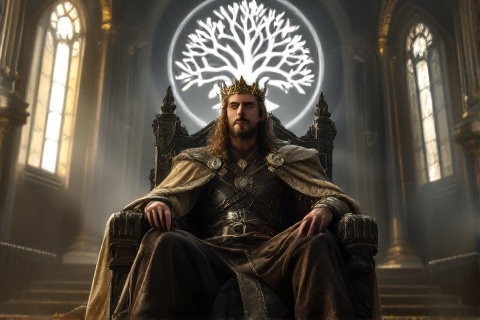
King Elessar's reign, spanning 120 years from Fourth Age 1 to 120, marked a
golden age for the Reunited Kingdom. The former Ranger known as Aragorn ruled
with wisdom and justice, drawing upon his centuries of experience and the
ancient lore of Númenor. Under his guidance, the kingdom
flourished as it had not done since the days of Elendil, with prosperity and
peace becoming hallmarks of his reign.
One of King Elessar's greatest achievements was the restoration of the ancient
kingdoms of Gondor and Arnor. He rebuilt many of the old
fortresses and cities that had fallen into ruin during the Third Age, including
Annúminas, the ancient capital of Arnor by Lake Evendim. The King established
his northern capital there, fulfilling the dream of reunification that had
remained dormant since the fall of the North-kingdom centuries before.
The restoration of Minas Tirith stood as a testament to
King Elessar's commitment to renewal. The White City was extensively rebuilt and
beautified, with the withered White Tree
replaced by a sapling Aragorn discovered on Mount Mindolluin. Through skilled
diplomacy and strength of arms when necessary, he established lasting peace with
the Southrons and Easterlings, turning former enemies into valuable trading
partners and allies.
Throughout his reign, King Elessar maintained and strengthened the alliances
that had been forged during the War of the Ring. The friendship between Gondor
and Rohan grew ever stronger, with the Rohirrim and the people
of Gondor engaging in extensive trade and cultural exchange. The
Dwarves too remained steadfast allies, with both peoples
benefiting from increased cooperation in crafts and commerce.
The Diminishing of the Elves
The departure of the Elves from Middle-earth continued throughout the Fourth
Age, as the call of the Sea grew ever stronger in their hearts. The great exodus
that began with the Ring-bearers' departure continued steadily, with many Elves
taking ship from the Grey Havens to journey to the Undying Lands. This gradual
withdrawal represented the final fulfillment of their fate, as the time of the
Elves in Middle-earth drew to its close.
While most Elves departed, some remained in diminished havens throughout
Middle-earth. The realm of Eryn Lasgalen, formerly known as
Mirkwood, continued under the rule of Thranduil, while a
small number of Elves dwelt in East Lórien, though their
powers waned with the passing of Galadriel's Ring. These
remaining communities became increasingly isolated as the years passed, their
influence fading like twilight before nightfall.
Legolas, son of Thranduil and one of the Fellowship of
the Ring, established a colony of Elves in
Ithilien with the blessing of King Elessar. Under his guidance, these Elves
helped restore the gardens and forests of Ithilien to their former glory.
However, after the death of King Elessar, Legolas finally heeded the call of the
Sea that had stirred in his heart since his first sight of it. He built a grey
ship and sailed West, taking Gimli the Dwarf with him, an unprecedented honor
granted by the Valar.
The Flourishing of the Shire
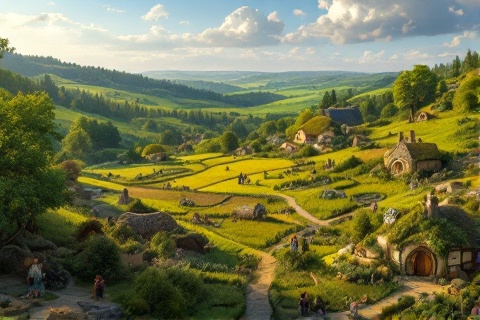
The Shire entered a period of unprecedented prosperity under the
protection of King Elessar, who issued a decree forbidding Men from entering the
Shire without permission. This royal protection allowed the
hobbits to maintain their traditional way of life while
benefiting from increased security and trade opportunities with the outside
world. The King's appreciation for the hobbits, particularly the Ring-bearers,
ensured that their homeland remained a protected enclave within the Reunited
Kingdom.
Samwise Gamgee's tenure as Mayor of the Shire
lasted for seven terms until the year 55 of the Fourth Age, marking one of the
most prosperous periods in hobbit history. Under his leadership, the Shire
experienced a cultural renaissance, with many of the deeds of the War of the
Ring recorded in the Red Book of Westmarch. Sam's wisdom and experience, gained
during his travels with Frodo, helped guide the Shire through the changes of the
early Fourth Age while maintaining its essential character.
The borders of the Shire were expanded through King Elessar's decree, which
added the Westmarch to hobbit lands, extending their territory from the Far
Downs to the Tower Hills. This gift of land demonstrated the high regard in
which the hobbits were held by the King and provided space for new settlements
as hobbit families continued to grow and prosper.
The hobbits' way of life remained remarkably resilient to the changes occurring
in the wider world. While they maintained diplomatic relations with the Reunited
Kingdom and engaged in some trade, their society continued to focus on the
simple pleasures and traditions that had characterized hobbit life for
generations. The Shire remained a pocket of peaceful continuity in a changing
world, preserving many of the customs and values that had defined hobbit culture
throughout the Third Age.
Dwarven Resurgence in the North
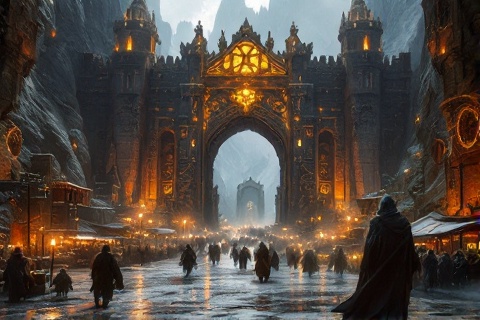
Under Gimli's leadership, the Dwarves established thriving colonies in the
Glittering Caves of Aglarond beneath Helm's Deep. These caves, which had amazed
Gimli during the War of the Ring, became a wonder of the Fourth Age as Dwarven
craftsmen created works of extraordinary beauty, combining their traditional
skills with new artistic influences from their alliance with the Elves of
Ithilien.
The ancient Dwarven realms of Erebor and Moria experienced
remarkable revivals during the Fourth Age. Erebor, the Lonely Mountain,
continued to prosper under the line of Dáin, while Moria was gradually reclaimed
and cleansed of the evil that had long plagued it. The halls of
Khazad-dûm once again rang with the sound of Dwarven
hammers and songs, though the work of rebuilding would continue for many
generations.
The relationship between the Dwarves and the Reunited Kingdom grew stronger
through extensive trade networks and mutual support. Dwarven craftsmanship
contributed significantly to the rebuilding of Minas Tirith and other great
cities, while the protection and trade opportunities provided by the Reunited
Kingdom helped Dwarven communities flourish. This cooperation led to a golden
age of craftsmanship and commerce that benefited both peoples.
The Legacy of the Age of Men
The Fourth Age witnessed a gradual transition from a world of evident magic to
one where the supernatural became increasingly rare and subtle. The departure of
the Elves and the fading of ancient powers marked the beginning of what would
become the world of Men, where the extraordinary became the stuff of legend
rather than daily reality. This transformation occurred slowly but inexorably,
as the direct influence of the Valar and the power of the Eldar diminished in
Middle-earth.
The establishment of lasting peace in the Reunited Kingdom under King Elessar
and his successors created a foundation for the future of Men. This peace was
maintained through careful diplomacy, strong alliances, and wise governance,
allowing civilization to flourish in ways that had not been possible during the
long years of shadow in the Third Age. The stability of this period allowed for
great advances in learning, crafts, and culture.
The final departure of the last Elves and the complete fading of the Three
Rings' power marked the end of an era in Middle-earth. The ancient magic that
had preserved realms like Rivendell and Lothlórien disappeared entirely, leaving
only memories and tales of their former glory. This loss of Elvish power
represented the final transition from the Elder Days to the age of Men.
The Fourth Age marked the beginning of recorded history as we know it, with the
fantastic elements of earlier ages giving way to more mundane concerns. The
great events of the past began to be viewed through an increasingly historical
lens, though the truth of these tales was preserved in ancient records and the
memories of the Dúnedain. This transformation established the foundation for the
world that would eventually become our own, though countless years would pass
before the end of the Fourth Age.